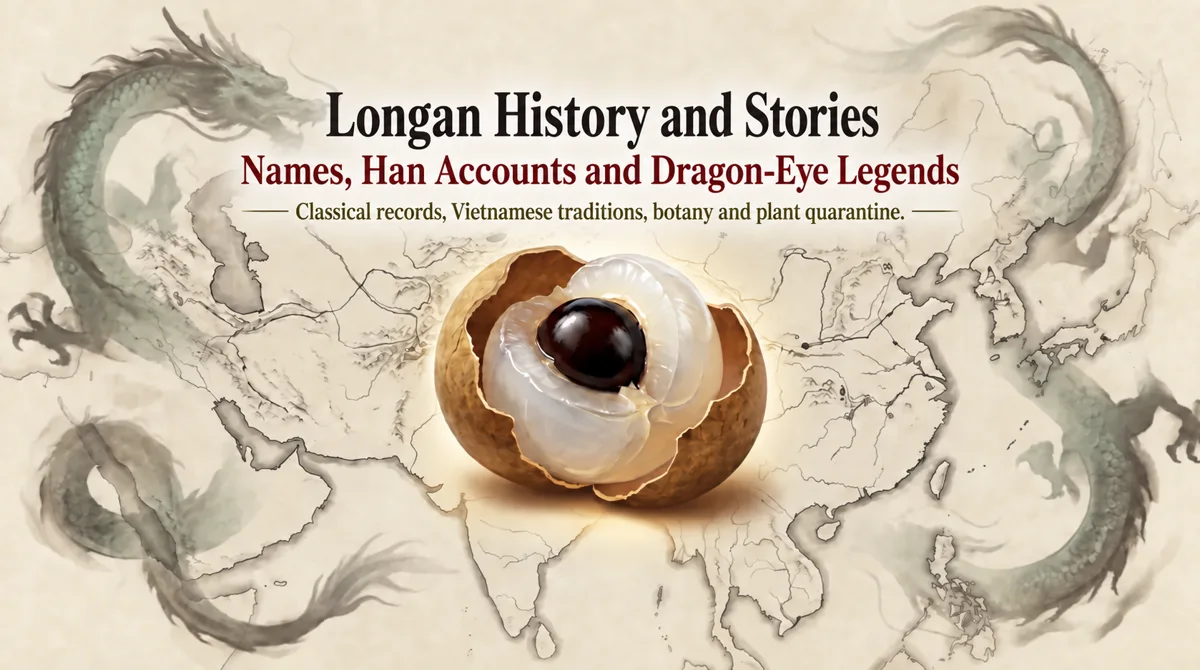
A dark seed appears inside a pale aril when the fruit is opened. Its resemblance to a dragon’s eye explains the name discussed in Longan Guide.
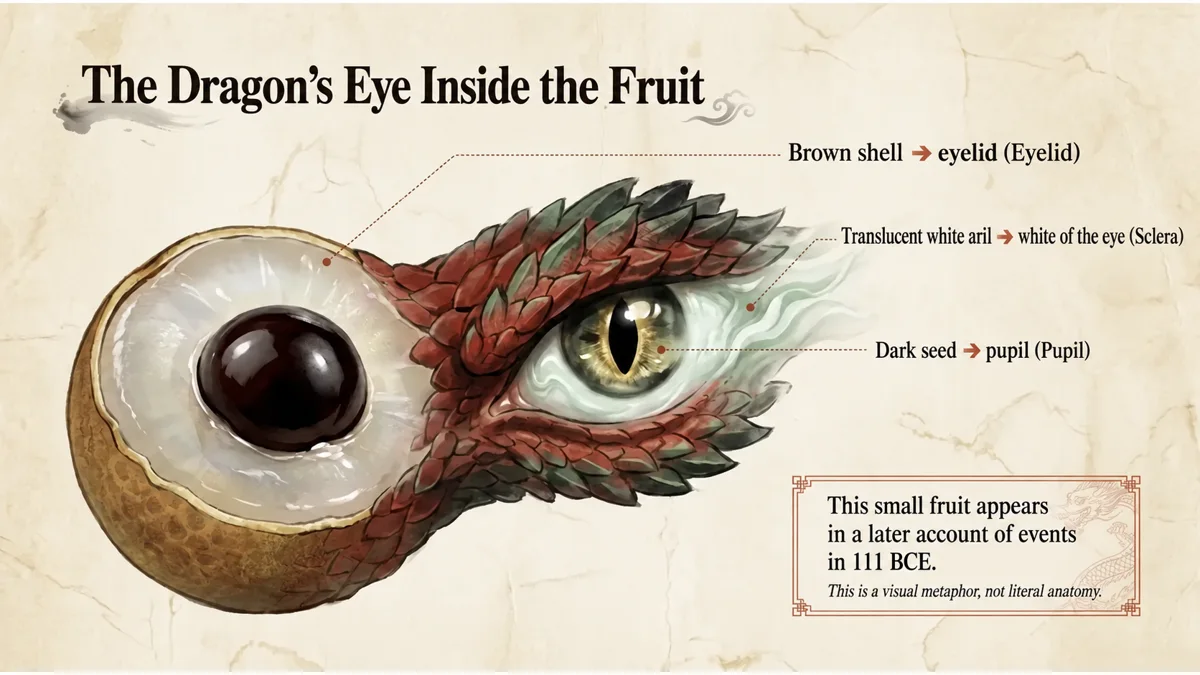
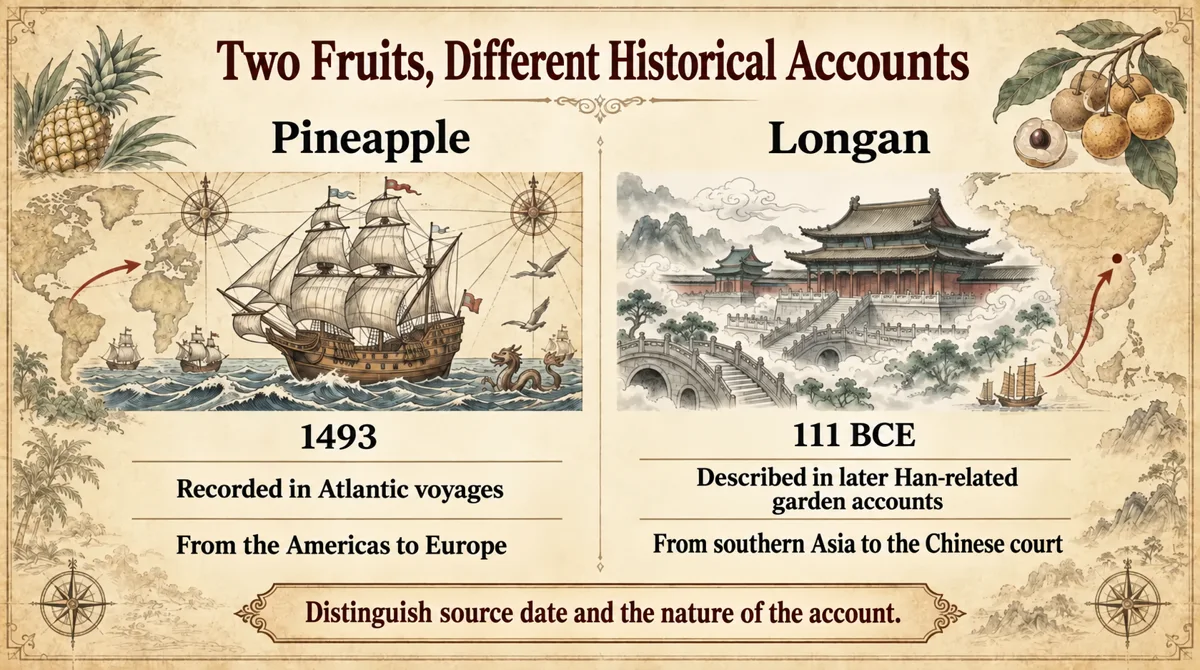
The story extends beyond a name. Sanfu Huangtu, a geographical work compiled after the events it describes, says that after Emperor Wu defeated Nanyue in 111 BCE, longan, lychee and other southern plants were moved into an imperial garden. Longan thus appears in East Asian accounts describing events long before the European encounter with pineapple in 1493.
Longan’s Native Range and Spread in Asia
Kew’s Plants of the World Online gives a native range from the Indian subcontinent to southern China and northwestern Peninsular Malaysia. Native range and spread through cultivation should be distinguished. For classification and biology, see Longan Guide.
The fruit appears in a later geographical account of events in 111 BCE.
Longan in Accounts of Han Imperial Gardens
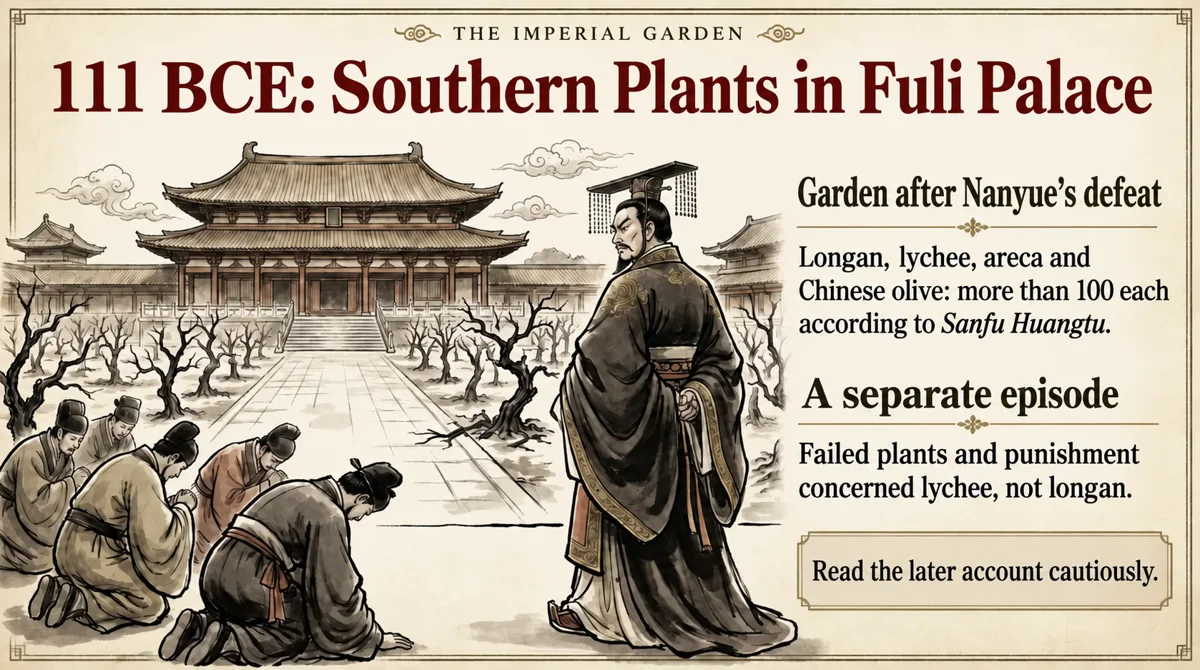
In 111 BCE, Emperor Wu of Han defeated Nanyue, a kingdom covering much of present-day Guangdong, Guangxi and northern Vietnam. Jiaozhi commandery was associated with the Red River region of northern Vietnam, around present-day Hanoi.
According to Sanfu Huangtu, Emperor Wu established Fuli Palace to grow unusual southern plants. The text lists more than a hundred each of longan, lychee, areca and Chinese olive. An imperial garden collecting southern plants is a more appropriate description than assuming it had the equipment of a modern greenhouse.
The same account says a hundred lychee plants brought from Jiaozhi failed to grow. One that later survived also died without fruiting, and officials responsible for care were punished. The fruit named in this failure-and-punishment episode is lychee, not longan.
Trying to grow warm-climate plants in a different climate recalls European efforts to cultivate pineapple in the seventeenth and eighteenth centuries. However, the date and nature of the classical account require caution about the details it reports.
Tribute Fruit and Harsh Transport in the Eastern Han
Apart from transplantation into gardens, sources also describe tribute shipments of longan and lychee from the south.
Material quoted in the commentary to the Book of the Later Han’s annals of Emperor He describes relay couriers carrying fresh fruit from the seven commanderies of Jiaozhi, traveling day and night. Dangerous roads and wild animals caused deaths. Tang Qiang, magistrate of Linwu, protested, and Emperor He is said to have ended the tribute. Sanfu Huangtu instead attributes its abolition to Emperor An, showing a difference between accounts.
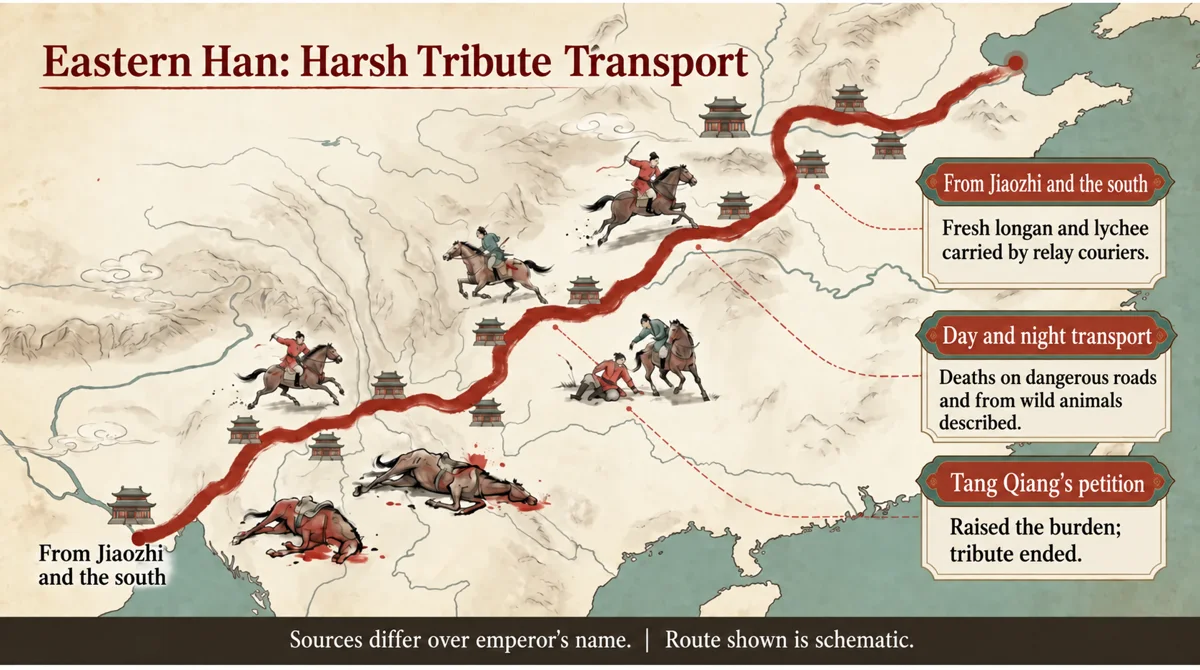
Stories of fast horses carrying fresh lychees for Yang Guifei in the Tang dynasty are better known. These earlier Han accounts describe a comparable tribute system with a human cost, centuries before that episode.
Hưng Yên’s Ancestral Longan Tree
Many centuries later, a tree in Vietnam still symbolizes the region’s relationship with longan.
At Hiến Pagoda in the old Phố Hiến area of Hưng Yên stands a tree locally called cây nhãn tổ, the ancestral longan tree. Vietnam’s intellectual property office describes about three centuries of longan cultivation in Hưng Yên and identifies this as the region’s oldest tree.
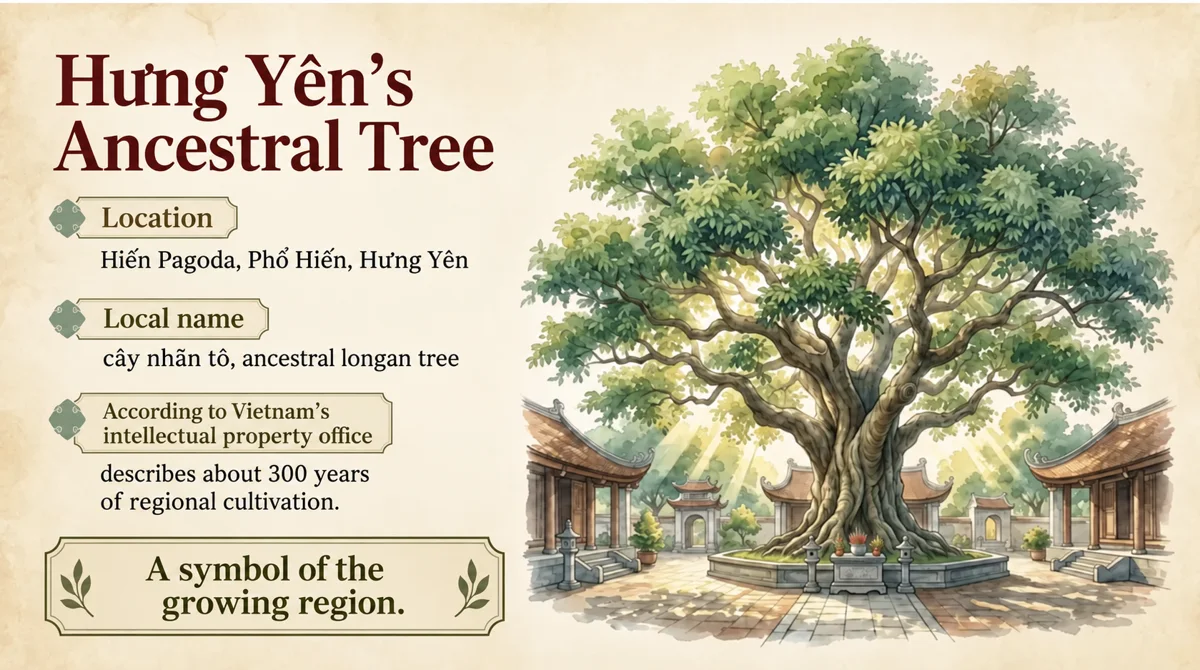
Local tradition says its sweet, fragrant fruit was selected as an offering to the Buddha and the emperor. Hưng Yên longan is therefore also called nhãn tiến vua, longan offered to the king. This is a regional origin tradition; a direct link to Han tribute shipments has not been established.
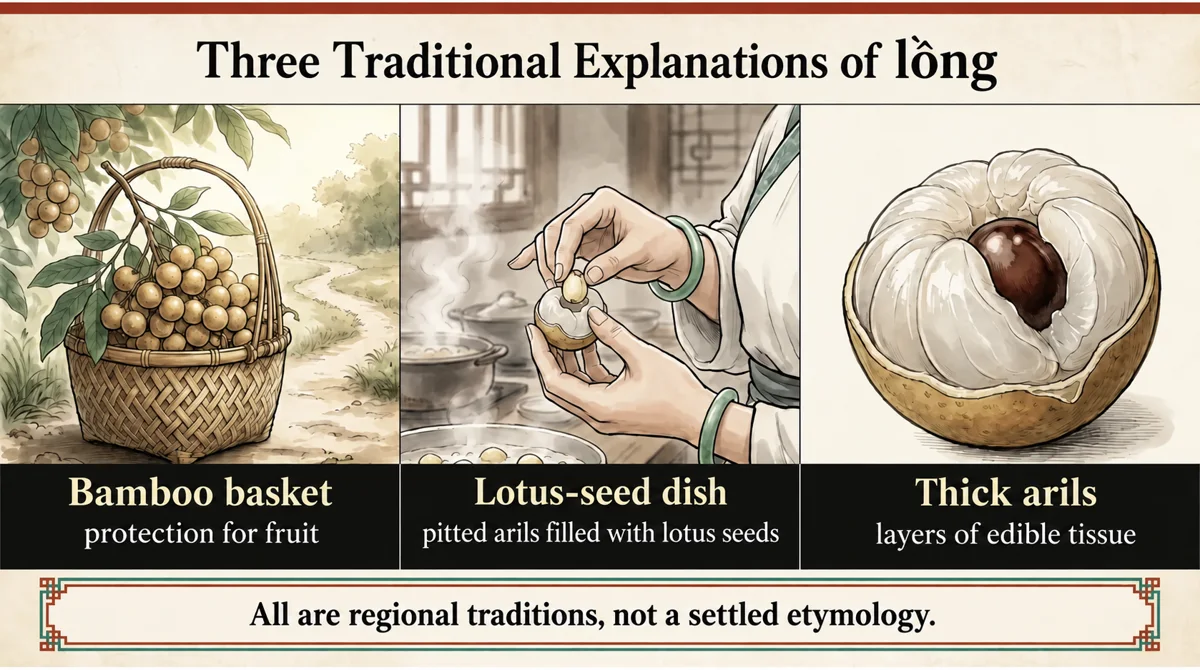
Regional accounts offer several explanations for lồng in the cultivar’s name: bamboo baskets protecting harvested fruit, a dish of pitted arils stuffed with lotus seeds, or the thick layers of edible tissue. These remain traditional explanations rather than one established etymology.
1790: Publication of Longan’s Scientific Name
The scientific name was published by João de Loureiro, a Portuguese Jesuit who lived for many years in Vietnam.
In 1790, Loureiro published Dimocarpus longan in Flora Cochinchinensis. The name is still accepted; the abbreviation “Lour.” identifies Loureiro as its author.
Loureiro arrived in 1742 in the region Europeans called Cochinchina, associated with Đàng Trong in central and southern Vietnam. He remained until 1777, about thirty-five years, serving at court and studying local plants, including medicinal uses. After returning to Europe, his book was published in Lisbon.
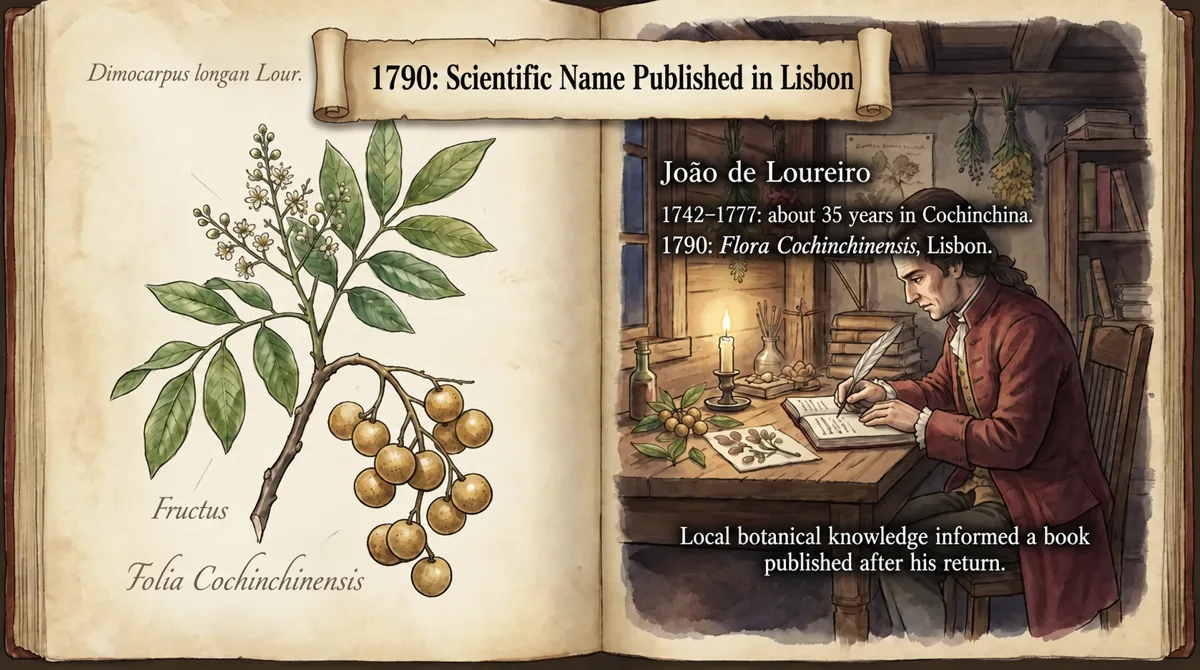
His botanical work drew on knowledge accumulated during that long stay. The place of the book’s publication was Lisbon, rather than Vietnam.
Longan Reaches New Growing Regions
The fruit described in classical accounts and remembered through Vietnam’s ancestral tree continued to spread.
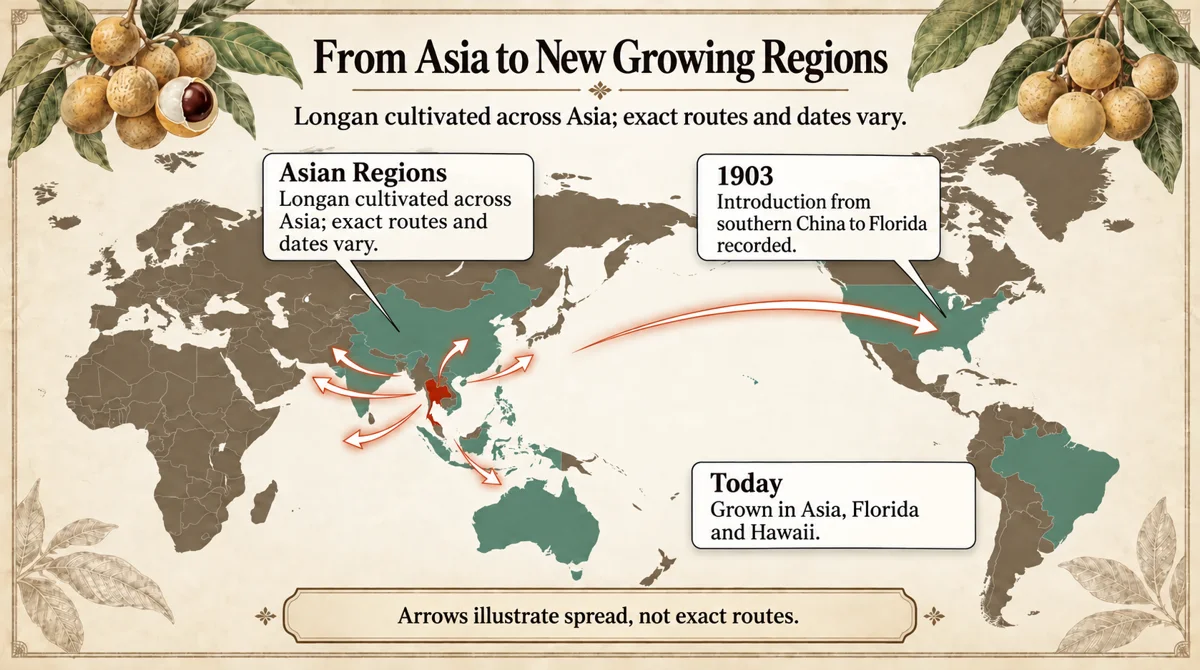
Longan cultivation expanded through Southeast Asia, including Thailand, Indonesia, Malaysia and the Philippines. Detailed dates and routes for each region remain poorly documented in the sources reviewed.
A modern account places its introduction from southern China to Florida in 1903. Longan is now grown beyond Asia, including Florida and Hawaii. Because trade changes substantially from year to year, older single-year figures are not presented here as current global totals.
A Door Opens to Japan for Vietnamese Fresh Fruit
Longan appears in accounts of Han history, but commercial access to Japan for Vietnamese fresh fruit is a much more recent chapter.
Small-scale cultivation is recorded in warm parts of Japan such as Okinawa. Sources giving a precise introduction date and route into Japan are limited.
On November 18, 2022, Japan’s Plant Protection Station announced access for Vietnamese fresh longan meeting specified standards and detailed quarantine procedures. Domestic sales appeared in 2023. This is a compliant commercial shipment route, not permission for travelers to bring market-bought fresh fruit in baggage.

Imperial gardens and tribute roads, Hưng Yên’s ancestral tree, Loureiro’s scientific name and access to Japan connect different chapters in the fruit’s history.
Folklore Behind the Names Longyan and Guiyuan
The following section concerns Chinese folklore rather than historical records.
In one tale, an evil dragon devastated a village, destroying fields and houses. A young man named Guiyuan faced it alone. He struck one eye with a steel blade, then removed the other despite the dragon’s counterattack. The dragon died, but Guiyuan was fatally wounded.
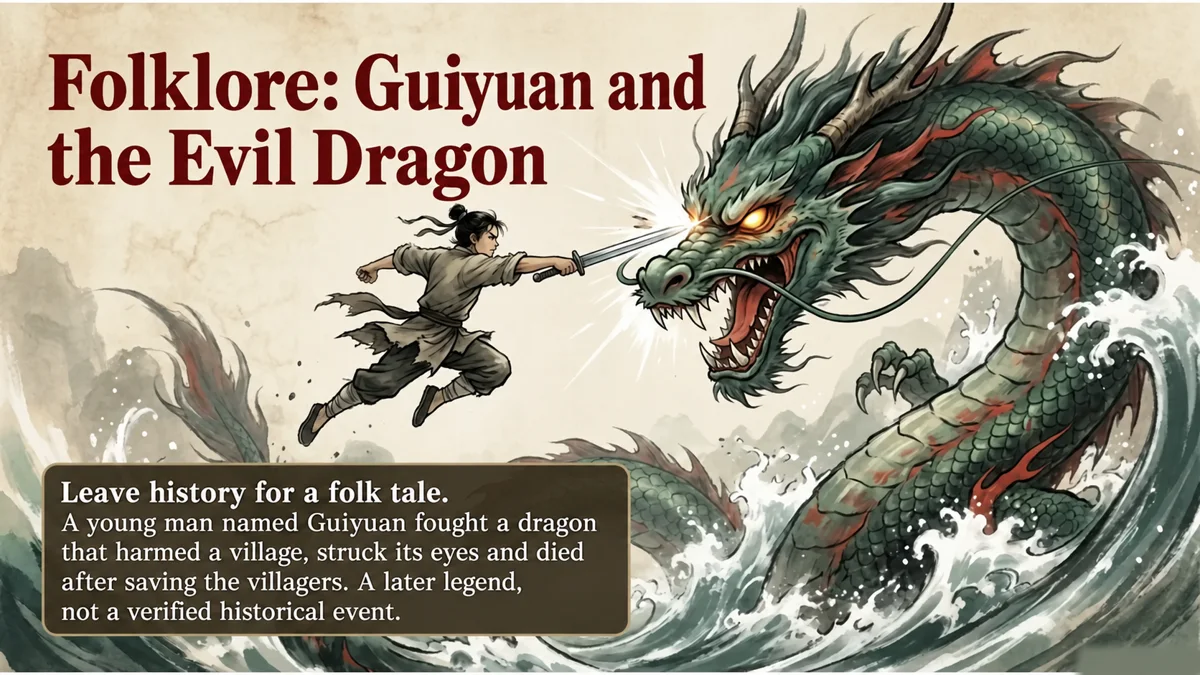
Villagers buried the dragon’s eyes together with Guiyuan. The following year, two large trees grew there and bore fruit with round, shining seeds. Because the seeds resembled the dragon’s eyes, the fruit was called longyan; the name guiyuan, especially associated with dried fruit, honored the young man. This is the outline of one version of the legend.
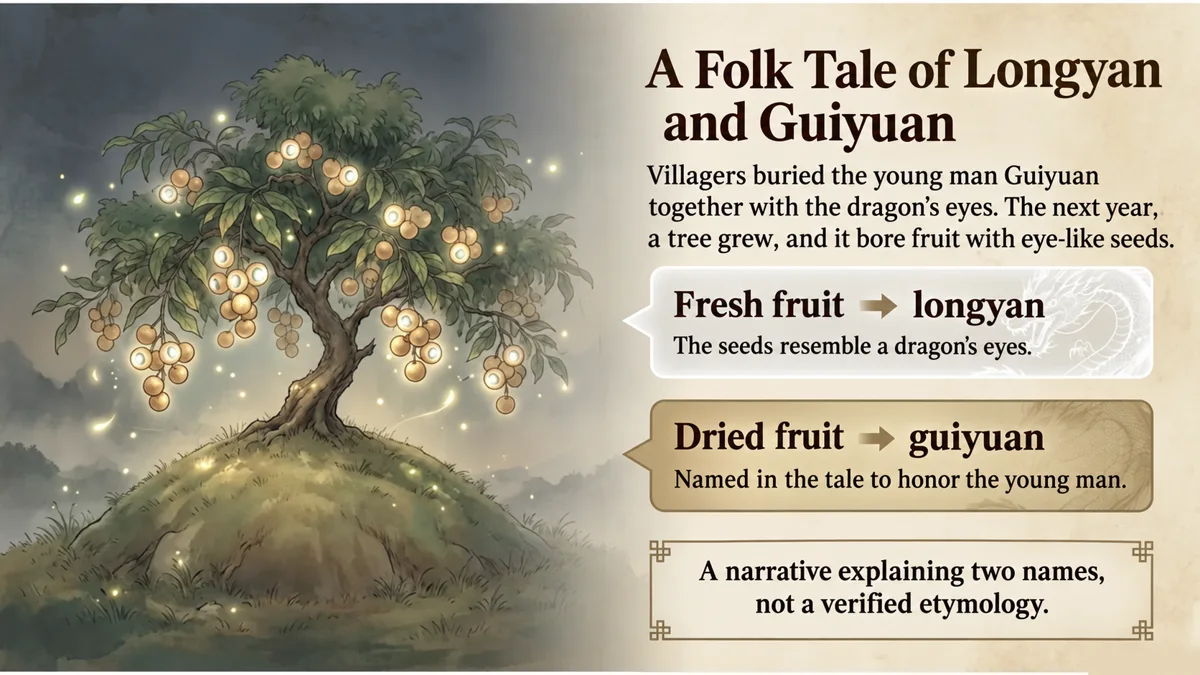
Another version has Guiyuan fight a water dragon for three days and nights. After defeating it and taking its eyes, he was pursued by an official who wanted them. He swallowed one eye while the other broke apart. A tree later grew at his burial place and bore pale-ariled fruit with black seeds resembling a dragon’s eyes.
These are later folk traditions without historical corroboration. Their interest lies in connecting two names for the fruit in a single narrative.
From Classical Accounts to Plant Quarantine
Longan’s story draws on classical accounts about the Han dynasty. Written accounts, regional traditions and modern official records offer different kinds of evidence.
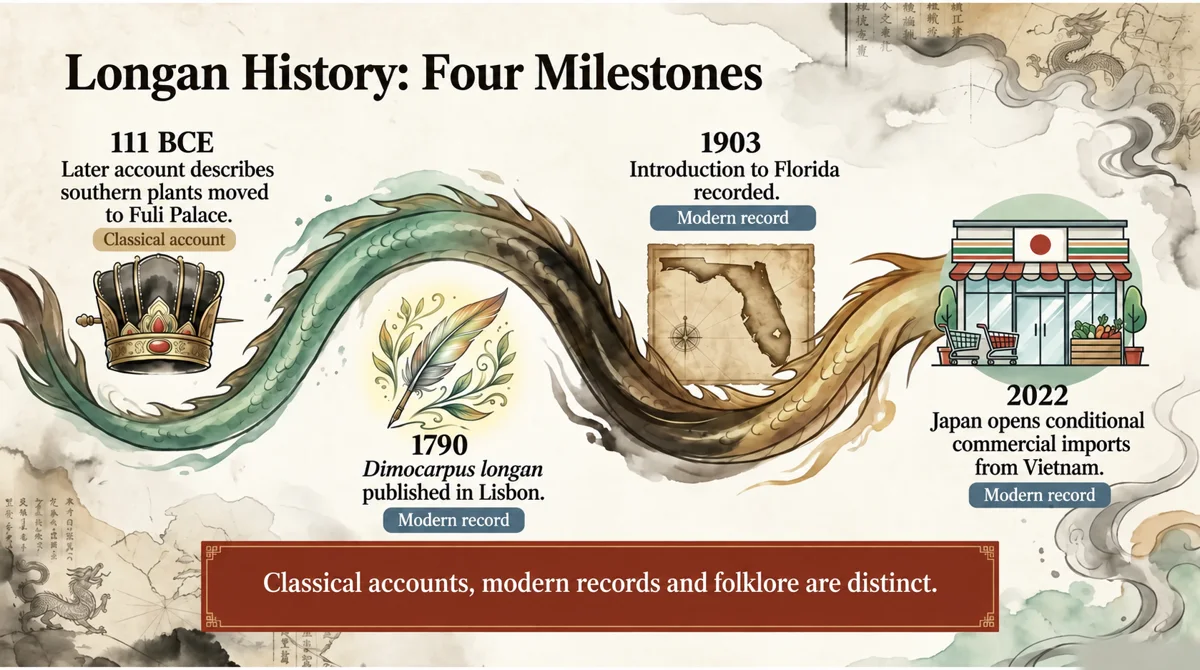
A later geographical work describes southern plants moved after Nanyue’s defeat in 111 BCE; Eastern Han material describes the end of harsh tribute transport. An ancestral tree symbolizes about three centuries of cultivation in Hưng Yên. In the eighteenth century, a scholar long resident in Vietnam published the scientific name. In 2022, compliant Vietnamese fresh fruit gained commercial access to Japan.
When you open a small brown longan, the pale aril and dark seed connect with a long story of classical writing, regional tradition, botanical study and plant quarantine.
Frequently Asked Questions About Longan History
Why is longan called “dragon’s eye”?
Its dark seed surrounded by a translucent pale aril resembles an eye. Longyan means “dragon’s eye”; Japanese uses ryūgan and Vietnamese uses Nhãn.
Does longan appear in Han-era accounts?
A later geographical work describes longan among southern plants brought to an imperial garden after Nanyue’s defeat in 111 BCE. Read it with its later date of compilation in mind.
Are guiyuan and longyan different fruits?
Both generally refer to longan. Guiyuan is often used for dried products. Multiple folk explanations of the names exist; no single legend should be treated as verified history.
Related Articles
- Biology, names, varieties and Japan quarantine requirements: Longan Guide
- Choosing, peeling and serving: How to Eat Longan in Vietnam
- Fruit to try in Vietnam: Everyday Fruits in Vietnam
References
- Chinese Text Project: Sanfu Huangtu, volume 3
- IP Vietnam: Geographical indication protection of Hưng Yên longan
- Kew: Dimocarpus longan Lour.
- Hưng Yên television: Nhãn lồng and the royal-offering tradition
- Regional account: The name Nhãn lồng and the ancestral tree
- João de Loureiro: biographical background
- University of Florida IFAS: U.S. introduction and trade
- Japan Plant Protection Station: Conditional imports of Vietnamese fresh longan
- Chutian Metropolis Daily: Longan names and folklore
- A retelling of the dragon-eye legend
