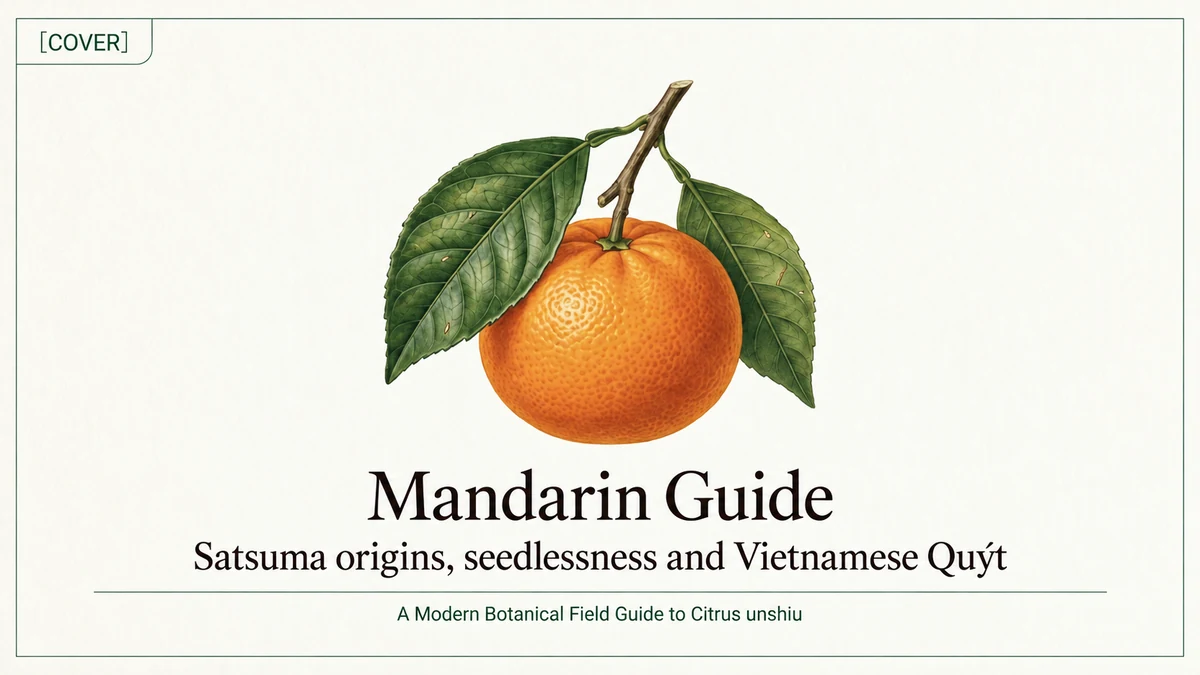
Vietnamese mandarins are called Quýt. Northern growing areas generally harvest them around October–February. These mandarins are not necessarily Japanese satsumas: skin thickness, sweetness and acidity vary by cultivar.
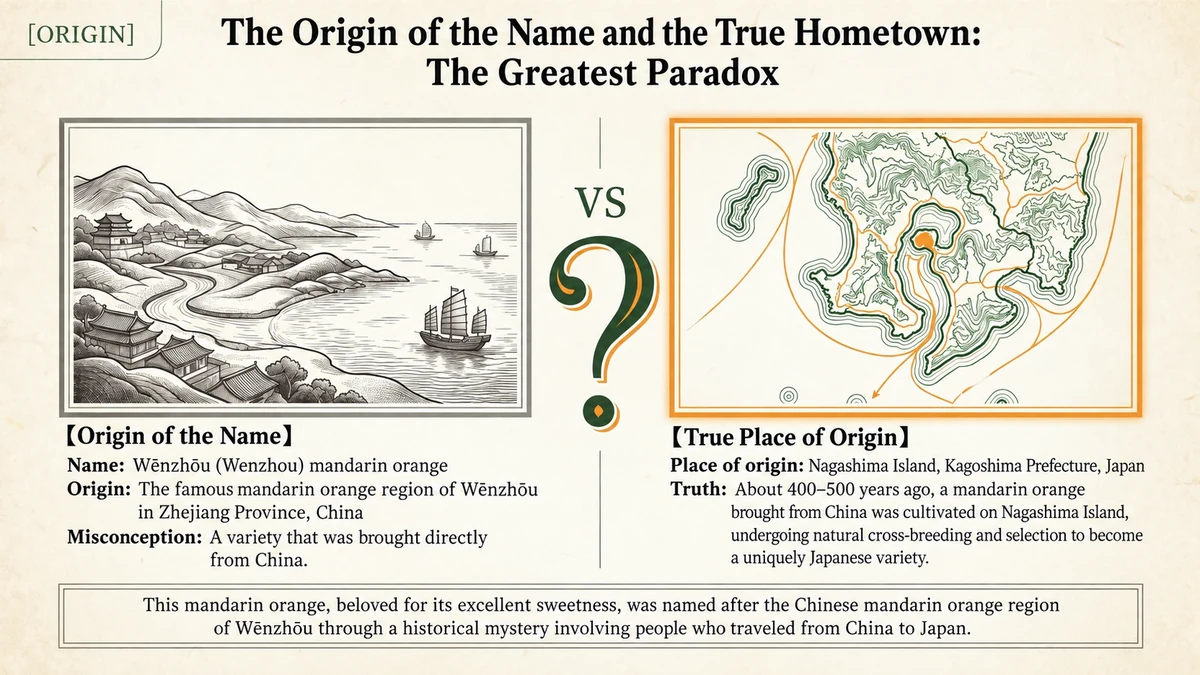
The Japanese name unshū mikan contains the name of Wenzhou, a Chinese city. Yet the satsuma is generally believed to have originated in Japan. Its name and its birthplace tell different stories.
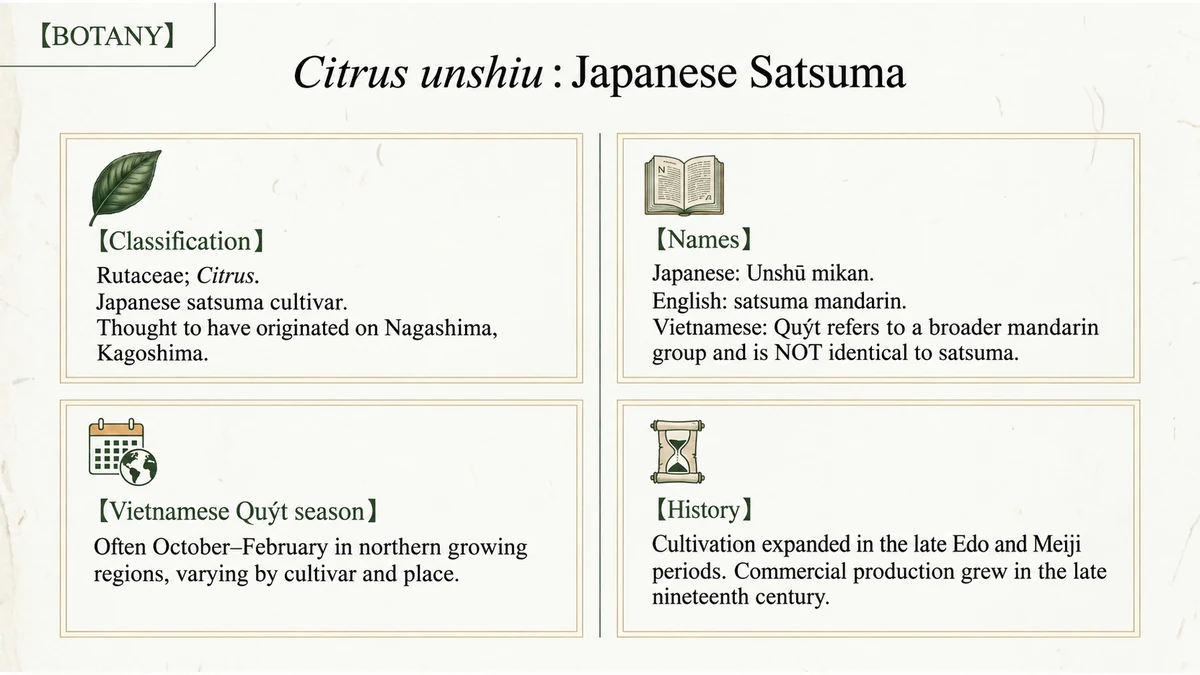
Satsuma mandarin, Citrus unshiu, is an evergreen citrus in the rue family. It is thought to have arisen in Nagashima, Kagoshima, from citrus ancestry connected with China, roughly four or five centuries ago. This guide separates the Japanese satsuma’s biology from the broader Vietnamese mandarin group and introduces their names, nutrients and growing regions.
Mandarin and Satsuma: Basic Facts
| Item | Details |
|---|---|
| Japanese fruit | Satsuma mandarin / Satsuma orange / Unshū mikan |
| Vietnamese name | Quýt: the broader mandarin group, not a synonym for satsuma |
| Scientific name | Citrus unshiu for satsuma; related to mandarin Citrus reticulata |
| Classification | Evergreen citrus shrub or small tree, family Rutaceae |
| Satsuma origin | Believed to be Nagashima, Kagoshima, Japan; its citrus ancestry includes varieties introduced from China |
| Vietnamese season | Roughly October–February in northern areas; varies by cultivar and region |
| Vietnamese growing regions | Bắc Sơn in Lạng Sơn, Bắc Kạn and Hương Cần near Huế; historical place names follow the cited sources |
| Nutrients | Vitamin C, beta-cryptoxanthin, potassium and dietary fiber |
References are listed at the end of this article. The nutrient figures below describe Japanese satsuma, not every Vietnamese Quýt cultivar.
Satsuma Origins and Why It Usually Has Few Seeds
The satsuma offers an unusual piece of citrus history: a Japanese fruit bearing a Chinese place name. Its ancestry and seedlessness make a familiar winter snack more interesting than it first appears.
A Chinese Place Name, a Japanese Birthplace
Unshū is the Japanese reading of Wenzhou, a city in Zhejiang, China. The satsuma is nevertheless generally thought to have originated in Nagashima in present-day Kagoshima. One explanation is that its name honored Wenzhou’s reputation for citrus. The name is not evidence that this particular cultivar was imported directly from Wenzhou.
Genetic Research Reveals a Close Family Relationship
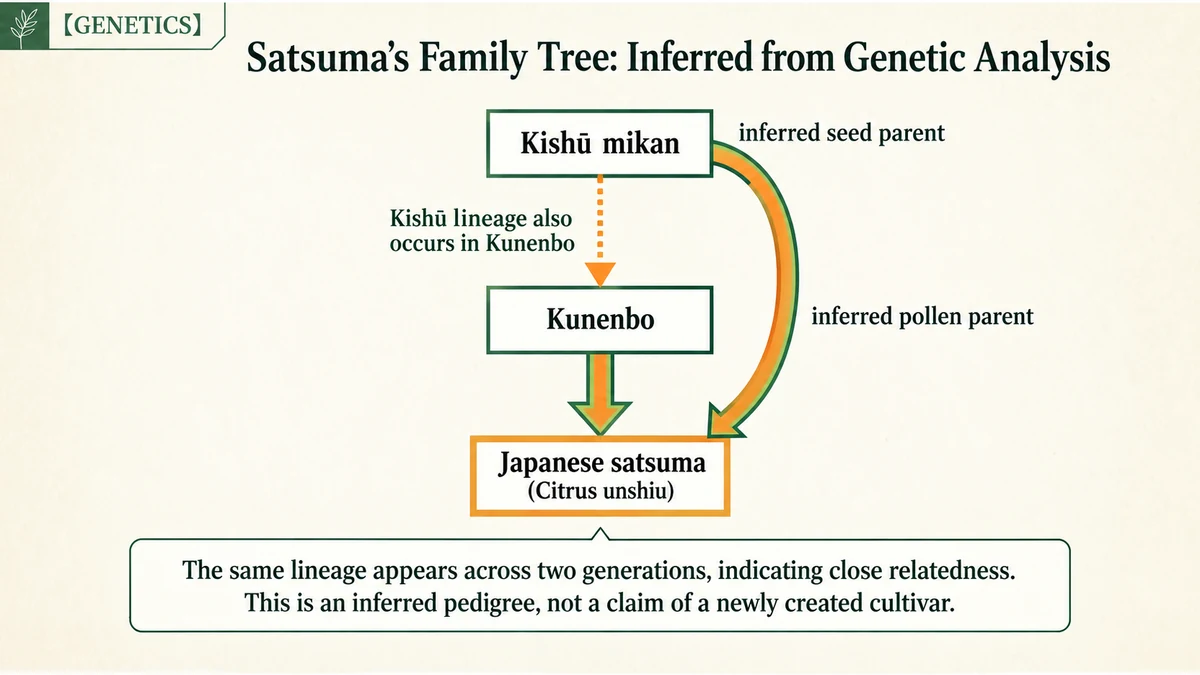
Genetic studies identify Kishū mandarin as the seed parent and Kunenbo as the pollen parent of satsuma. Kunenbo itself has Kishū ancestry. This means the family tree contains closely related lines across two generations, rather than two wholly unrelated parents.
Reduced Pollen and Fruit Growth Without Fertilization
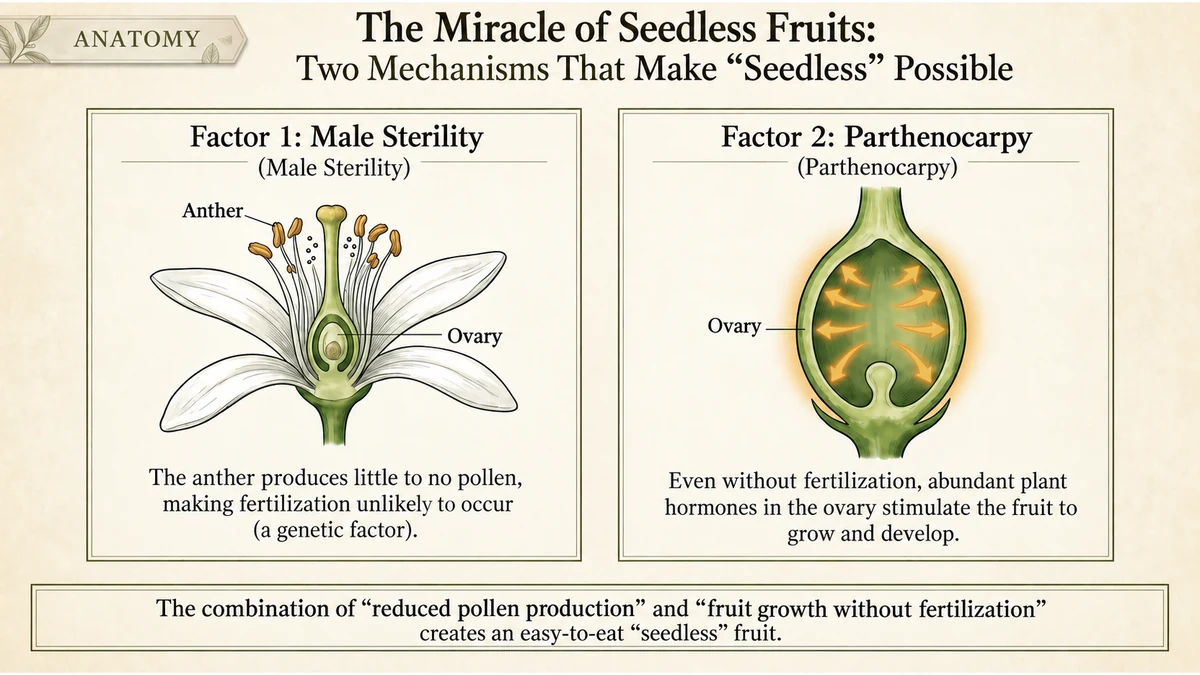
Satsuma’s usual lack of seeds involves two traits. Male sterility limits pollen production, while parthenocarpy allows fruit to develop without fertilization. NARO research links inherited male sterility with reduced pollen numbers and nuclear genetic factors. These traits help explain low seed counts; they do not mean every fruit in every growing situation is guaranteed to contain no seeds.
How Satsuma Became Japan’s Familiar Mikan
Cultivation expanded in the late Edo and Meiji periods, eventually making satsuma the fruit most Japanese people mean by mikan. The late nineteenth century was an important period of expansion, rather than the fruit’s first appearance in Japan.
Satsuma Nutrition
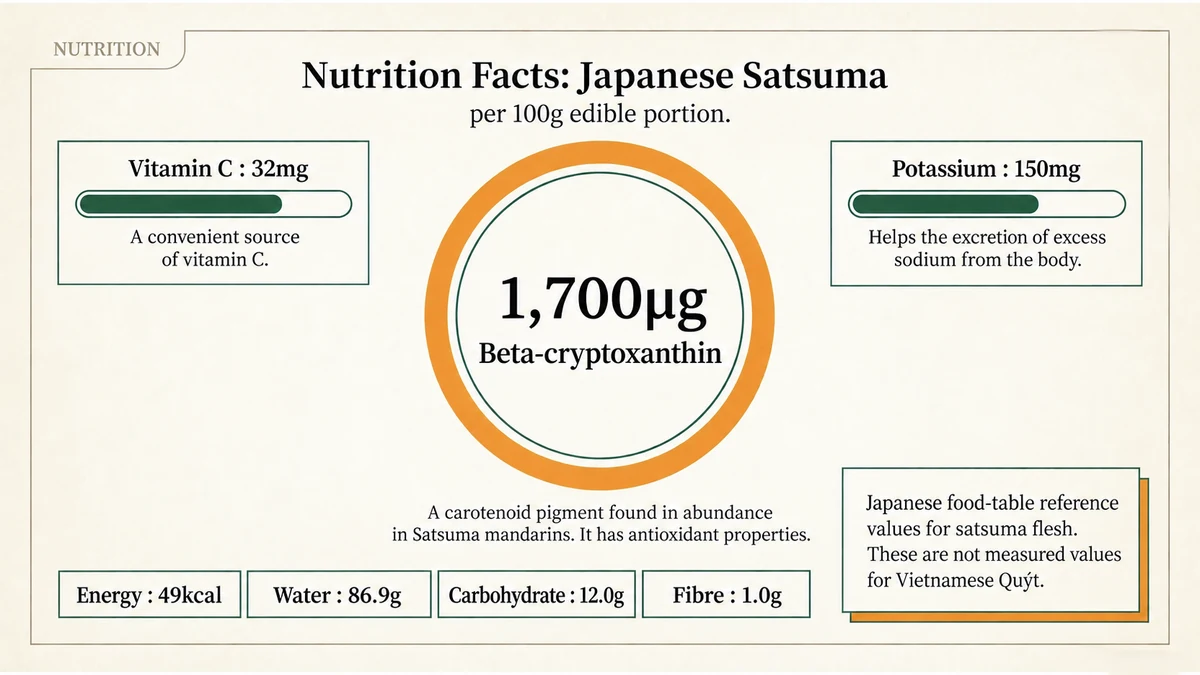
The following reference values apply to 100 g of ordinary raw satsuma segments, including their segment membranes, in Japan’s food composition tables.
- Energy: 49 kcal
- Water: 86.9 g
- Carbohydrate: 12.0 g
- Dietary fiber: 1.0 g
- Potassium: 150 mg
- Vitamin C: 32 mg
- Beta-cryptoxanthin: 1,700 µg
Satsuma contains beta-cryptoxanthin, a carotenoid pigment, together with vitamin C and potassium. Nutrient amounts vary with the fruit and the food-table category; these values should not be treated as measurements of the Vietnamese fruit in the author’s photographs.
A fruit’s nutrient composition does not establish that eating it treats a symptom or prevents a disease. Its practical appeal is simpler: peel it by hand and enjoy it as part of a varied diet.
Mandarin Varieties and Growing Regions
World Production: Compare Like-for-Like Statistics
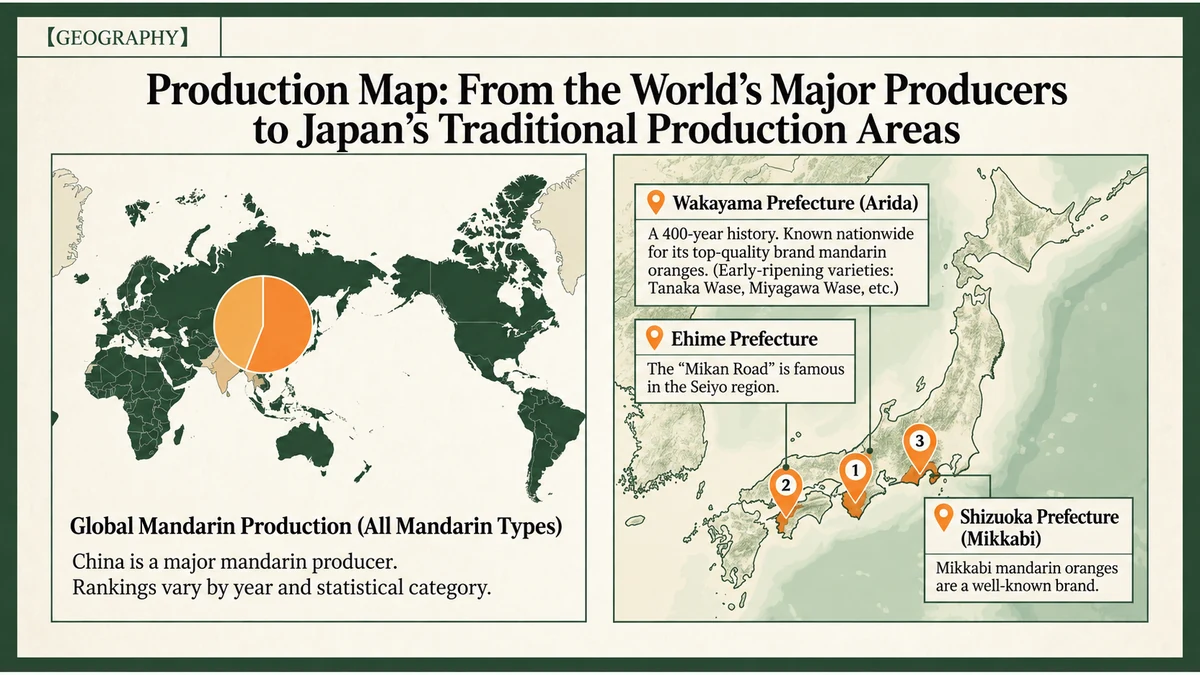
China is an important mandarin producer. International statistics commonly group tangerines, mandarins and clementines together, so that category does not represent Japanese satsumas alone. Rankings and tonnage should be compared using the same reporting year and category; undated figures are omitted here.
Japanese Growing Regions and Brands
Wakayama, Ehime and Shizuoka are well-known Japanese citrus regions. Arida mikan in Wakayama has a long cultivation tradition, while Nishi-Uwa in Ehime and Mikkabi in Shizuoka are familiar regional names. Satsumas are grouped by harvest timing, from very early to late types. Familiar early cultivars include Miyagawa Wase, Okitsu Wase and Taguchi Wase.
Vietnamese Quýt and Familiar Regional Varieties
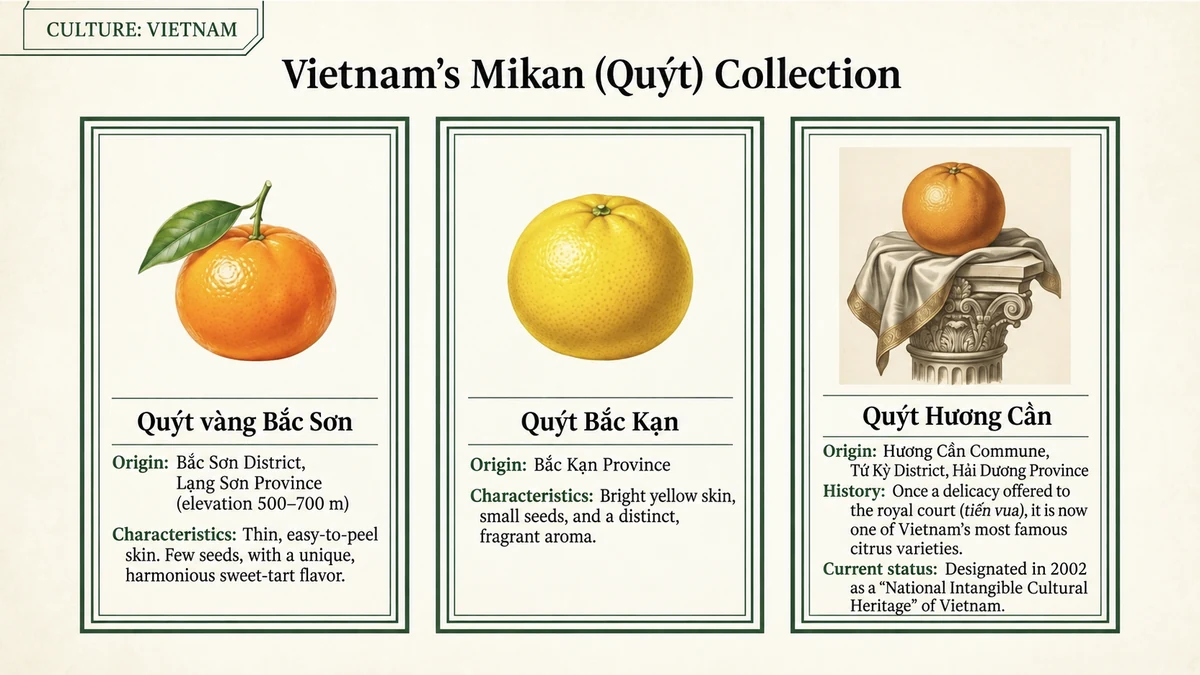
Quýt is the Vietnamese word for mandarins. Quýt vàng Bắc Sơn is associated with mountainous Bắc Sơn in Lạng Sơn and is known for its glossy rind and sweet-tart flavor. Quýt Bắc Kạn is another northern regional fruit, described in the cited sources as yellow-skinned and aromatic. Cultivar and growing conditions affect flavor and seeds.
Quýt Hương Cần, from the Huế area, carries a different story: it is remembered as a fruit offered to the imperial court and celebrated in local literary traditions. Reports describe a serious decline in cultivation around 2002, followed by conservation efforts and recognition as a genetic resource in need of preservation in 2005. These historical regional names follow the source documents.
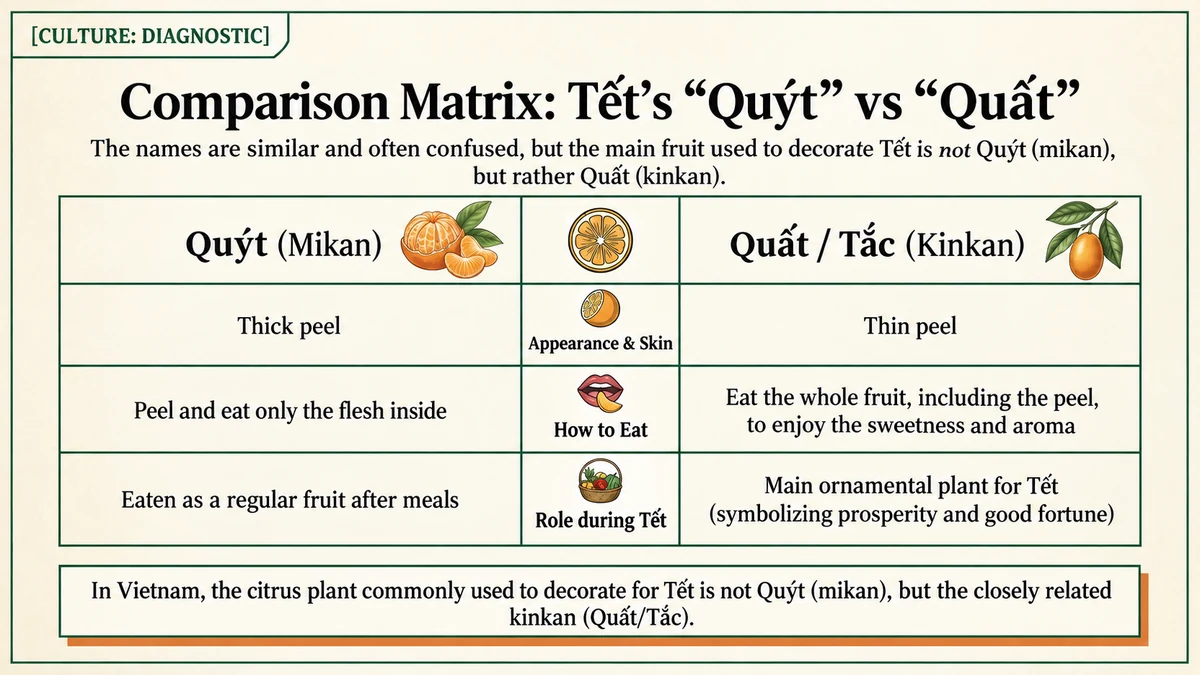
Do not confuse quýt with quất, also called tắc in southern Vietnam. Quất commonly refers to kumquat-type citrus used in potted displays at Tết. Names and local usage can vary, but it is not the ordinary word for a large peeling mandarin. Decorative fruit should not automatically be assumed suitable for eating.
Vietnamese Markets and Taking Fruit to Japan
A Familiar Market Fruit
Quýt is a familiar fruit at Vietnamese markets and on the table after meals. Northern mountain regions have distinctive local varieties, and citrus demand often increases around Tết.
Fresh Citrus in Travelers’ Baggage
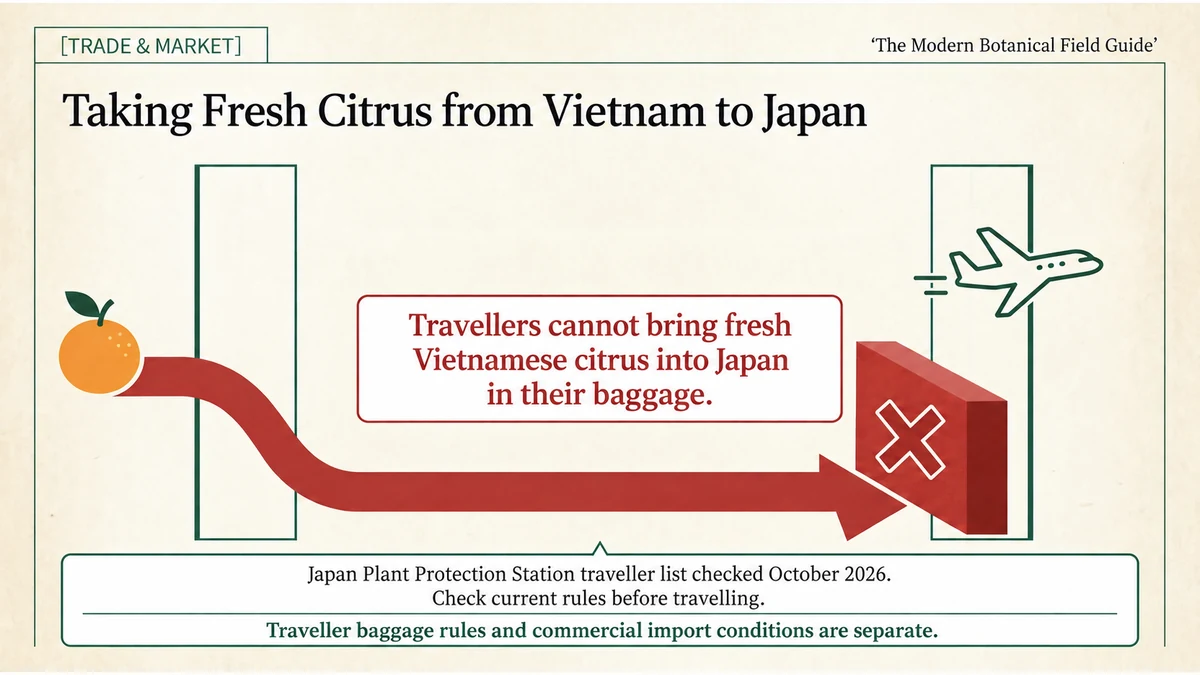
Japan’s official traveler guidance lists citrus from Vietnam among fruits that cannot be brought into Japan in baggage. This article addresses travelers carrying fresh fruit; it does not use that baggage list to establish every commercial import condition.
Check the Plant Protection Station’s current guidance before travel. Buying fruit at a market or airport shop does not remove the restriction on fresh citrus. Enjoy the fruit during your stay in Vietnam.
Mandarin Guide: Key Points
These distinctions help make sense of the names and varieties.
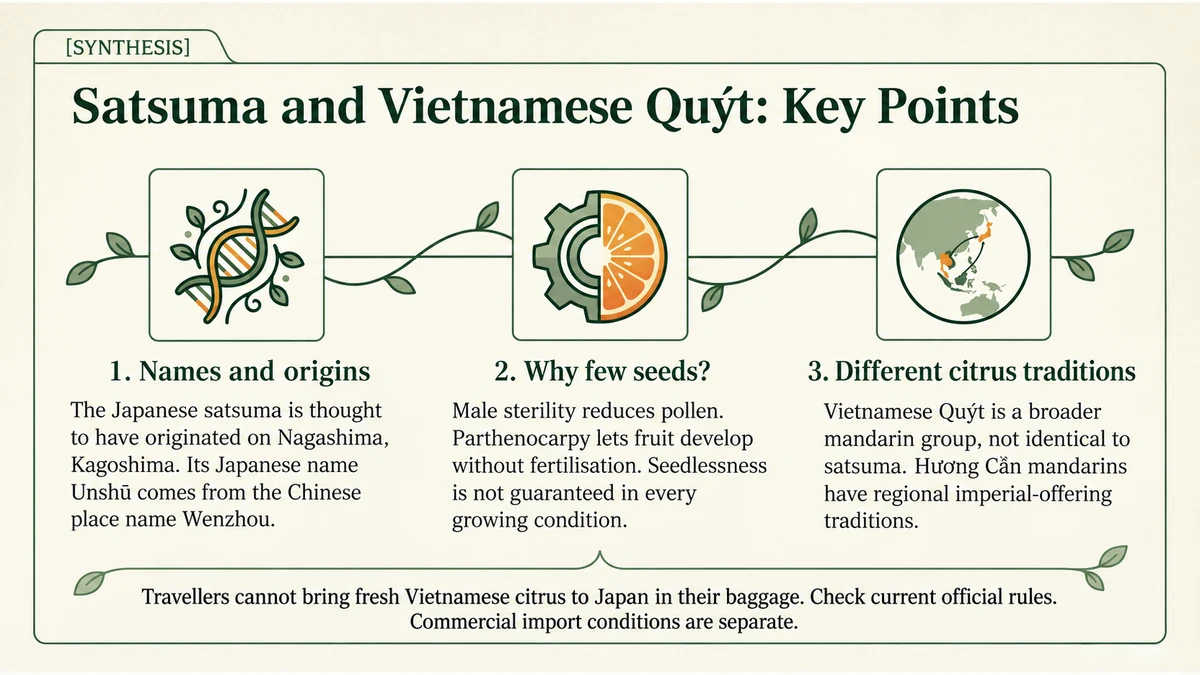
- Japanese satsuma, Citrus unshiu, is generally thought to have originated in Nagashima, Kagoshima, despite bearing Wenzhou’s name.
- Kishū and Kunenbo appear in its family tree. Reduced pollen production and parthenocarpy contribute to its usual low seed count.
- Japanese food-table values include vitamin C, potassium and beta-cryptoxanthin; those values are not measurements of every Vietnamese mandarin.
- Japanese regional brands and Vietnamese Quýt varieties belong to a diverse citrus world. Quất used for Tết displays should not be confused with peeling mandarins.
- Fresh citrus from Vietnam cannot be brought into Japan in travelers’ baggage under the official guidance checked for this revision.
Frequently Asked Questions
Where did satsuma mandarin originate?
It is generally thought to have arisen in Nagashima, Kagoshima, Japan, from citrus ancestry including varieties introduced from China.
What is mandarin called in Vietnamese?
Quýt. This is a broader mandarin name, rather than a precise Vietnamese synonym for Japanese satsuma. Quất or tắc often refers to kumquat-type citrus.
When are Vietnamese mandarins in season?
Roughly October–February in important northern growing areas, with differences between varieties and regions.
Can I carry Vietnamese mandarins into Japan?
No. Japan’s official traveler list prohibits fresh citrus from Vietnam in baggage. This was checked for the October 2026 revision; consult current official guidance before traveling.
For cultural background, read Mandarin History and Stories. For buying, peeling and firsthand tasting notes, see How to Eat Mandarins in Vietnam. You can also browse Vietnam Fruit Guide, Everyday Fruit in Vietnam and Orange Guide.
References
- Satsuma classification, ancestry and cultivation history: Wikipedia overview (Japanese). Source 1
- Naming background: nippon.com’s article on unshū mikan and satsuma (Japanese). Source 1
- Seedlessness: NARO research on inherited male sterility and pollen number; Ito Noen’s explanation (Japanese). Source 1, Source 2
- Nutrition: Japan’s Ministry of Education food composition database, ordinary raw satsuma segments (Japanese). Source 1
- International production category: GLOBAL NOTE’s compilation of FAO mandarin statistics (Japanese); undated rankings are not used here. Source 1
- Japanese regional varieties and brands: Arida and other producer-region resources cited in the Japanese edition.
- Vietnamese regional mandarins: Ministry of Industry and Trade on Bắc Kạn; Industry and Trade Magazine on Bắc Sơn (Vietnamese). Source 1, Source 2
- Hương Cần history and conservation: VietnamPlus and the Vietnamese agriculture ministry (Vietnamese). Source 1, Source 2
- Vietnamese citrus terminology: Hoang Khoi Food’s comparison of quất/tắc and quýt (Vietnamese). Source 1
- Travel rules: Japan’s Plant Protection Station, Vietnam traveler list; MAFF import-request information. Traveler and commercial rules must be distinguished (Japanese). Source 1, Source 2
