
In Vietnam, citrus sold as cam is available in supermarkets, open-air markets and juice stalls. In August 2026, I bought supermarket oranges for 50,000 VND per kilogram. To eat the segments, score and peel the skin; for juice, cut across the middle and squeeze. This guide combines practical preparation with my own buying and tasting notes.
Our Orange Guide explains the orange’s evergreen habit and complex mandarin and pummelo ancestry. Our Orange History and Stories explores Atlantic voyages, Portuguese trade and a Vietnamese proverb. Buying oranges in Vietnam raises more immediate questions: can a green-skinned fruit be ripe, and should you cut it differently for segments and juice?
For eating segments, remove the peel. For juice, cut the fruit in half across its equator and squeeze. Match the preparation to the way you want to enjoy it.
This article follows a practical sequence: find oranges, check the price, choose, cut, eat and store.
A Botanical Field Guide for Travelers: a practical guide to the juice inside Vietnamese citrus.
Vietnamese Orange: Price and Preparation at a Glance
| Item | Details |
|---|---|
| Vietnamese name | Cam |
| Approximate pronunciation | Kahm |
| Taste | A balance of acidity and sweetness, varying by cultivar |
| Texture | Firm, juicy segments |
| Availability | Often found year-round, with different seasons for each variety |
| One price example | 50,000 VND/kg, bought by the author in August 2026 |
| Where to buy | Supermarkets, open-air markets, street fruit vendors and juice stalls |
| Basic preparation | Peel and separate into segments, or cut across the middle and squeeze |
| Popular local drinks | Nước cam / Cam vắt (fresh juice); Cam vắt mật ong (with honey) |
| Beginner friendliness | ★★★★☆ |
Prices vary by location, season, variety and grade. Check the displayed price when buying.
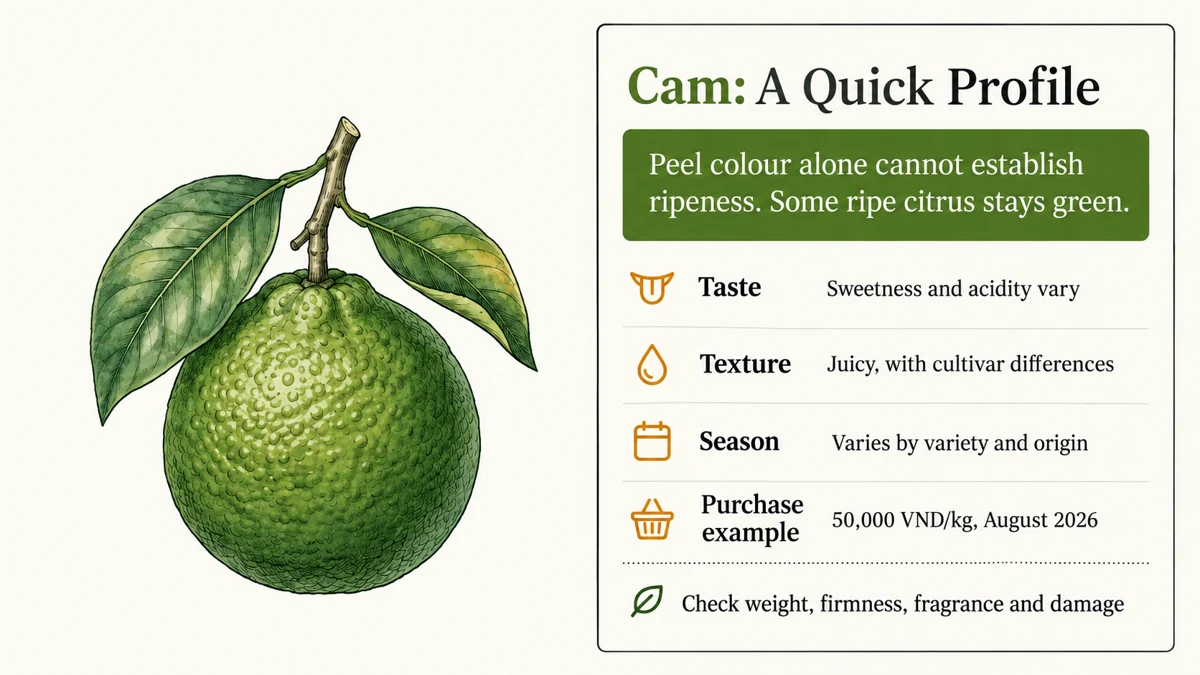
The Vietnamese Name: Cam
In Vietnamese, oranges and related citrus are called cam. The classification of cam sành varies between sources, and it is not necessarily the same as sweet orange (Citrus × sinensis). It is nevertheless a familiar fruit sold as cam. Learning this everyday name helps when shopping.
Taste and Peel Colour
Oranges sold in Vietnam typically balance sweetness and acidity, with juicy segments. The strength of each varies with cultivar and growing region.
Peel colour alone is an unreliable guide to ripeness. Citrus grown in warm conditions may retain green skin when ripe. Some northern cam sành turns yellow-green or yellow. Do not equate green with unripe or yellow with perfectly ripe: also check weight, firmness, fragrance and signs of damage.
Price and Where to Buy
I bought supermarket oranges for 50,000 VND/kg in August 2026. This is a recorded purchase example, rather than a fixed market price; prices vary with region, season, variety and grade.
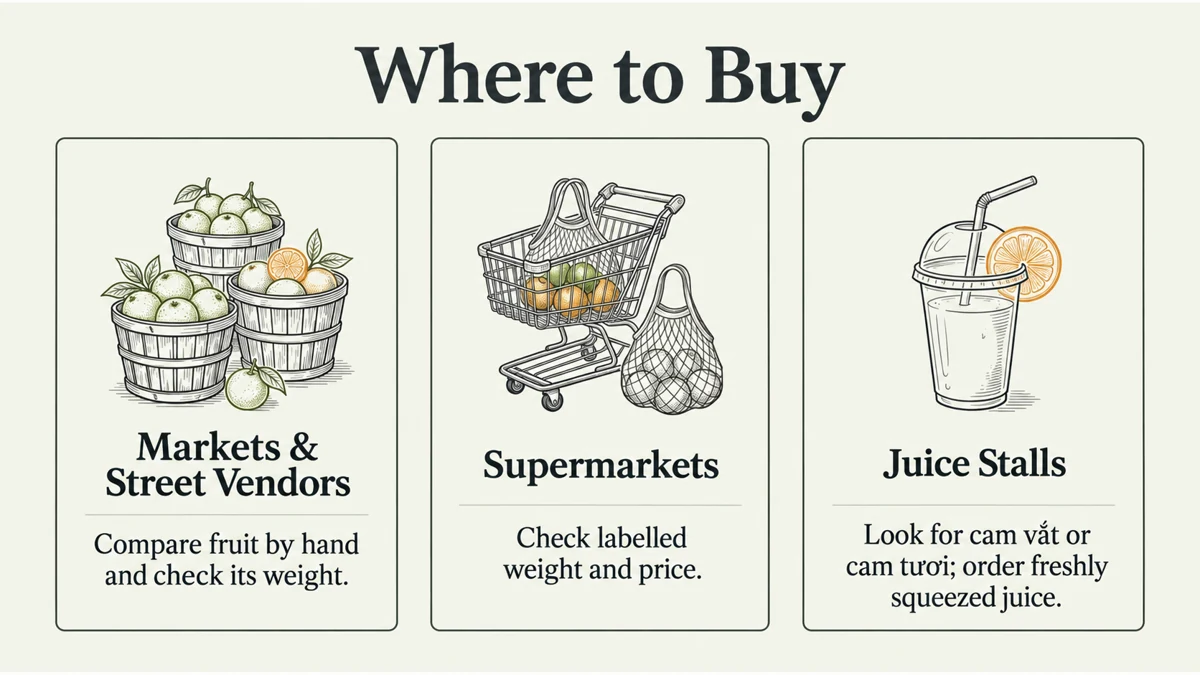
Open-Air Markets and Street Vendors
Fruit is often piled in baskets, allowing you to compare weight by hand.
Supermarkets
Weight and price labels are usually easy to check. Packaged fruit can be convenient if you are less comfortable negotiating at a market.
Juice Stalls
Dedicated juice stalls and drinks vendors often display piles of oranges and signs reading cam vắt or cam tươi. They are convenient when you want a drink immediately.
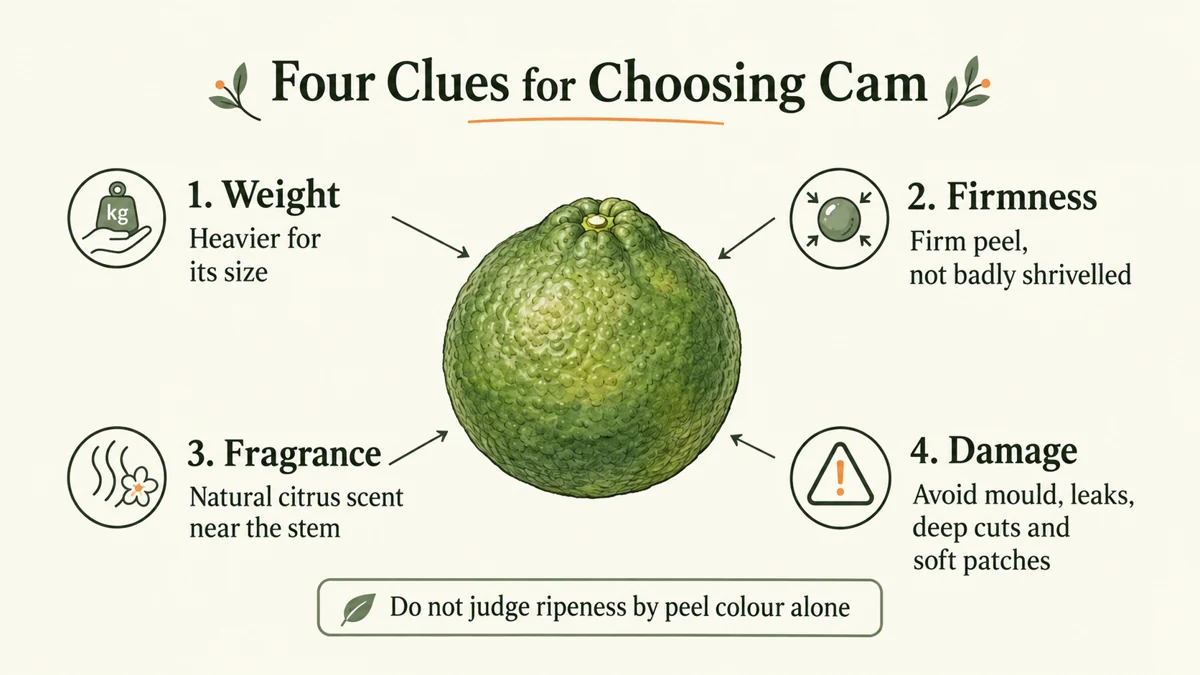
How to Choose an Orange
Use several clues together rather than judging by peel colour alone.
- Weight: among similarly sized fruit, a heavier orange often contains more juice. An unusually light fruit may be dry inside.
- Peel: look for firmness without widespread softness. Cam sành naturally has rough peel, so bumps alone do not indicate poor quality.
- Fragrance: check for a natural citrus scent around the stem.
- Damage: avoid mould, leaking juice, deep cuts and spreading soft patches. Green or yellow background colour alone does not establish ripeness.
These are practical rules of thumb, not guarantees. Combine several observations.
Two Ways to Cut an Orange
Preparation changes depending on whether you want segments or juice.
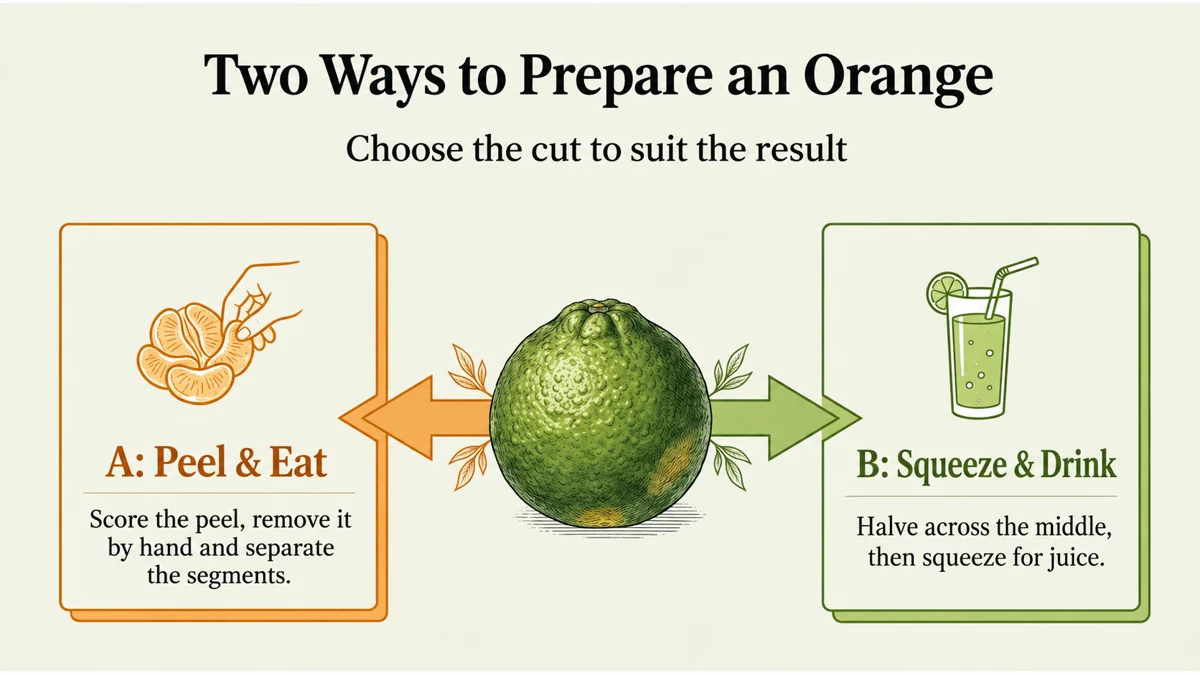
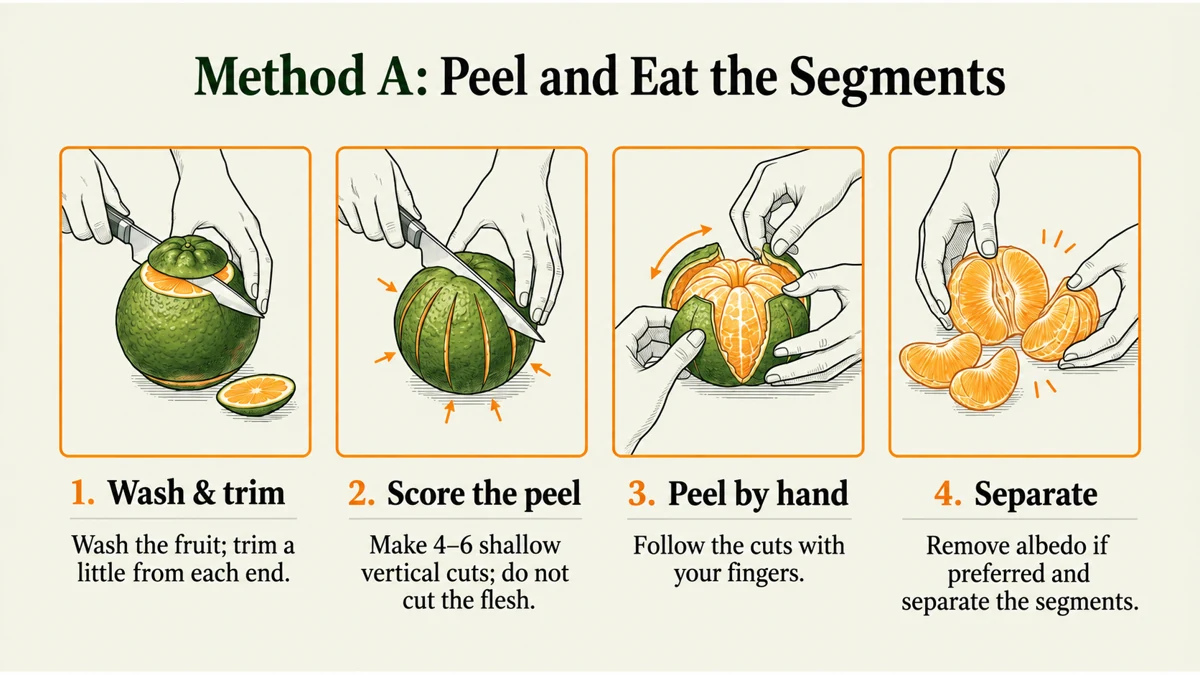
For Eating the Segments
- Wash the outside thoroughly.
- Trim a little from the top and bottom.
- Make four to six shallow vertical cuts through the peel, without cutting into the flesh.
- Peel by hand along the cuts.
- Remove some white albedo if you prefer, then separate and eat the segments.
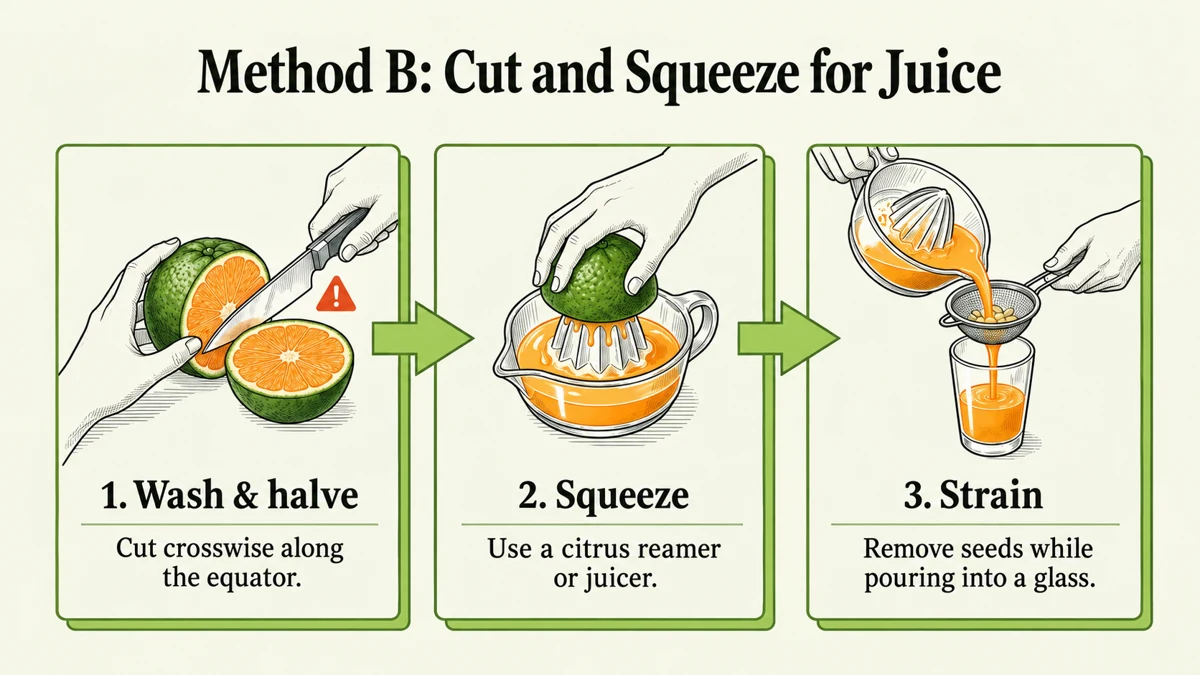
For Fresh Juice
- Wash the outside thoroughly.
- Cut the fruit crosswise in half along its equator.
- Squeeze with the cut side down by hand, or use a citrus reamer or juicer (dụng cụ vắt cam).
- Strain out the seeds as you pour into a glass.
Popular Ways to Enjoy Oranges in Vietnam
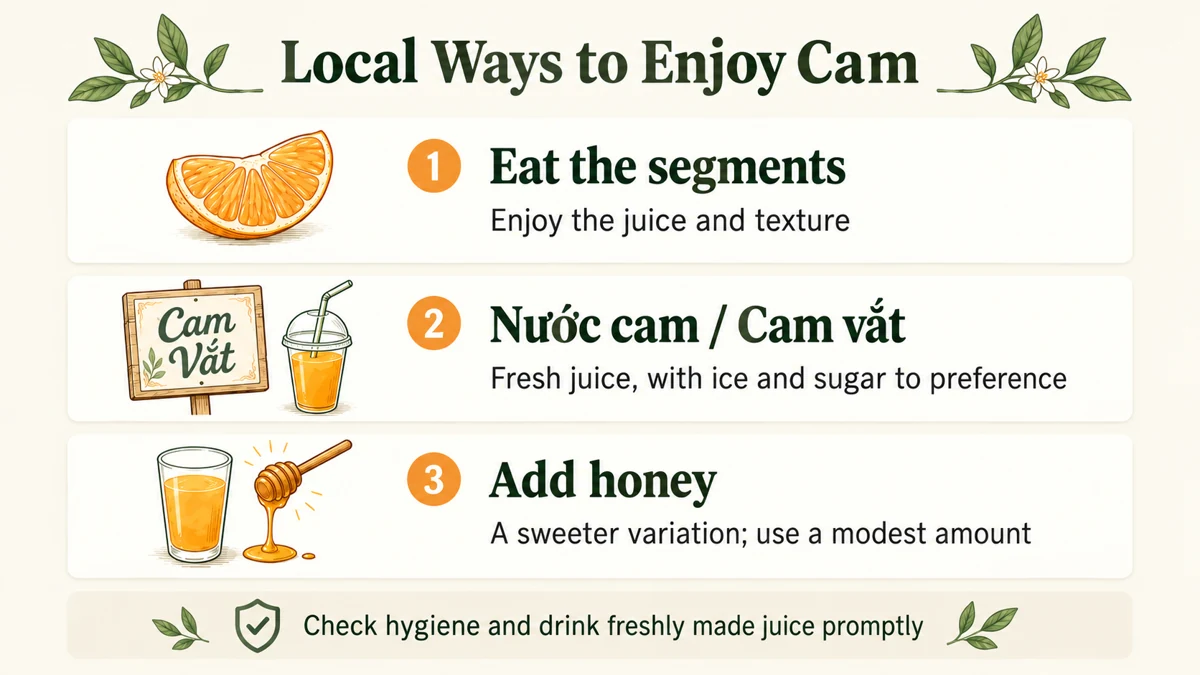
1. Eat the Segments
The simplest approach: peel, separate and eat.
2. Nước Cam / Cam Vắt: Fresh Orange Juice
A familiar street-side drink. Prices depend on the shop, area, serving size and added ice or sugar, so check before ordering. Không đường means “no sugar”; không đá means “no ice”.
3. Cam Vắt Mật Ong: Orange Juice With Honey
Fresh juice with honey is also enjoyed at home, including as a comforting drink when someone feels under the weather. This is a household custom, not a proven treatment.
How to Store Oranges
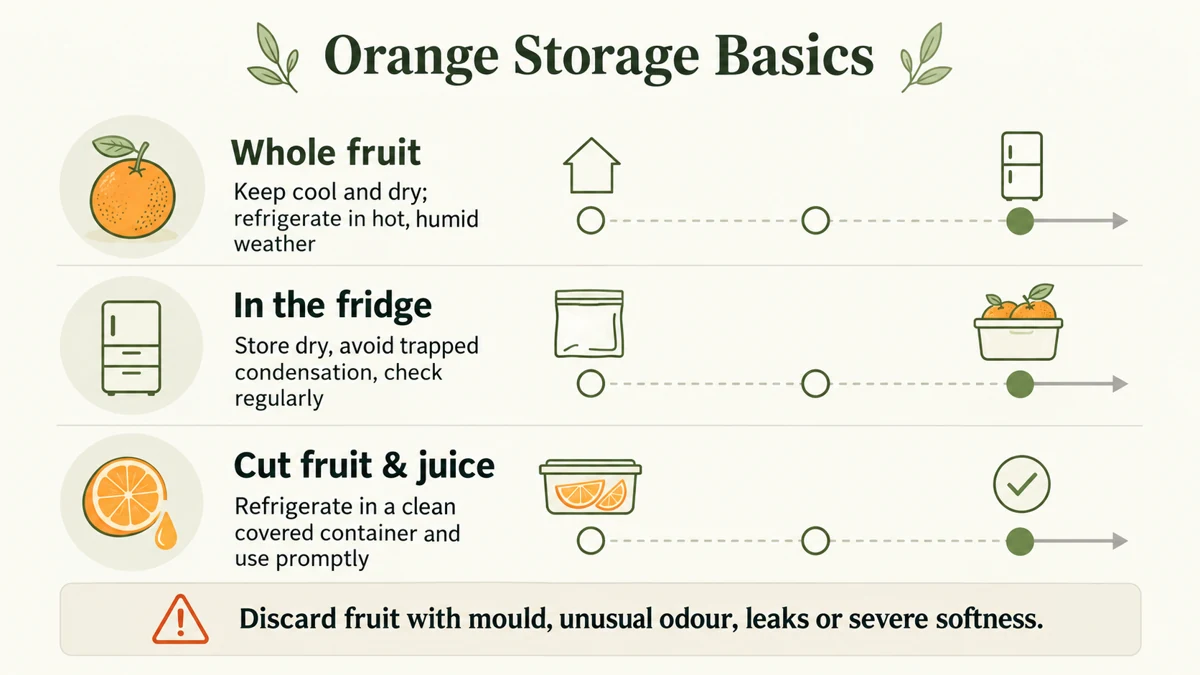
- Whole fruit: avoid direct sunlight and hot, humid conditions. In Vietnam’s heat, dry fruit is generally better refrigerated than left out for a long time. Avoid sealed bags that trap condensation.
- After cutting: refrigerate in a clean covered container and eat promptly. Freshly squeezed juice should be drunk immediately or refrigerated rather than left at room temperature.
Points to Check Before Eating
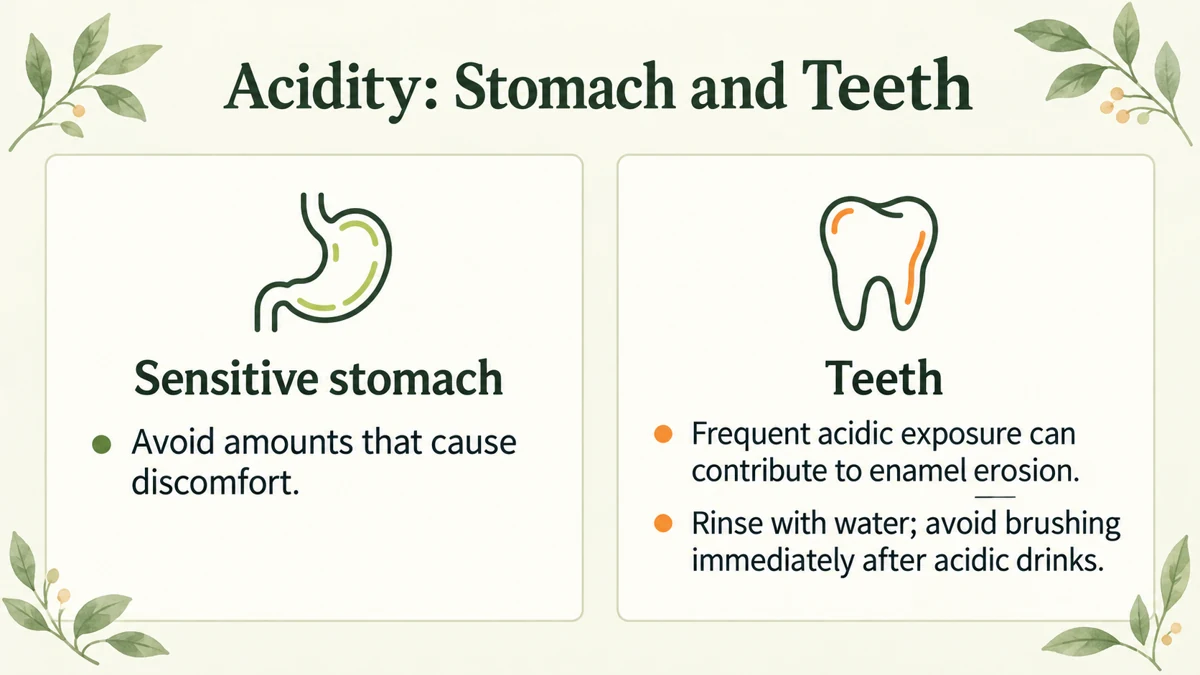
If acidic fruit or juice gives you stomach discomfort, avoid large amounts at once. Frequent, prolonged exposure to acidic drinks may contribute to dental erosion. The American Dental Association advises rinsing with water after acidic food and drinks and avoiding brushing immediately afterwards.
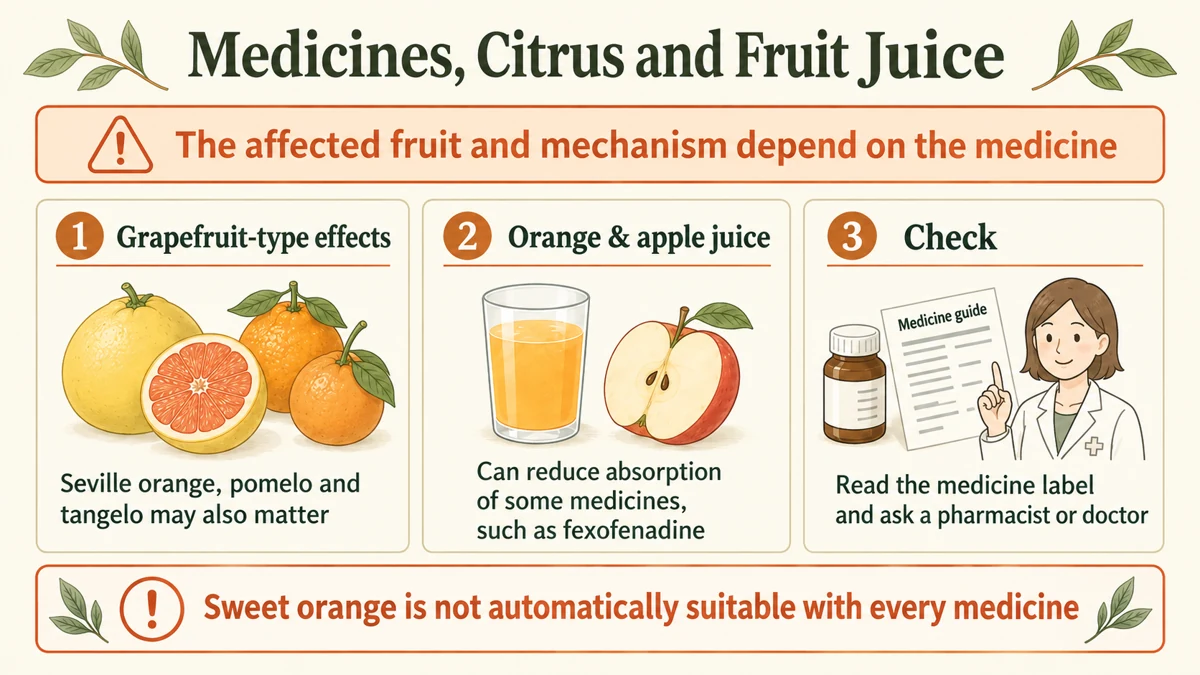
Ordinary sweet orange generally does not cause the same CYP3A4 inhibition associated with grapefruit. However, the FDA notes that Seville oranges, pomelos and tangelos may act similarly to grapefruit, while orange juice can reduce the absorption of medicines such as fexofenadine. The selling name cam may not establish the cultivar. If your medicine label warns about fruit or juice, ask a pharmacist or doctor rather than identifying the variety yourself.
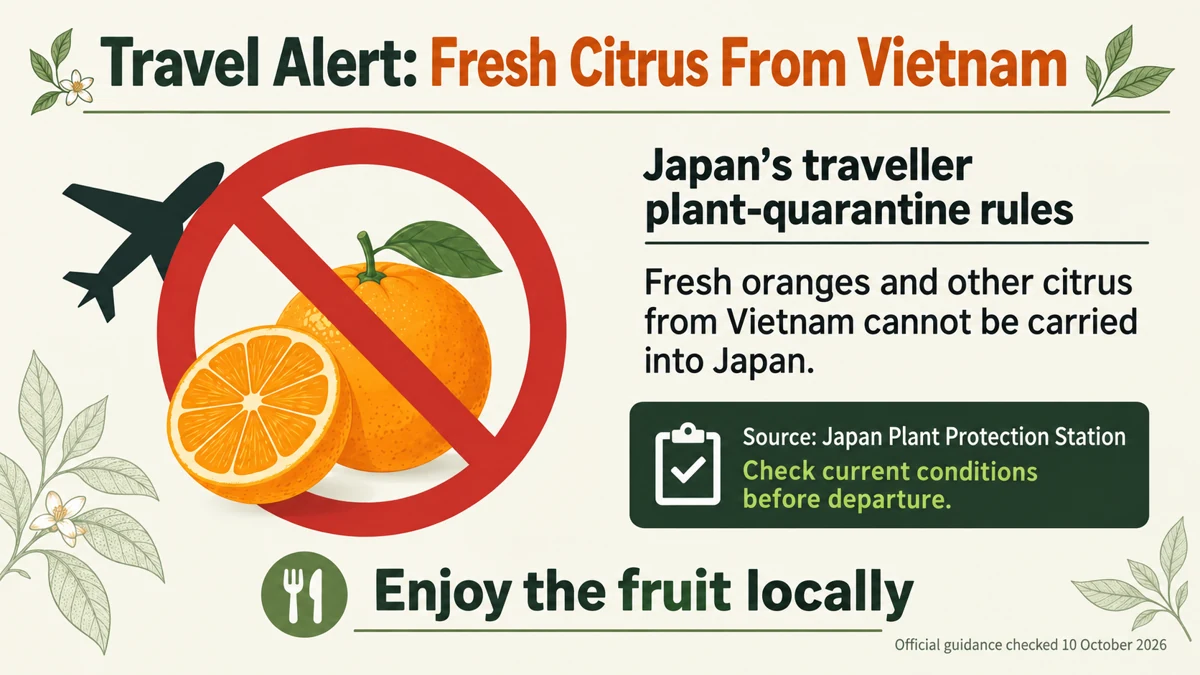
Can You Bring Fresh Vietnamese Oranges Into Japan?
Japan’s Plant Protection Station lists fresh oranges and other citrus from Vietnam as prohibited in travellers’ baggage. The traveller restrictions list is the direct basis, rather than whether a market-access request exists.
Rules can change. Always check the latest official guidance before travelling.
My Buying and Tasting Notes
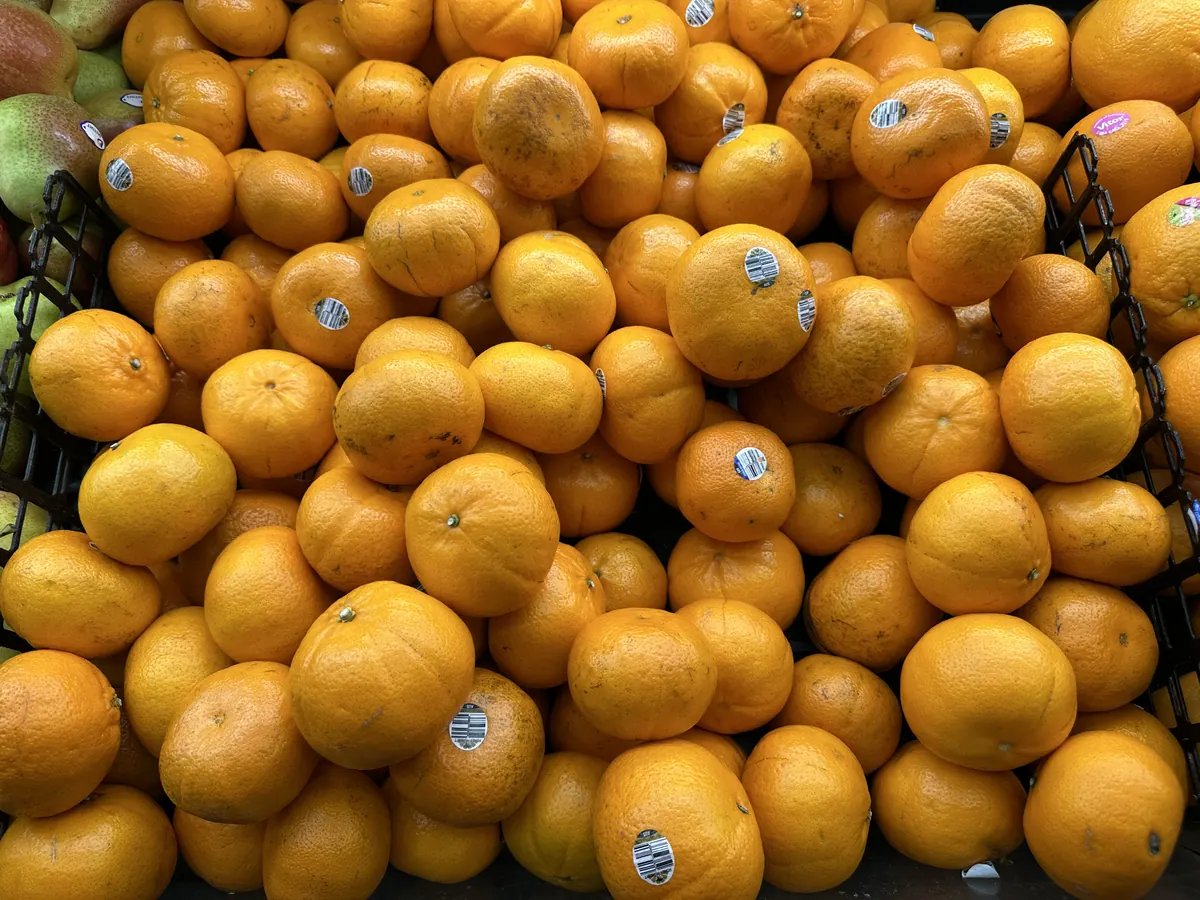
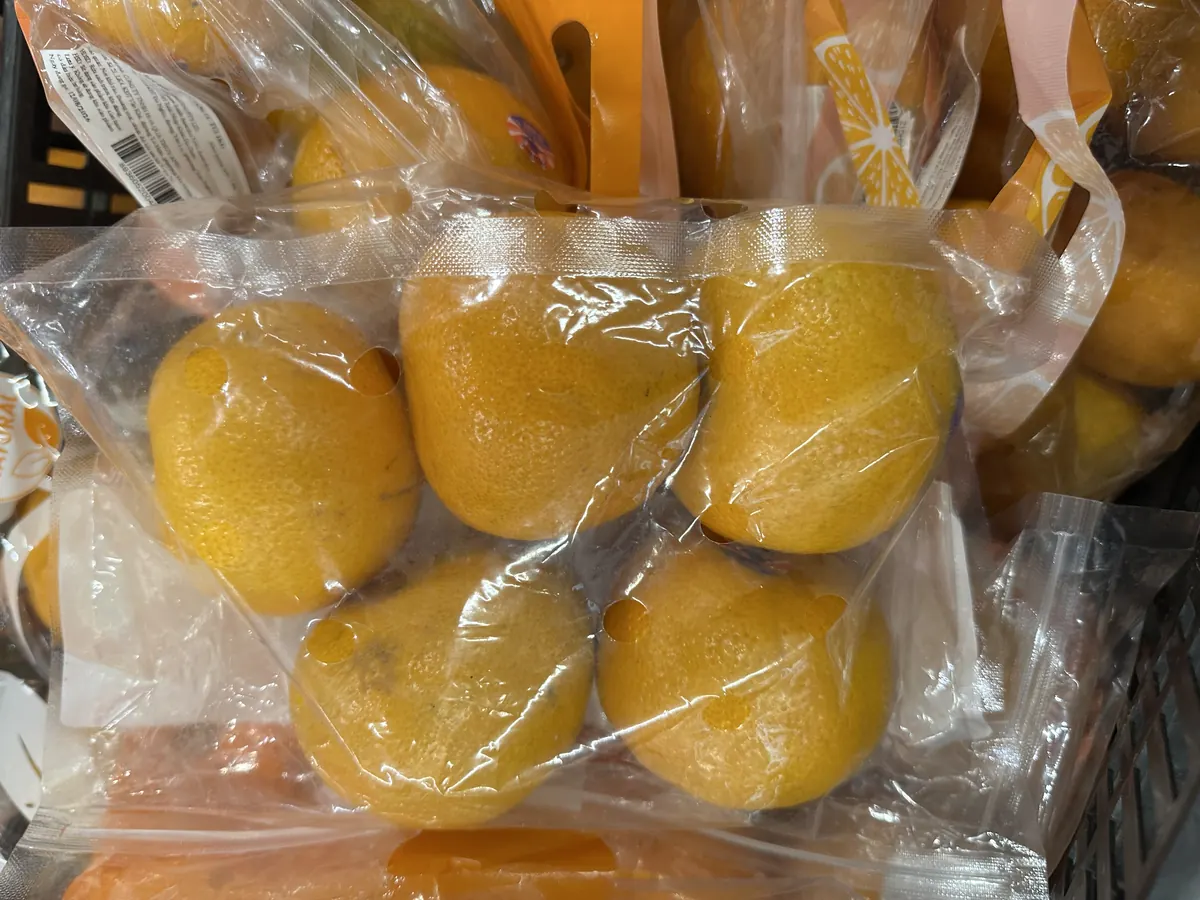
Purchase record
Place: supermarket
Date: August 2026
Price: 50,000 VND/kg
Tasting note
The juice sacs had a pleasantly popping texture with some fibrousness, and a distinctly sweet-tart flavour.
These observations come from the author’s own purchase and tasting.
Frequently Asked Questions
How Much Do Oranges Cost in Vietnam?
My August 2026 supermarket purchase cost 50,000 VND/kg. Prices vary with region, season, variety, grade and shop; check the shelf label.
Can You Buy Them Year-Round?
Oranges and related citrus are generally easy to find year-round, though individual varieties have different seasons.
Can Green-Skinned Oranges Be Ripe?
Yes. Citrus grown in warm conditions can retain green skin when ripe, while some cam sành turns yellow-green or yellow. Also check weight, firmness, fragrance and damage.
Do You Need to Peel Them?
Peel them for eating segments. For juice, simply cut crosswise in half and squeeze.
Which Way Should You Cut an Orange?
For segments, trim the ends and score the peel vertically. For juice, cut crosswise through the middle of the segments.
Can You Bring Them Into Japan?
Fresh citrus from Vietnam is listed as prohibited in travellers’ baggage. Enjoy it during your stay instead.
Practical Recap
Choose a preparation method to suit the result: peel for segments or halve across the middle for juice.
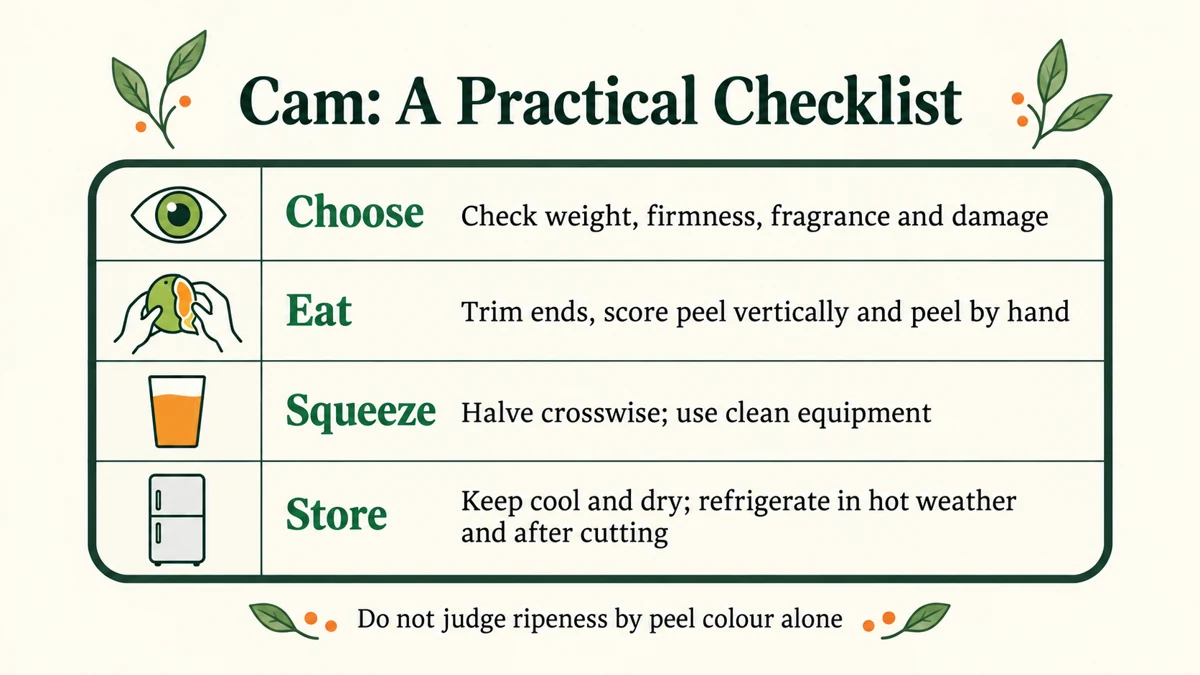
- Choose: check weight, firmness, fragrance and damage; do not rely on background peel colour.
- Cut: score and peel for segments; halve crosswise for juice.
- Enjoy: eat the segments, order fresh nước cam, or try juice with honey.
- Take care: avoid amounts that trigger stomach discomfort, and ask a pharmacist about any medicine warnings.
- Store: keep dry and cool, refrigerate in hot weather, and refrigerate cut fruit or juice promptly.
- Travel: fresh citrus from Vietnam cannot be carried into Japan.
At a market or juice stall, start by checking weight, peel firmness, fragrance and damage. Then choose between eating the segments and drinking the juice.
Learn More About Oranges
- For biology, nutrition, varieties and growing regions, see Orange Guide.
- For history and culture, from Chinese parables to Vietnamese proverbs, see Orange History and Stories.
- Explore other fruits in Vietnam Fruit Guide.
References
- Bách Hóa Xanh: How to choose tasty oranges; bTaskee: Choosing sweet, juicy cam sành
- Danang.style: Fresh orange juice stalls in Vietnam; Gucci Vietnam: Juice stalls on Mạc Đĩnh Chi Street
- US Food and Drug Administration: Grapefruit Juice and Some Drugs Don’t Mix
- American Dental Association: Dental Erosion
- Japan Plant Protection Station: Traveller restrictions for Vietnam
Japan Plant Protection Station: Vietnam traveller restrictions — Reviewed 10 October 2026.