Is Fruit Cheaper in Vietnam? 13 of 15 Cost Less Than in Japan
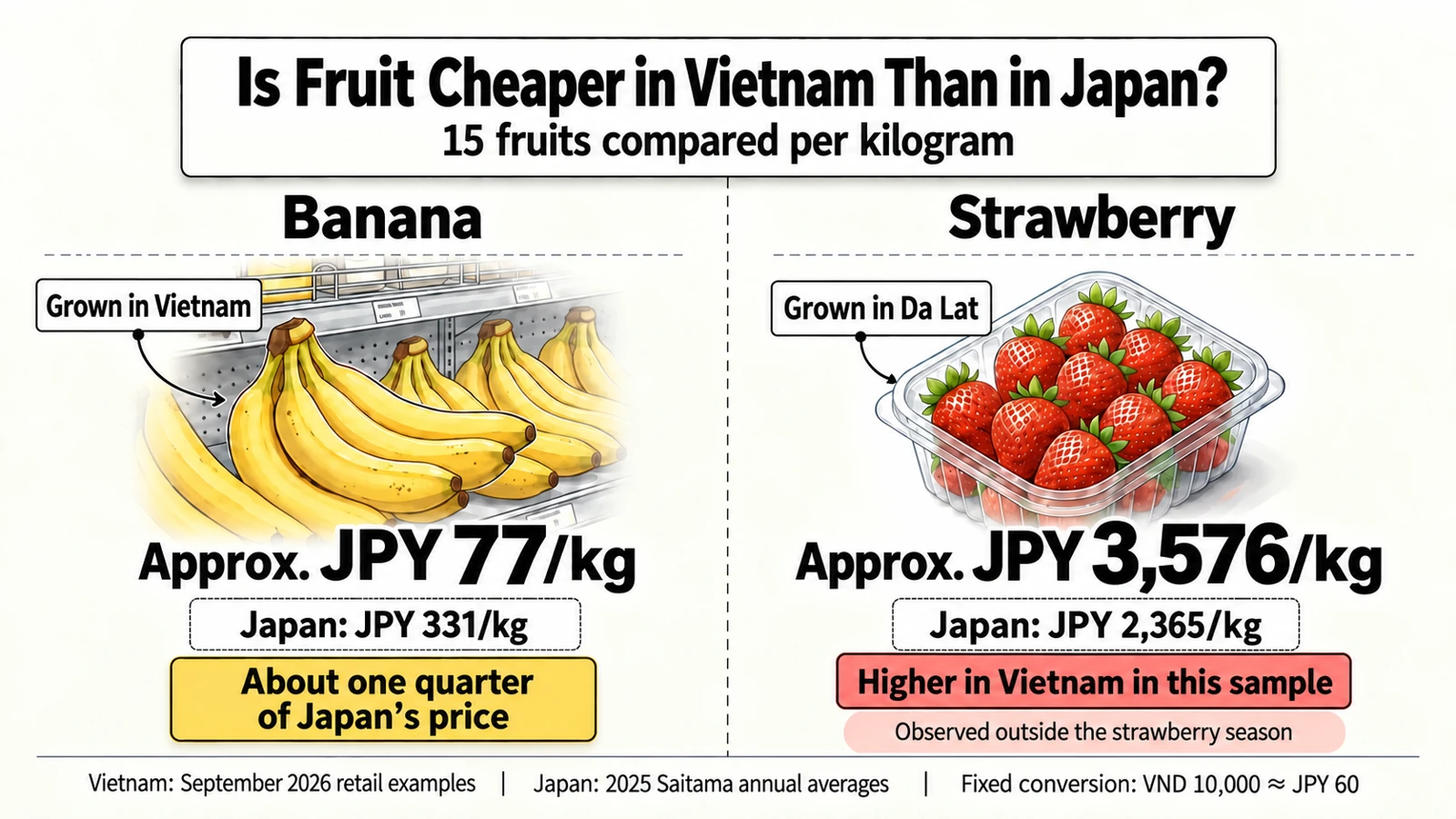
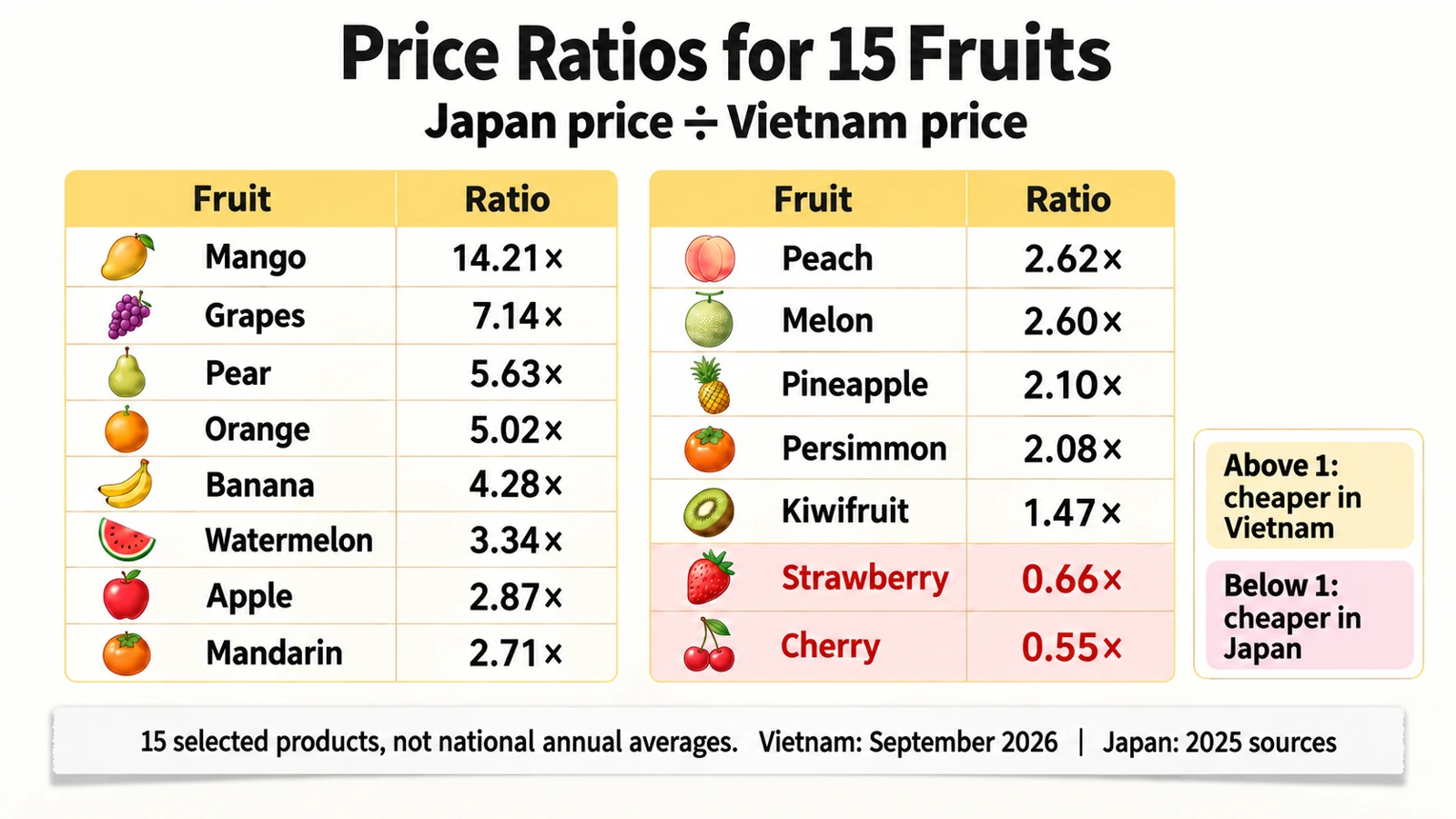
Bananas at a Vietnamese supermarket cost about JPY 77 per kilogram. Yet strawberries grown in Da Lat worked out at about JPY 3,576 per kilogram. When we compared 15 fruits familiar to shoppers in Japan at a common weight of 1 kg, 13 selected products were cheaper on the Vietnam side; strawberries and cherries were cheaper on the Japan side.
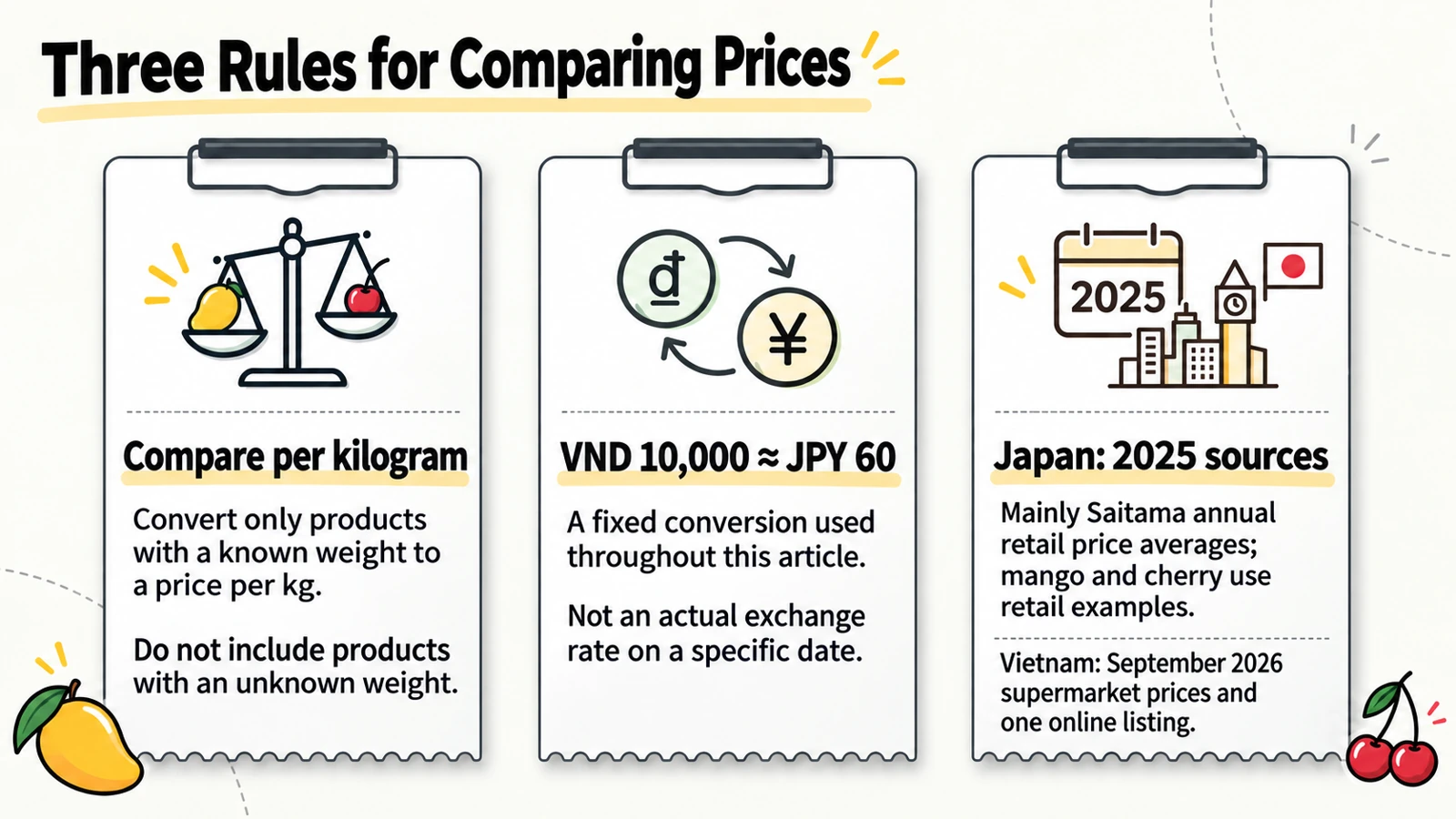
This guide compares Vietnam retail examples from September 2026 with Japanese statistics and sales materials from 2025. The products were not sold at the same time and are not necessarily the same varieties. These figures are not national averages for the two countries. The strawberries were observed outside their season. Prices and availability change, and this article will be updated as further local observations become available.
Vietnamese stores carry locally grown fruit alongside apples from Chile, pears from China and grapes from South Korea. Reading the price labels shows that the amount you pay depends on the specific product you choose as well as the type of fruit.
The Vietnam records mainly come from labels checked at GO, WinMart, AEON MaxValu and Lotte Mart on September 12, 2026. They also include additional GO records from September 13, a pineapple receipt from September 19, and an official online cherry listing checked on September 12. The Japanese figures mainly use Saitama City’s 2025 retail price statistics, supplemented by 2025 sales materials with stated weights.
All conversions use the same fixed comparison rate: VND 10,000 ≈ JPY 60. This is not an actual exchange rate for a particular date. Some photographs show different products or store displays from those used in the comparison table. “Vietnam” and “Japan” refer to where the products were sold, not necessarily where the fruit was grown. See the captions when a photographed label differs from a table price.
Bananas at About JPY 77/kg: How Does Japan Compare?
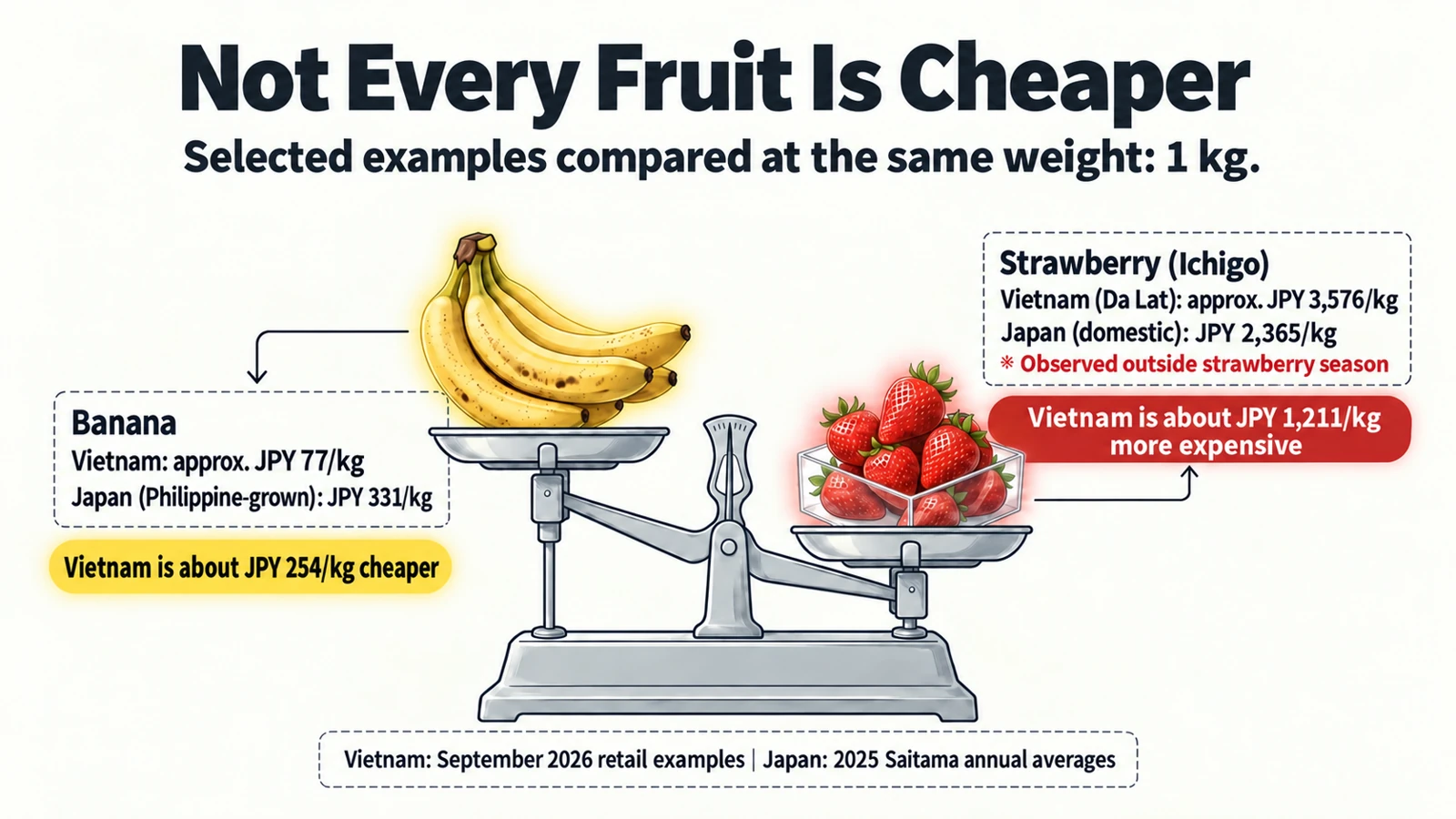
At GO! Thăng Long, the label for “Chuối Sứ/chuối tây” showed Vietnam-grown bananas at VND 12,900/kg, equivalent to about JPY 77/kg.
The Japan comparison is JPY 331/kg, the 2025 Saitama annual average for Philippine-grown bananas. At the same weight, the Japan figure was about 4.28 times higher, a difference of roughly JPY 254/kg.
There were other choices locally. Lotte Mart inside Lotte Mall offered Vietnam-grown Chuối cau at VND 45,000/kg and Chuối tây at VND 52,900/kg. Even within one fruit category, varieties and stores offer different prices. The JPY 77/kg figure belongs to the specific product observed at GO.
Related articles: Banana guide · Banana story · Banana eating tips
Strawberries: Higher in Vietnam in This Sample
Da Lat Strawberries: About JPY 894 for 250 g
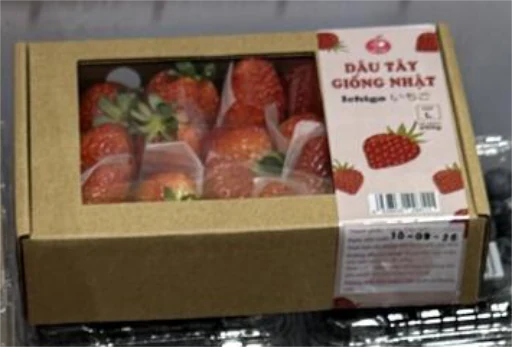
The product at GO was “Dâu tây giống nhật size L 250g.” Its name specifies a Japanese variety and size L, but the strawberries were grown in Da Lat, Vietnam.
A 250 g box cost VND 149,000, about JPY 894. Converted to 1 kg, that is approximately JPY 3,576. Japanese-grown strawberries averaged JPY 2,365/kg in Saitama in 2025, making the Vietnam example about JPY 1,211/kg more expensive.
September was outside the strawberry season when the author checked this product. That may have contributed to the high price, so the result should not be treated as a year-round trend. The numbers challenge the impression that every fruit must be cheap in Vietnam. The label also illustrates why “Japanese variety” and country of origin need to be read separately.
Imported Cherries Also Exceeded the 2025 Japan Example
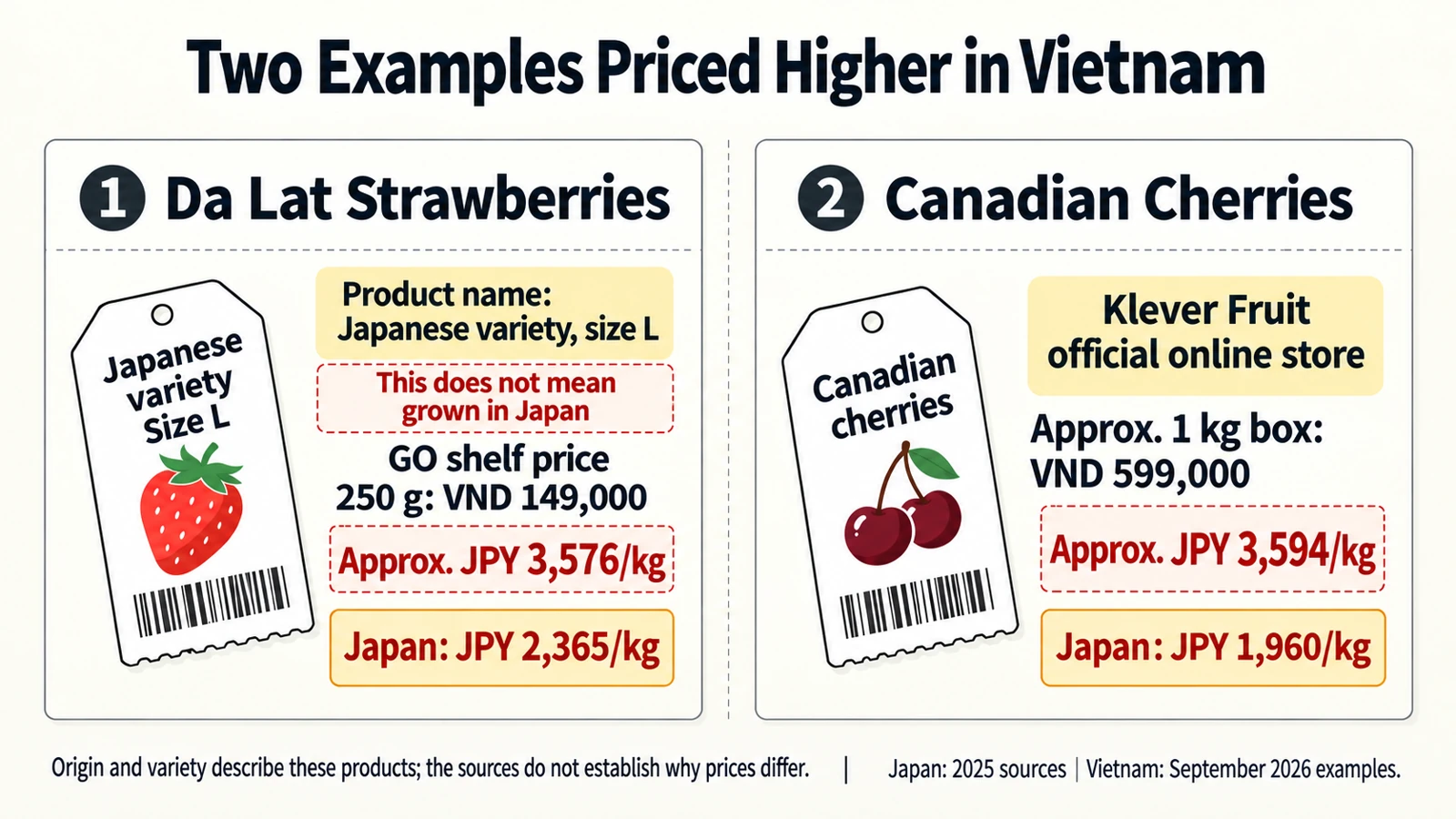
Both cherry examples are imports. On the Vietnam side, Klever Fruit’s official online store for Ho Chi Minh City listed Canadian red cherries, 10 Row, at VND 599,000 for an approximately 1 kg box. That is about JPY 3,594/kg. This source is separate from the photographs taken at the four supermarkets.
The Japanese example comes from a late-July 2025 advertisement by Tobu Utsunomiya Department Store. American cherries grown in the United States cost JPY 980 including tax for 500 g, or JPY 1,960/kg. The Vietnam example was about JPY 1,634/kg more expensive.
This compares a July 2025 department-store advertisement in Tochigi with a September 2026 online listing. The sales dates and channels differ, so it does not establish a general price gap for all cherries.
Vietnam vs. Japan Fruit Prices: 15 Fruits Compared per Kilogram
A Japan ÷ Vietnam ratio above 1 means the Japan example was more expensive. A ratio below 1 means the Vietnam example was more expensive. Each fruit name links to the section describing its store and origin.
Most Japan figures are 2025 Saitama annual averages. Mango uses a home-use producer direct-sale example from Kagoshima; cherry uses a Tobu Utsunomiya advertisement, both from 2025. Vietnam records include promotions and the online cherry price. Treat this as a reference comparison of selected products with different dates, origins, varieties and sales channels.
| Fruit | Vietnam JPY/kg | Japan JPY/kg | Japan ÷ Vietnam | Japan source period |
|---|---|---|---|---|
| Banana | 77 | 331 | 4.28× | 2025 annual average |
| Strawberry | 3,576 | 2,365 | 0.66× | 2025 annual average |
| Cherry | 3,594 | 1,960 | 0.55× | July 2025 retail example |
| Apple | 294 | 845 | 2.87× | 2025 annual average |
| Mango | 251 | 3,564 | 14.21× | 2025 producer direct sale |
| Watermelon | 179 | 600 | 3.34× | 2025 annual average |
| Melon | 354 | 920 | 2.60× | 2025 annual average |
| Persimmon | 330 | 688 | 2.08× | 2025 annual average |
| Orange | 138 | 693 | 5.02× | 2025 annual average |
| Mandarin | 354 | 959 | 2.71× | 2025 annual average |
| Pear | 174 | 979 | 5.63× | 2025 annual average |
| Peach | 594 | 1,555 | 2.62× | 2025 annual average |
| Grapes | 474 | 3,383 | 7.14× | 2025 annual average |
| Kiwifruit | 834 | 1,222 | 1.47× | 2025 annual average |
| Pineapple | 720 | 1,509 | 2.10× | 2025 annual average |
Pineapple compares pre-cut products in both countries. The Vietnam cherry box and the Japan mango pack are each labeled “approximately 1 kg,” so those conversions are estimates. JPY amounts are rounded to whole yen; ratios and price differences use the values before rounding.
Bananas, apples and mangoes showed substantial differences. Strawberries and cherries went in the opposite direction. Origin, variety and season are recorded as product context; prices are compared at the same weight.
What Choices Are There Among Vietnam-Grown Fruit?
Mango: Prices Vary by Variety Even at GO
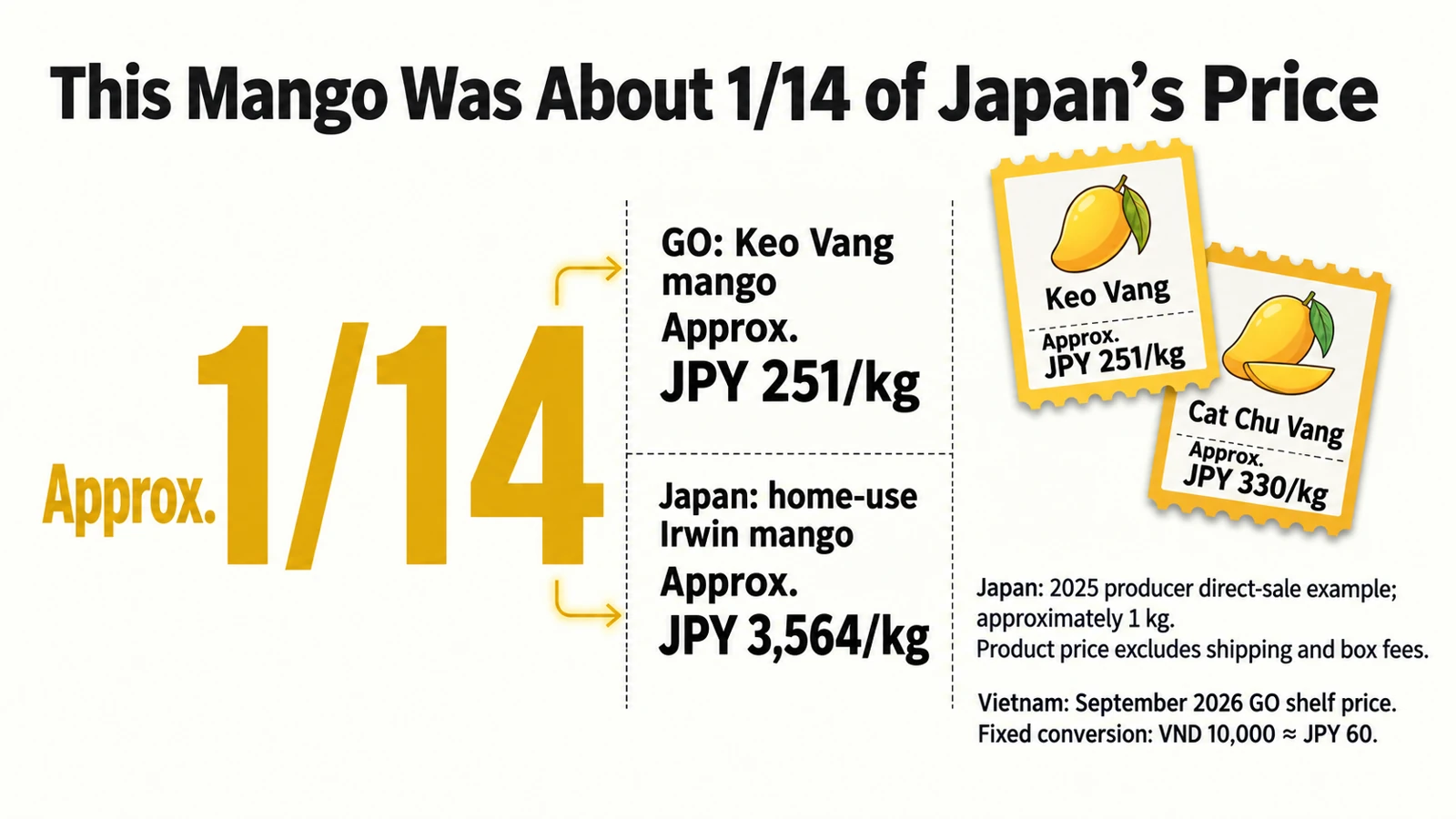
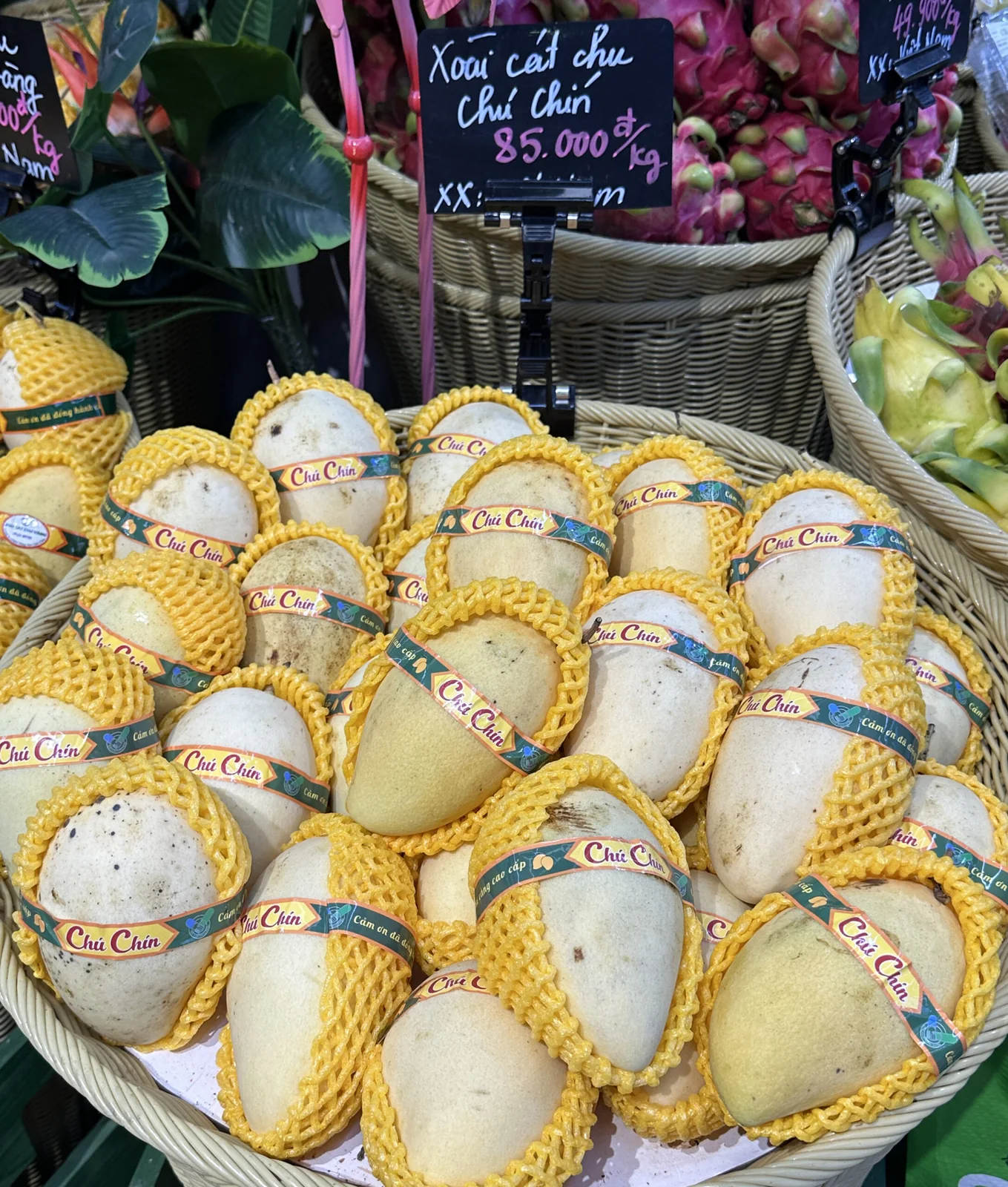
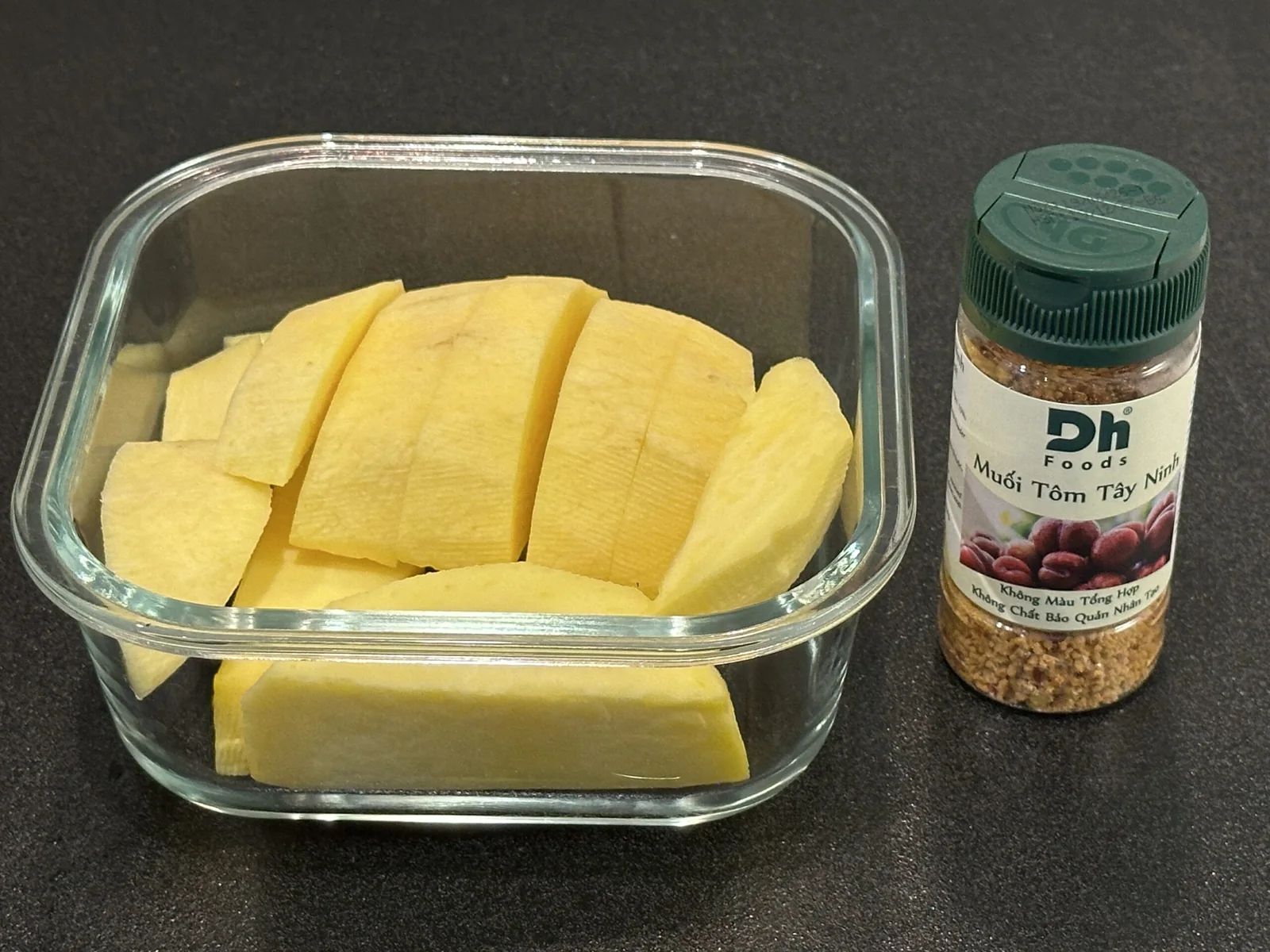
GO’s Khánh Hòa-grown “Xoài keo vàng” cost VND 41,800/kg, about JPY 251/kg. Vietnam-grown “Xoài cát chu vàng VietGAP” cost VND 55,000/kg, about JPY 330/kg.
The Japan comparison is a 2025 home-use Irwin mango offering from Tropical Farm Yamakawa in Ibusuki, Kagoshima. Its approximately 1 kg pack cost JPY 3,564 including tax, excluding shipping and the box fee. Against GO’s Keo Vang at about JPY 251/kg, the Japan example was roughly 14.21 times higher. This is an approximate comparison between a producer’s direct sale and a supermarket shelf price.
Lotte Mart also carried Vietnam-grown Xoài tứ quý at VND 64,900/kg and Xoài cát chu vàng at a promotional VND 75,000/kg. Variety and ripeness are useful details to check alongside price.
Related articles: Mango guide · Mango story · Mango eating tips
Watermelon: A Japanese Variety Can Be Grown in Vietnam
WinMart’s label read “Dưa Hấu Giống Nhật” and “XX: Việt Nam”: a watermelon described as a Japanese variety and grown in Vietnam.
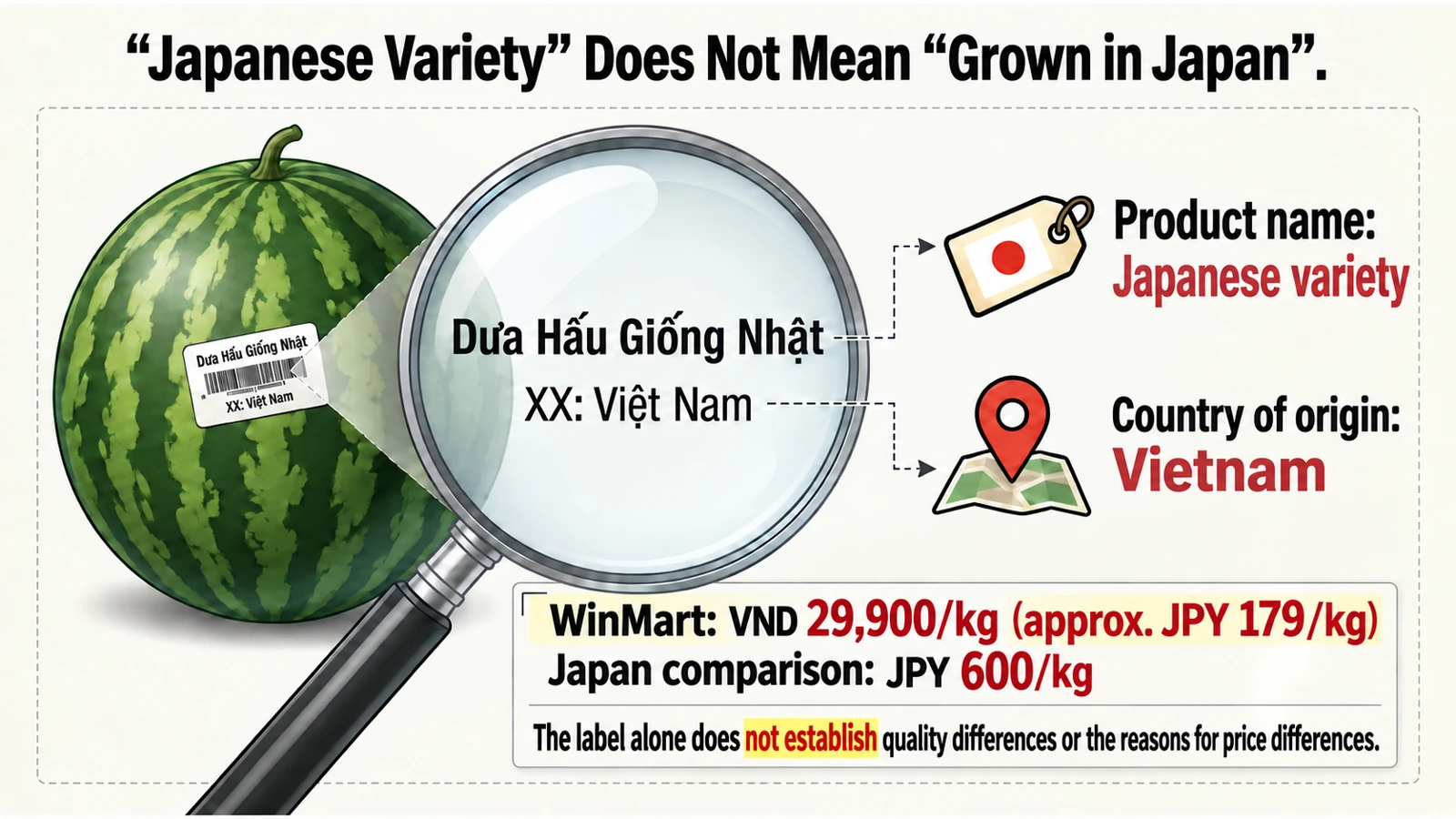
The price was VND 29,900/kg, about JPY 179/kg. The Japanese red-fleshed watermelon figure was JPY 600/kg, about 3.34 times higher. A hypothetical 3 kg fruit at that Vietnam unit price would cost approximately JPY 538.
Lotte Mart’s Vietnam-grown red-fleshed watermelon also cost VND 29,900/kg, while a seedless offering cost VND 32,900/kg. A whole-fruit price in Japan can be compared in the same way if its weight is known.
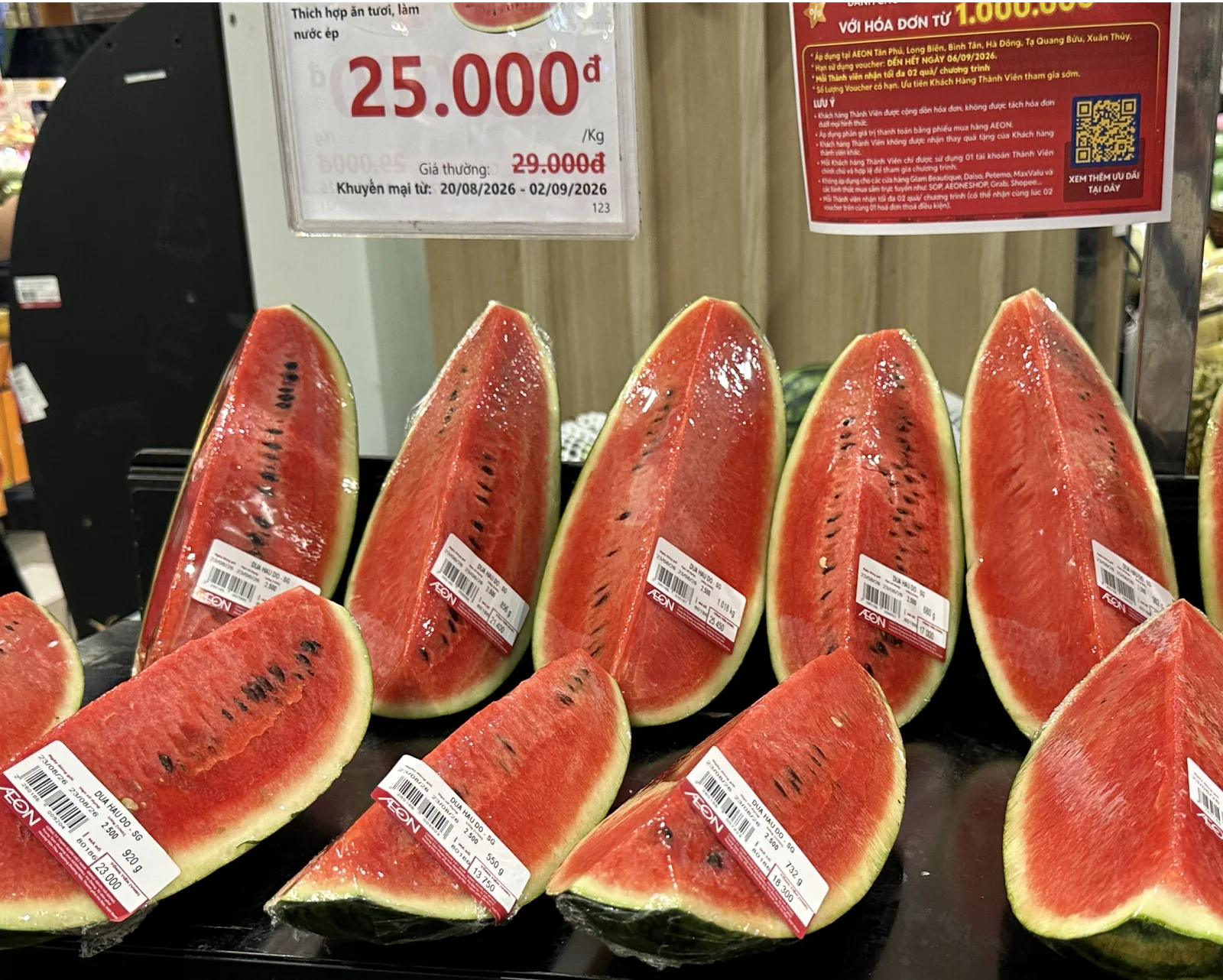
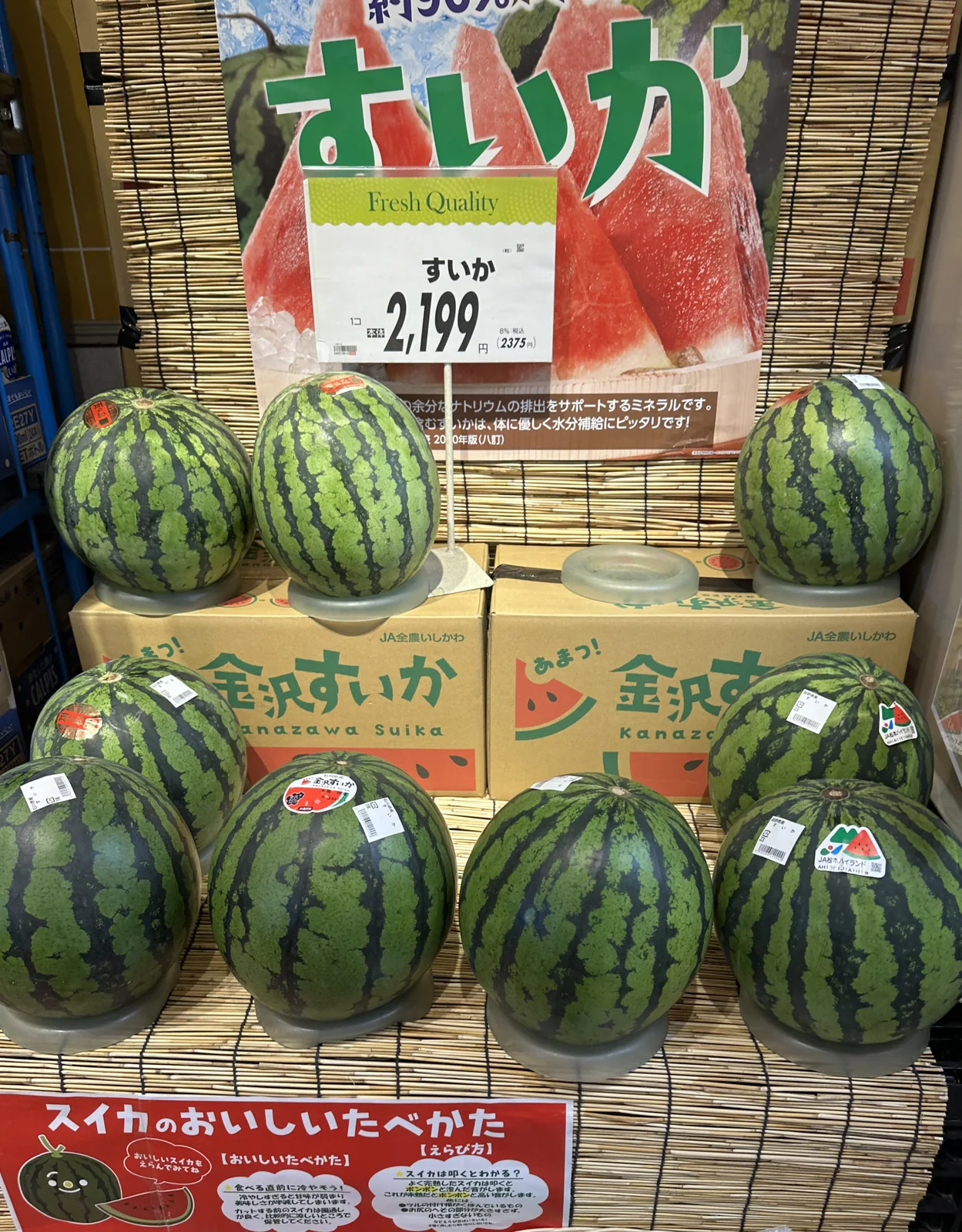
These photos show separate retail examples. The Japanese photo does not state the weight, so its price was not used in the per-kilogram comparison.
Related articles: Watermelon guide · Watermelon story · Watermelon eating tips
Melon: Vietnam-Grown Orange Flesh at About JPY 354/kg
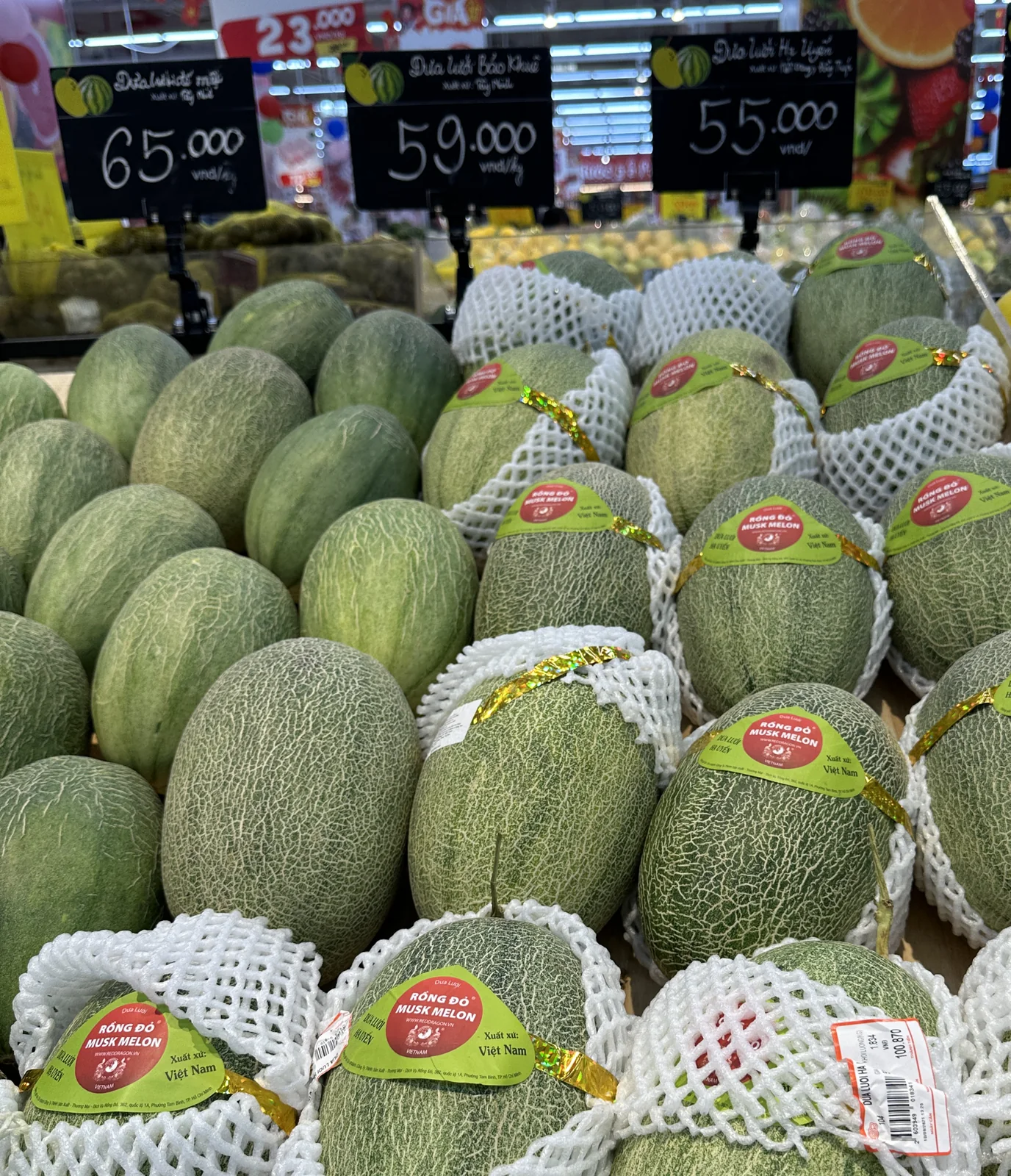
WinMart’s “Dưa lưới dài ruột cam” cost VND 59,000/kg, about JPY 354/kg. The fruit was grown in Vietnam; the product name refers to its elongated shape and orange flesh.
The Japanese netted-melon figure was JPY 920/kg, about 2.60 times higher. Lotte Mart offered several Vietnam-grown melons, including Huỳnh Long Chín Phê at VND 69,900/kg and Pansy at VND 79,000/kg.
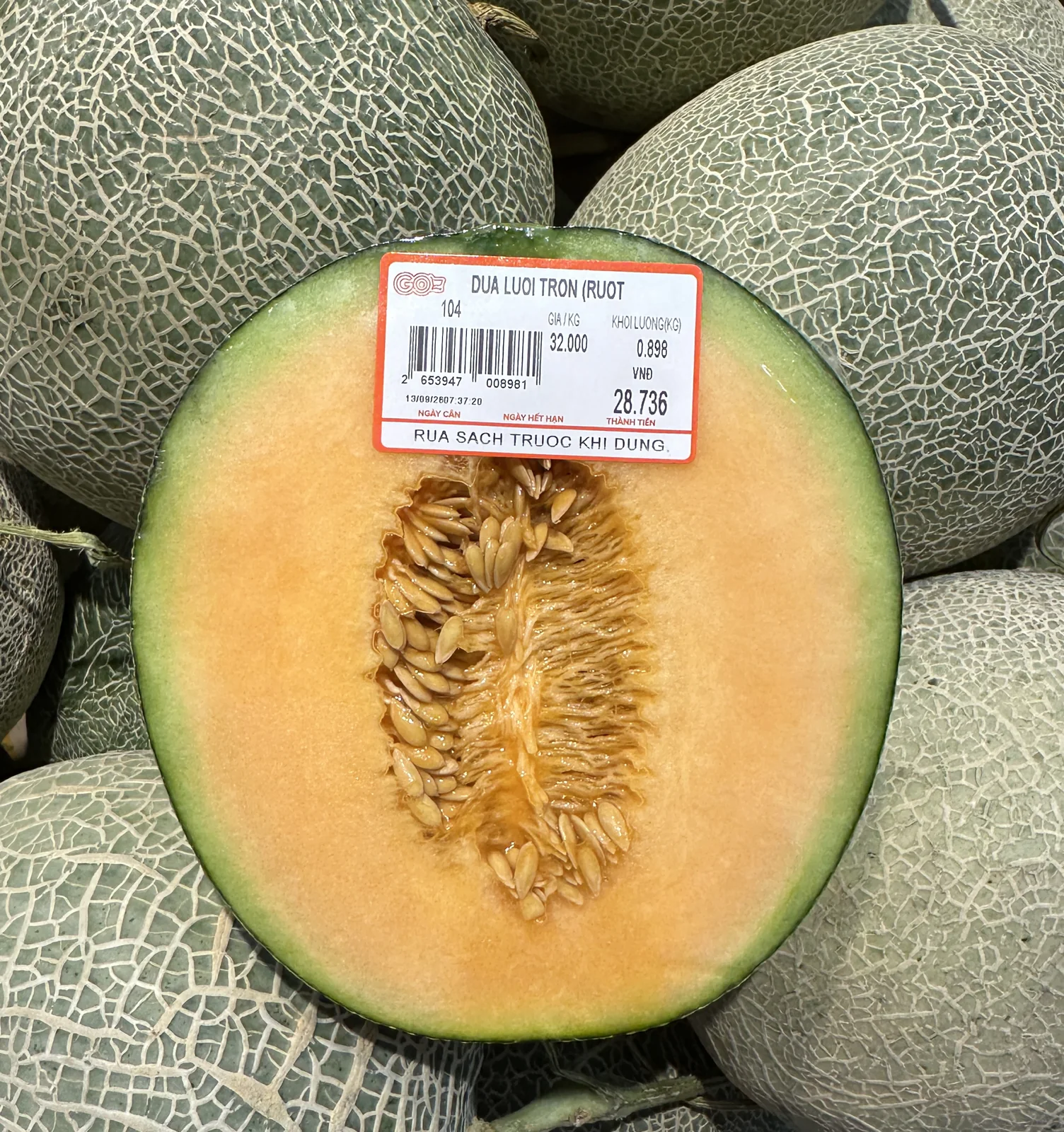
At GO the following day, September 13, a round orange-fleshed melon was labeled VND 32,000/kg, about JPY 192/kg. A half-melon label showed 0.898 kg and a total of VND 28,736, matching unit price × weight. Against Japan’s JPY 920/kg, that example gives a ratio of about 4.79 and a gap of JPY 728/kg. Its origin cannot be determined from that label. It is a separate product from the previous day’s WinMart melon; the main table uses WinMart’s price.
Related articles: Melon Guide · Melon History & Stories · How to Eat Melon
Persimmon: A Northern Vietnamese Origin on the Label
GO’s “Hồng giòn Mộc Châu” cost VND 55,000/kg, about JPY 330/kg. The origin field said Sơn La, and the product was sold as a crisp Mộc Châu persimmon. The Japan figure was JPY 688/kg, about 2.08 times higher.
WinMart also carried Vietnam-grown Hồng giòn at VND 69,900/kg. Persimmons familiar to Japanese shoppers can be found among the fruit in Vietnam’s stores.
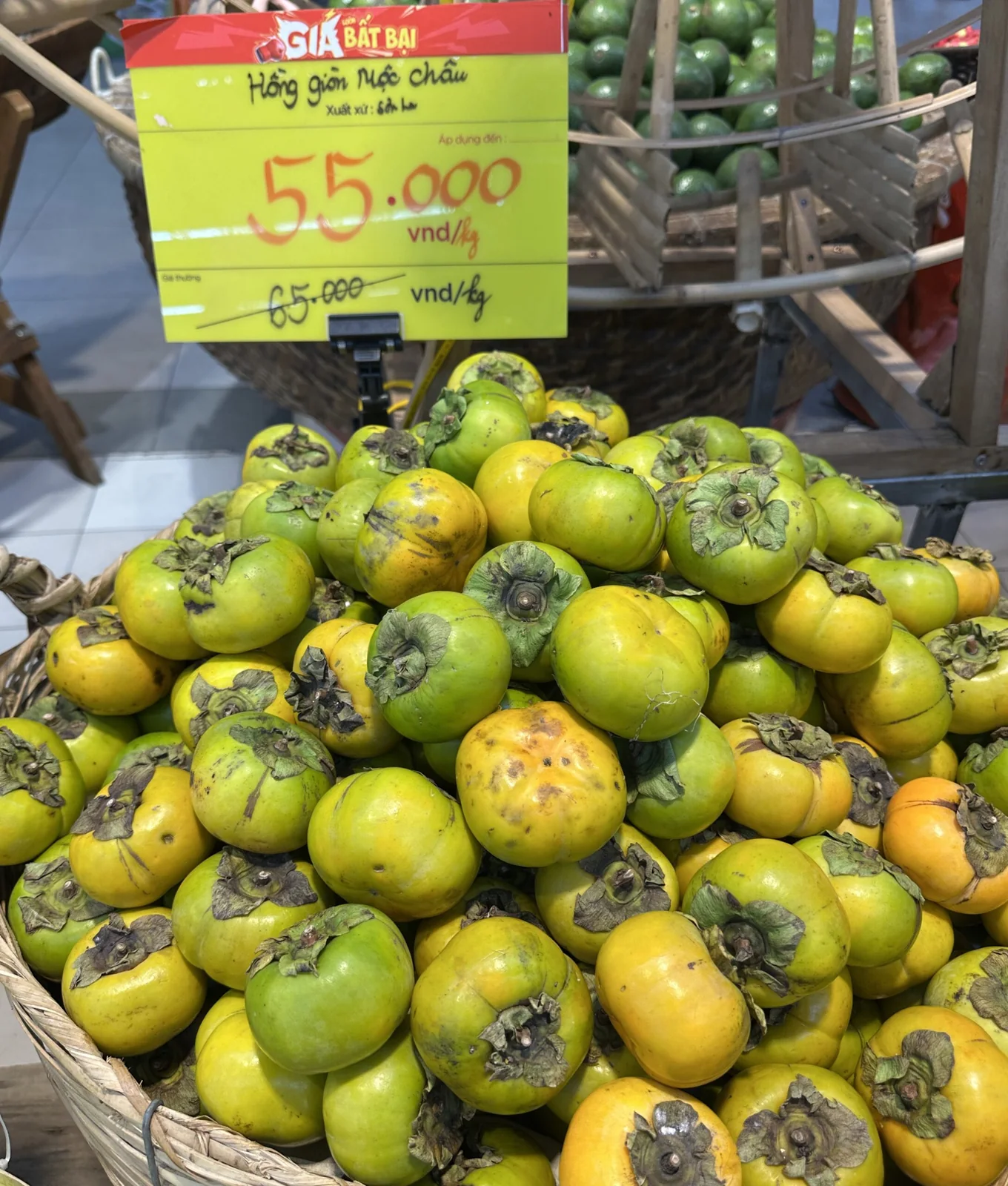
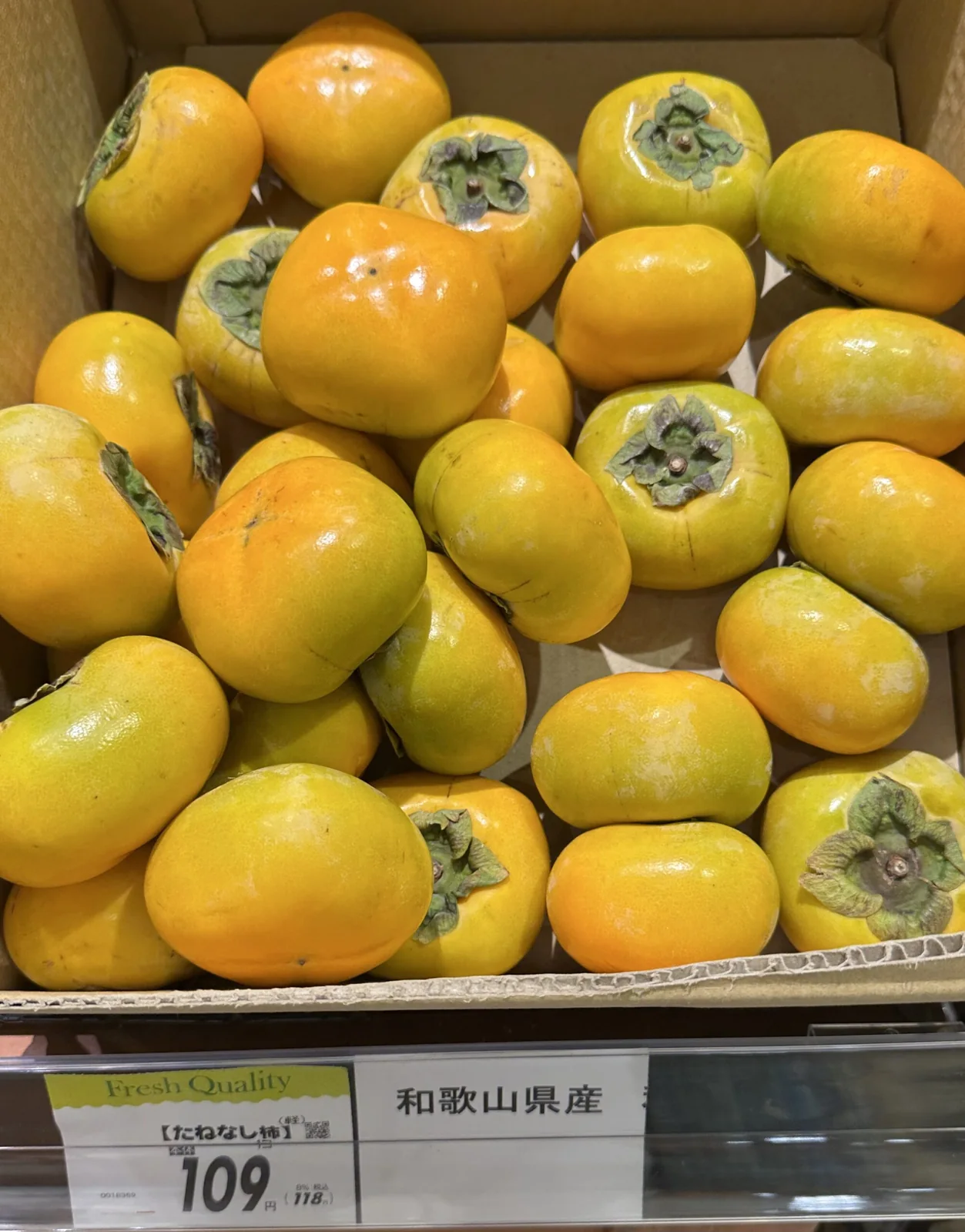
The Japanese photo is an individual retail example with no confirmed weight. The body and table therefore use the 2025 retail price statistic per kilogram.
→ Persimmon Guide / Persimmon History and Stories / How to Eat Persimmons
Orange: Choose Local Fruit or Imported Navels
GO’s Vĩnh Long-grown “Cam sành” cost VND 23,000/kg, about JPY 138/kg. The Japan figure for imported Valencia or navel oranges was JPY 693/kg, about 5.02 times higher.
Lotte Mart’s Australian navel oranges cost VND 94,000/kg, about JPY 564/kg. Compared with the Japan figure, the difference was about JPY 129/kg. Choosing a different orange changes the result. Cam sành is also used for freshly squeezed juice, so intended use matters alongside origin.
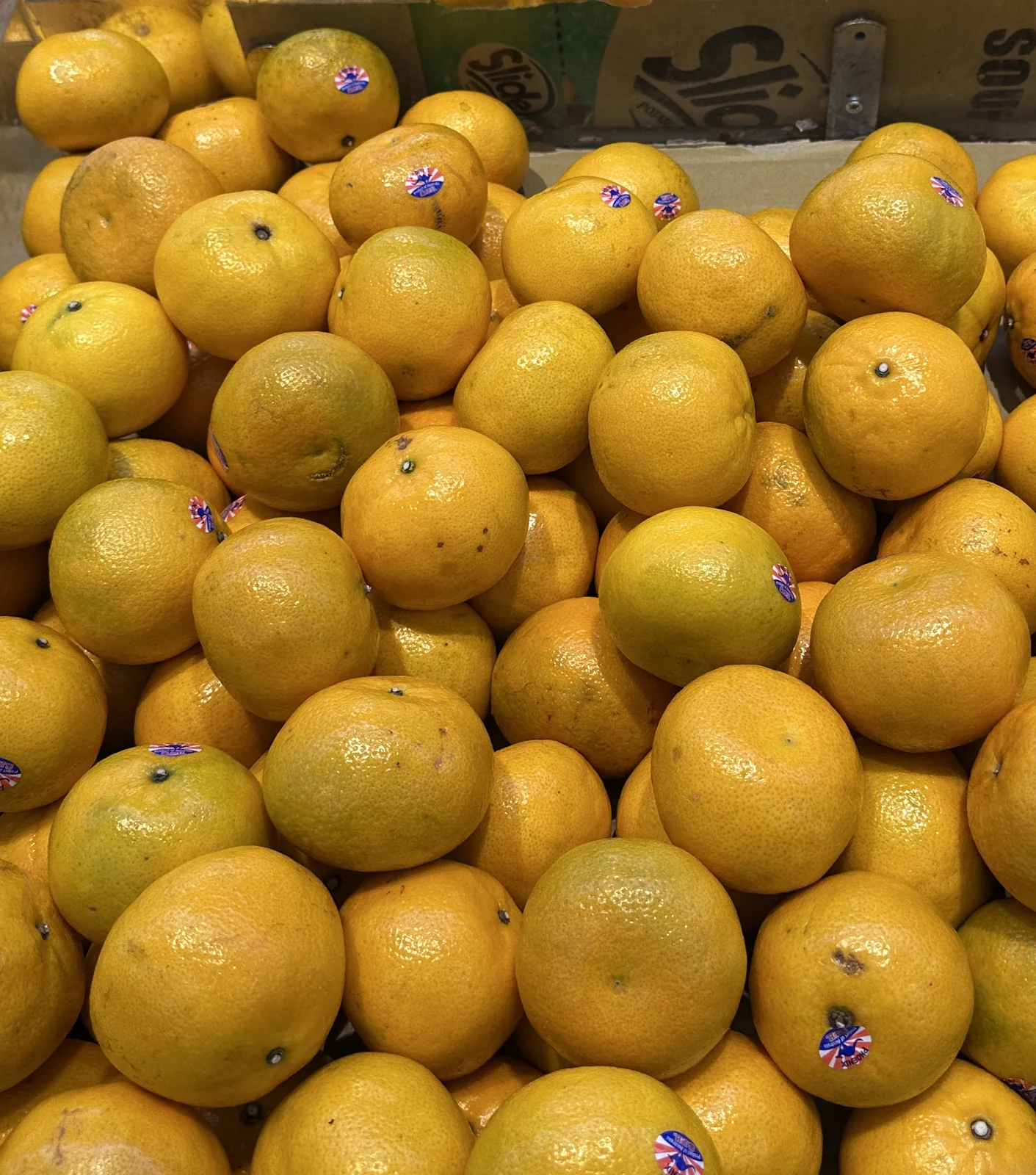
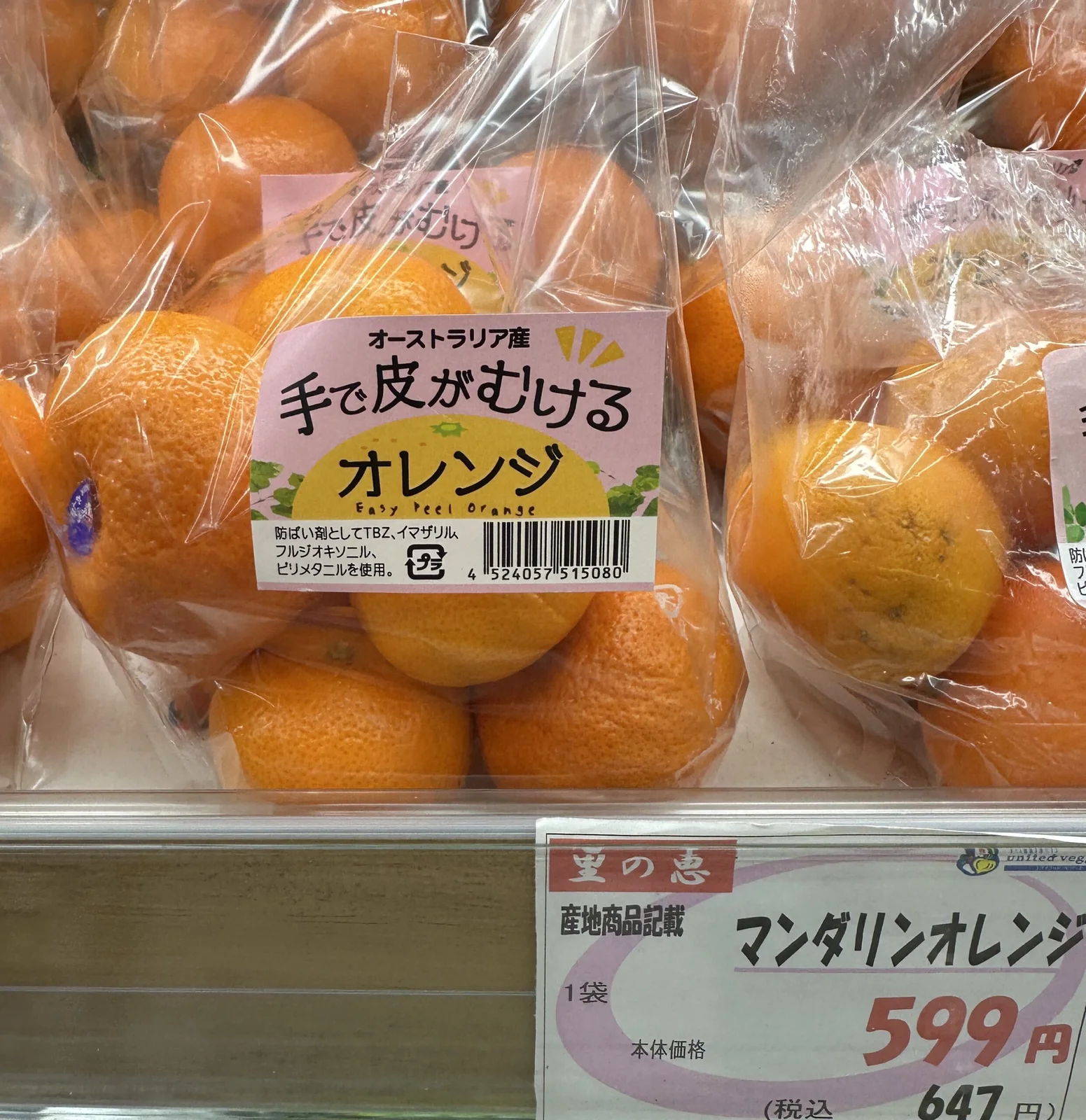
These photographs show different products from those used in the comparison. The Japanese photo is of mandarin oranges, not the table’s Valencia or navel oranges. The photographed price was not used as a table price per kg.
Related articles: Orange guide · Orange story · Orange eating tips
Mandarin: The Same Convenience of Peeling by Hand
GO’s “Quýt đường” cost VND 59,000/kg, about JPY 354/kg. The label listed Tiền Giang/Đồng Tháp in the origin field. Japanese satsuma mandarins were JPY 959/kg, about 2.71 times higher.
Lotte Mart offered a Vietnam-grown 1 kg box at VND 63,900 and an Australian offering at VND 129,000/kg. Sweetness, acidity and the membranes around the segments can also help distinguish varieties.
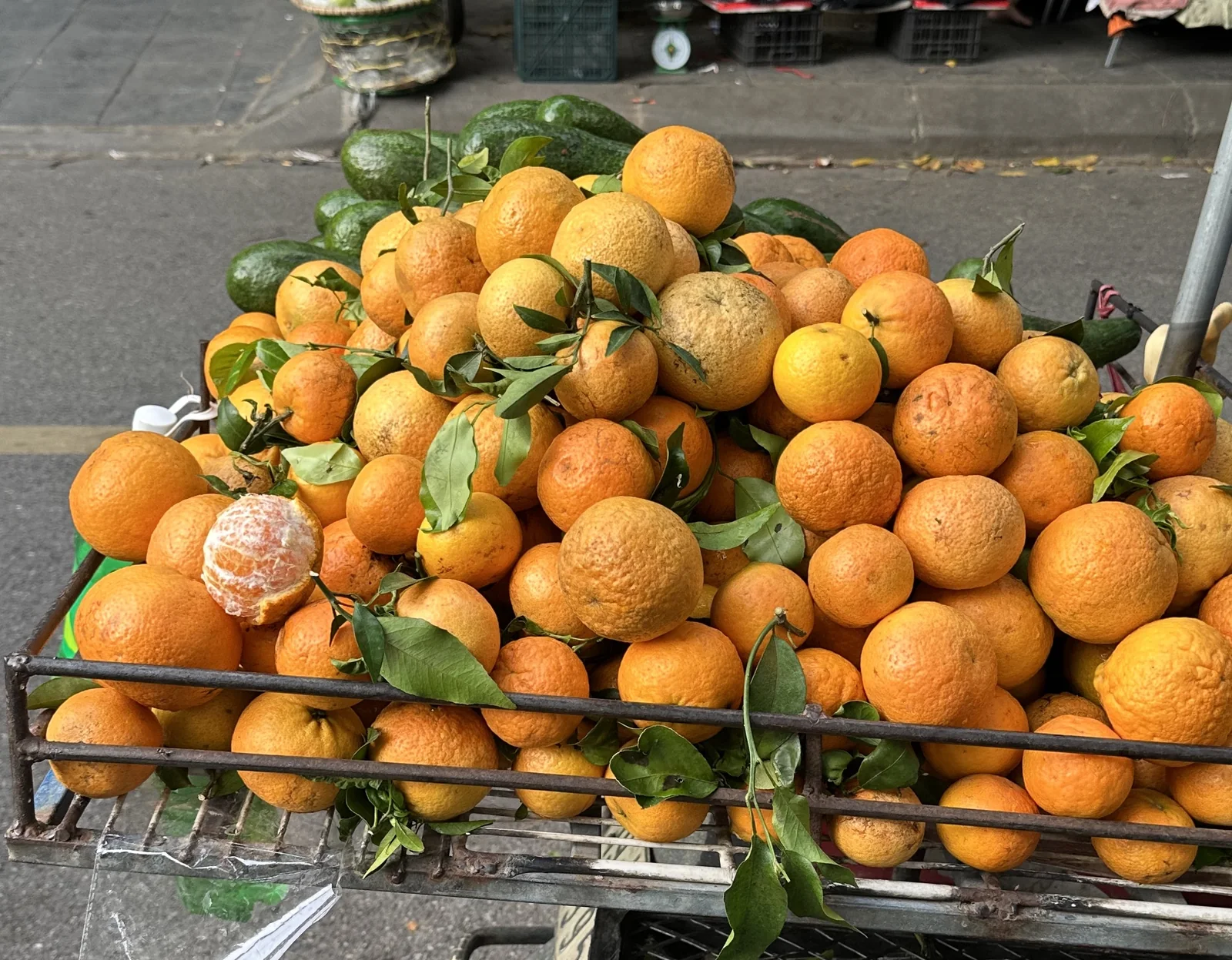
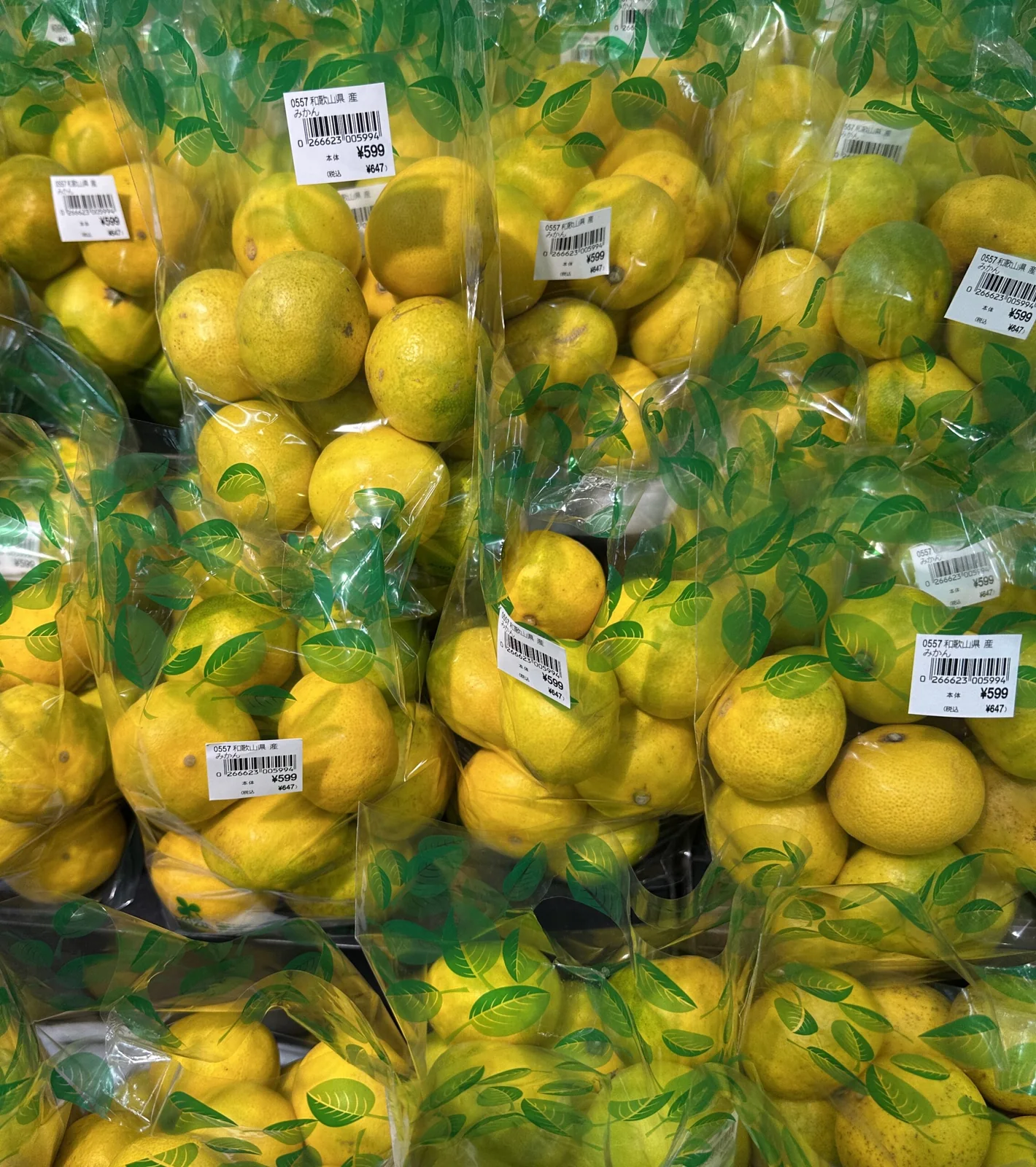
The photos are separate examples. Their weights cannot be confirmed from the photographs, so those prices were not used in the table.
Related articles: Mandarin guide · Mandarin story · Mandarin eating tips
Imported Fruit Is Not Always Expensive
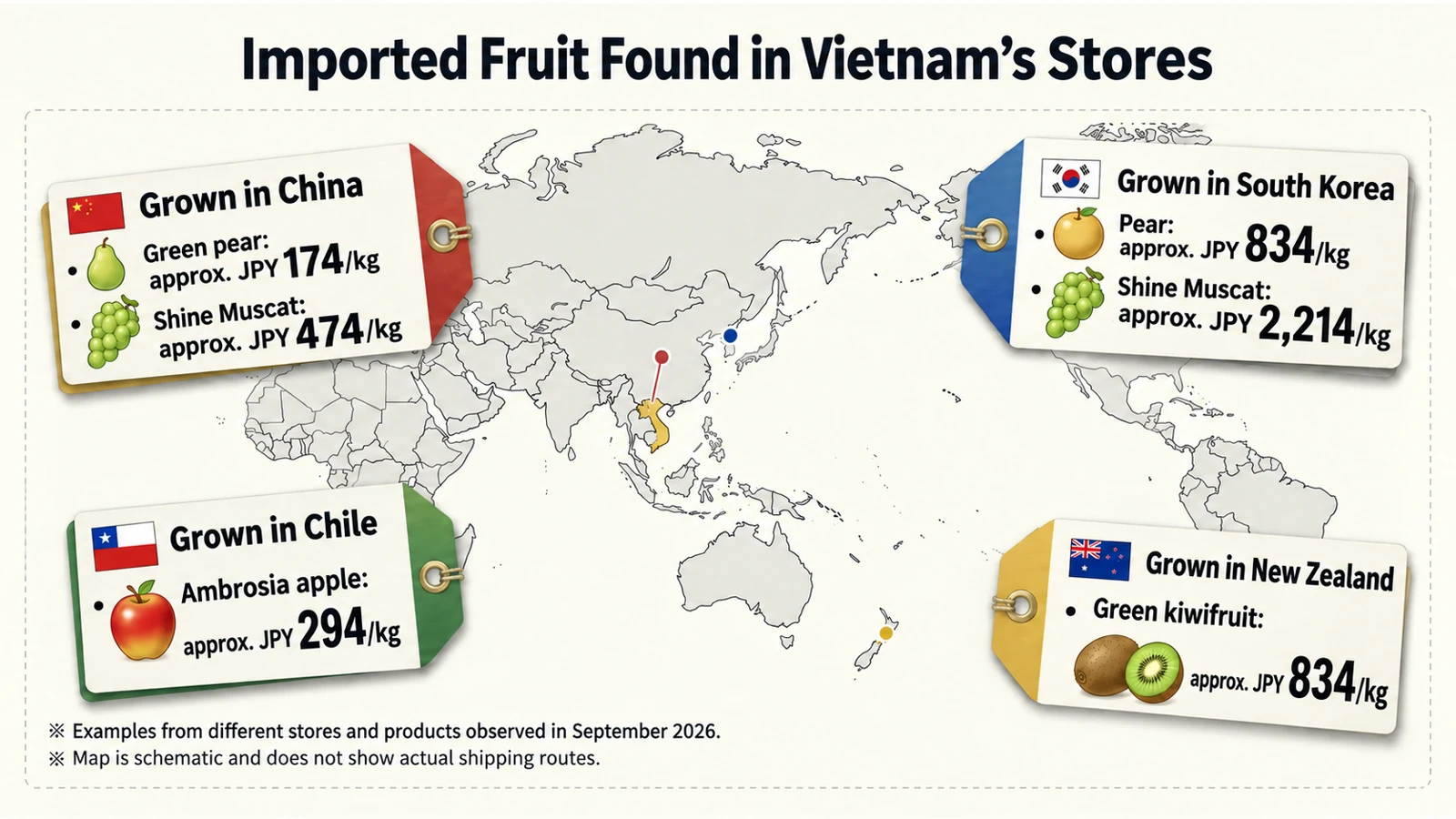
Apple: Chilean Ambrosia at About JPY 294/kg
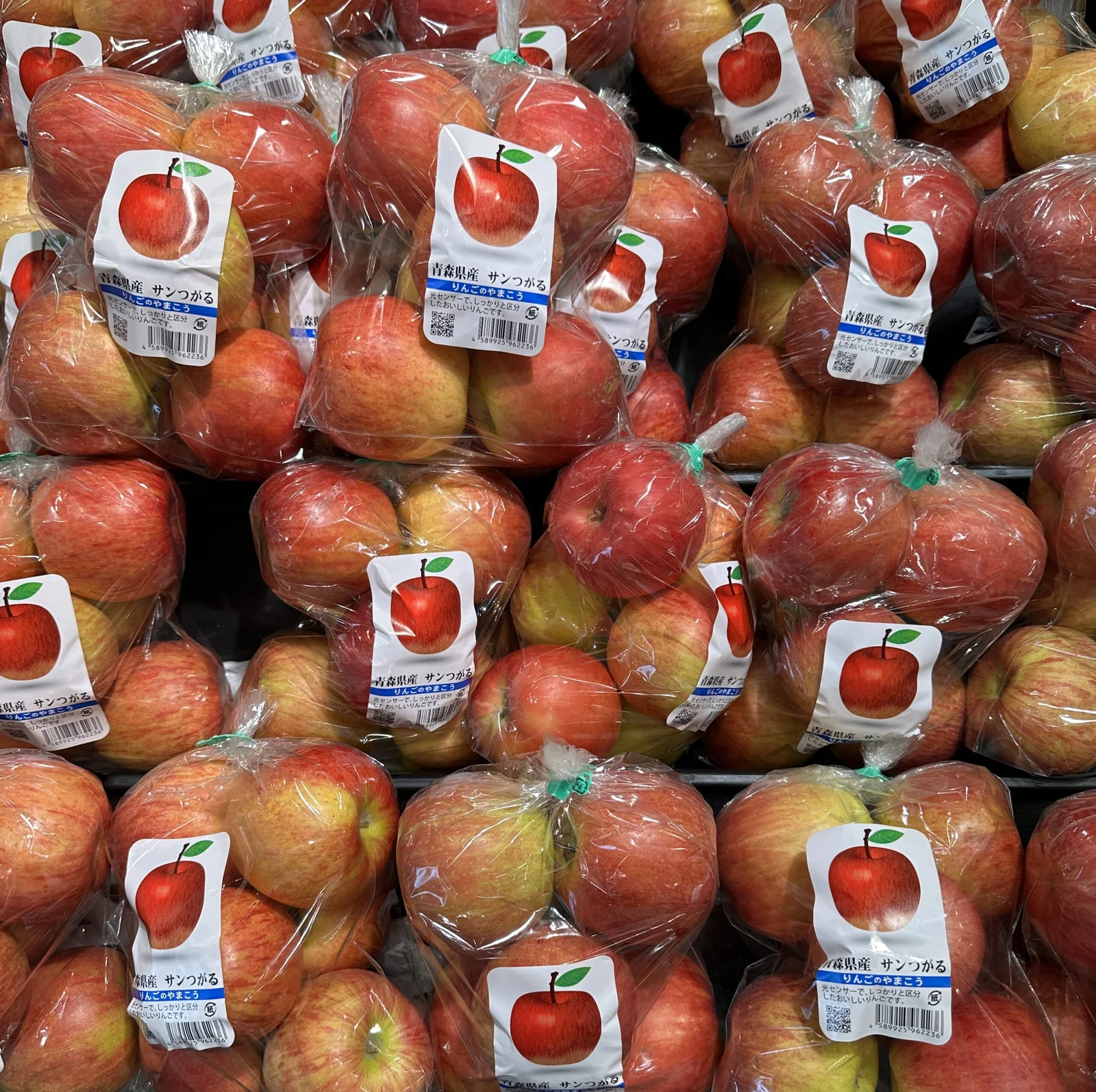
GO’s “Táo Ambrosia Chile” was grown in Chile and cost VND 49,000/kg, about JPY 294/kg, reduced from VND 69,000/kg. Japan’s Fuji or Tsugaru figure was JPY 845/kg, about 2.87 times higher.
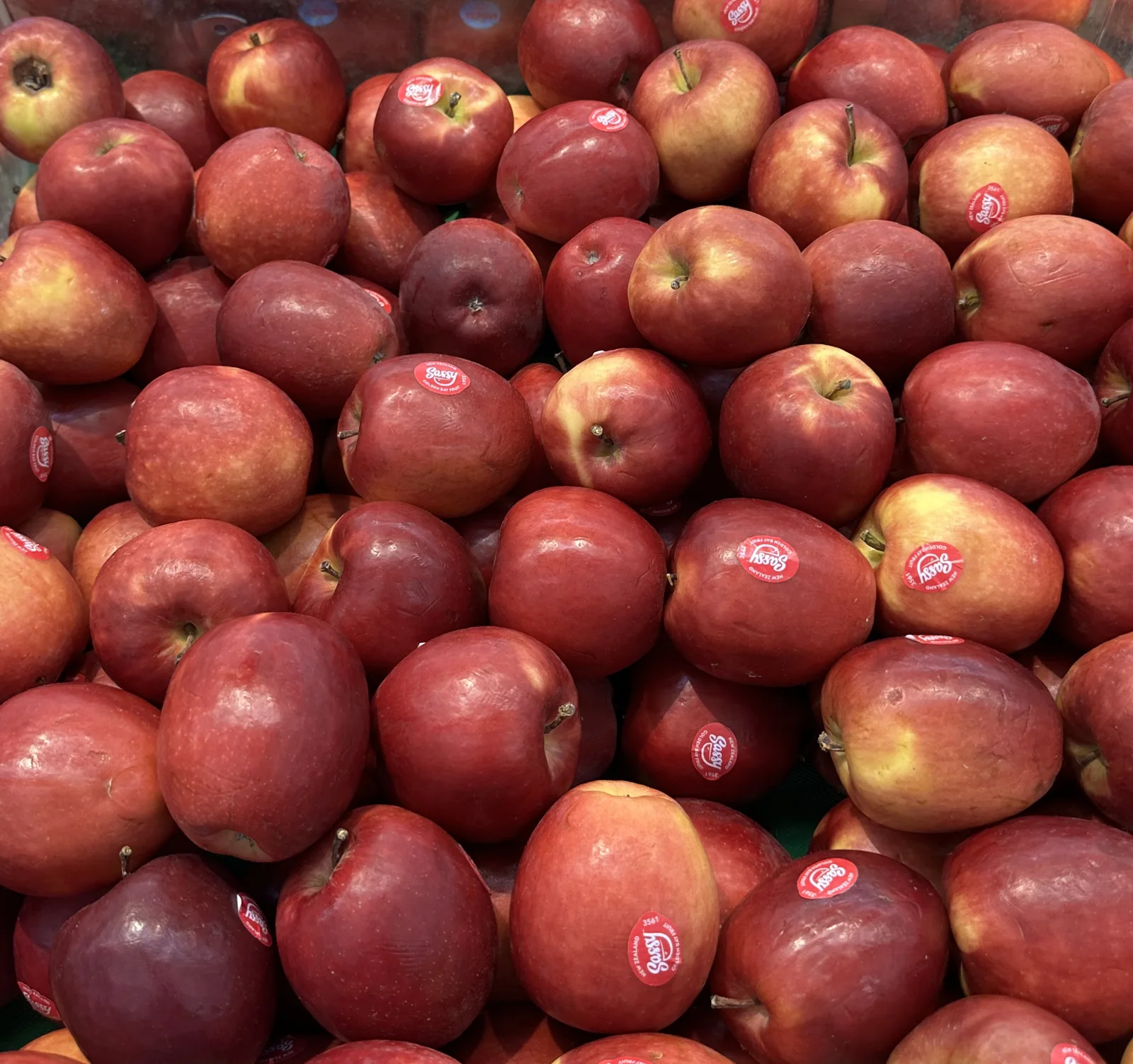
Lotte Mart also carried New Zealand apples: Koru at VND 89,000/kg, Queen at VND 109,000/kg and Jazz at VND 119,000/kg. The observed prices differed by origin and variety.
Related articles: Apple guide · Apple story · Apple eating tips
Pear: Different Labels for Chinese and South Korean Products
GO’s Chinese green pear, “Lê xanh Trung Quốc,” cost VND 29,000/kg, about JPY 174/kg. The Japanese pear figure was JPY 979/kg, about 5.63 times higher.
AEON MaxValu offered South Korean pears at VND 139,000/kg, about JPY 834/kg. That leaves a difference of about JPY 145/kg against Japan. The amount paid changes depending on which product is chosen.
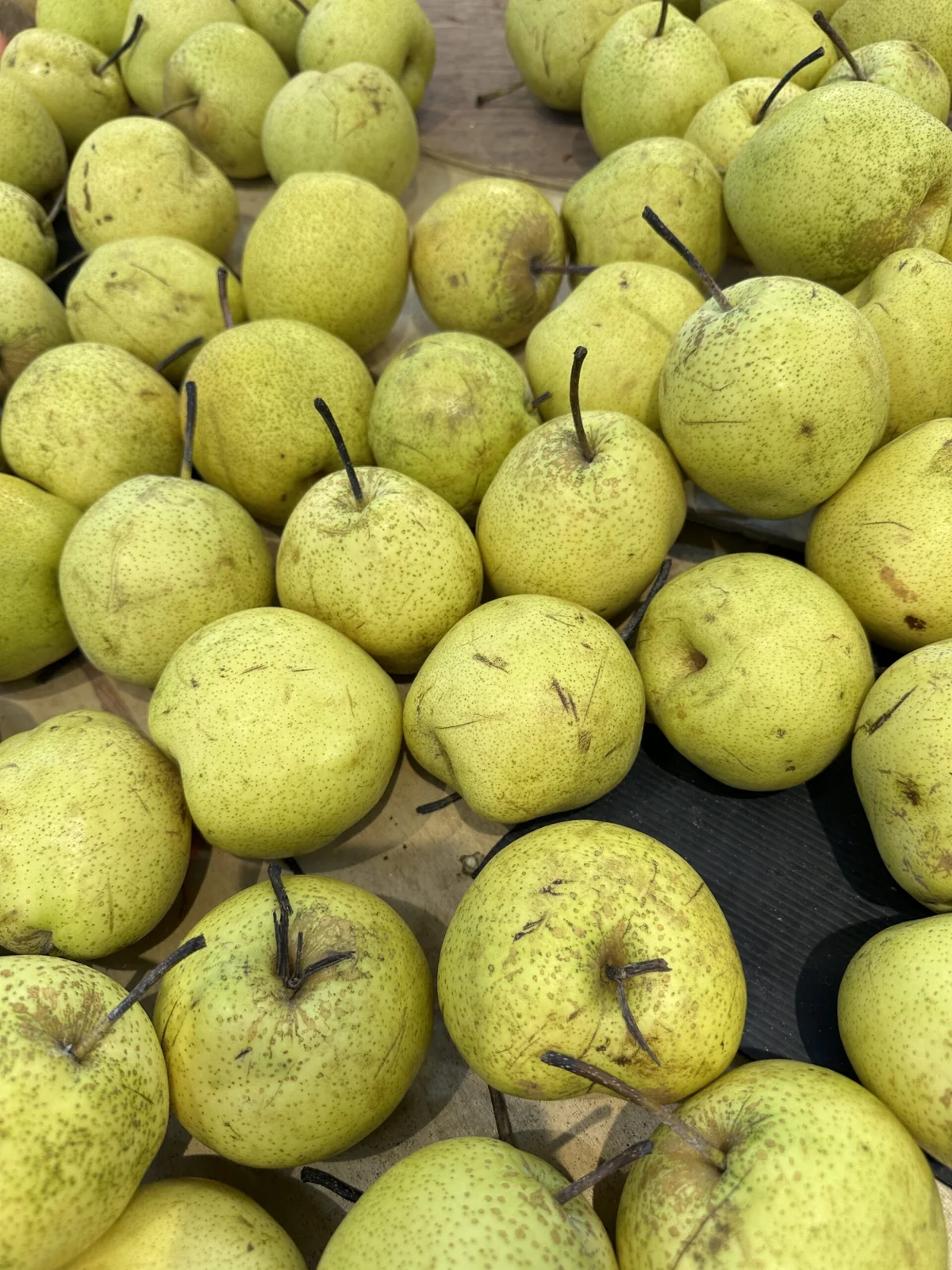
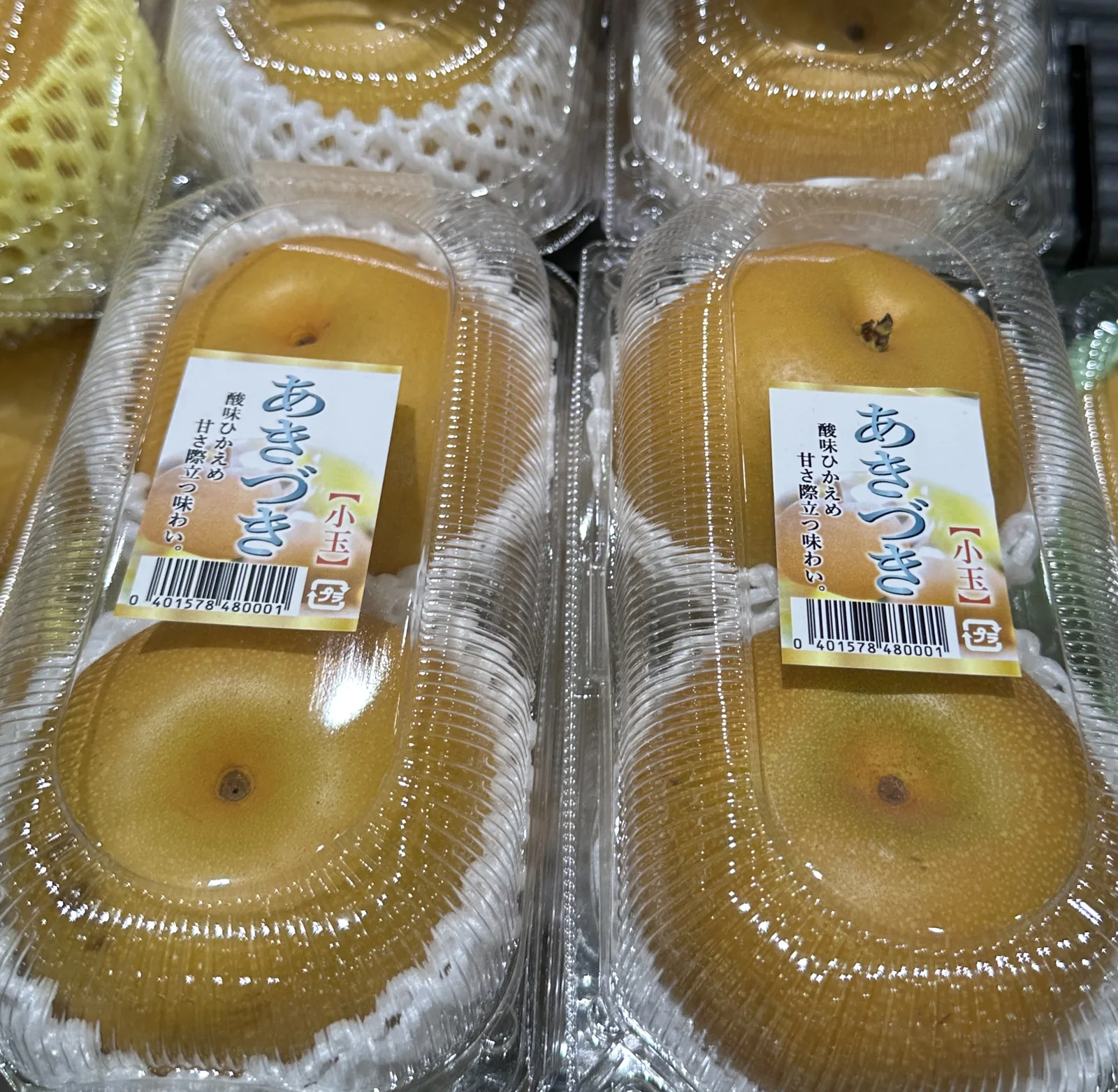
→ Pear Guide / Pear History & Stories / How to Eat Pears
Peach: A Chinese-Grown Product at AEON MaxValu
“TRÁI ĐÀO TƯƠI TQ L1” listed China as its origin and cost VND 99,000/kg, about JPY 594/kg. The Japan peach figure was JPY 1,555/kg, about 2.62 times higher. For fruit packed in protective nets, checking the weight unit makes comparison easier than counting pieces alone.
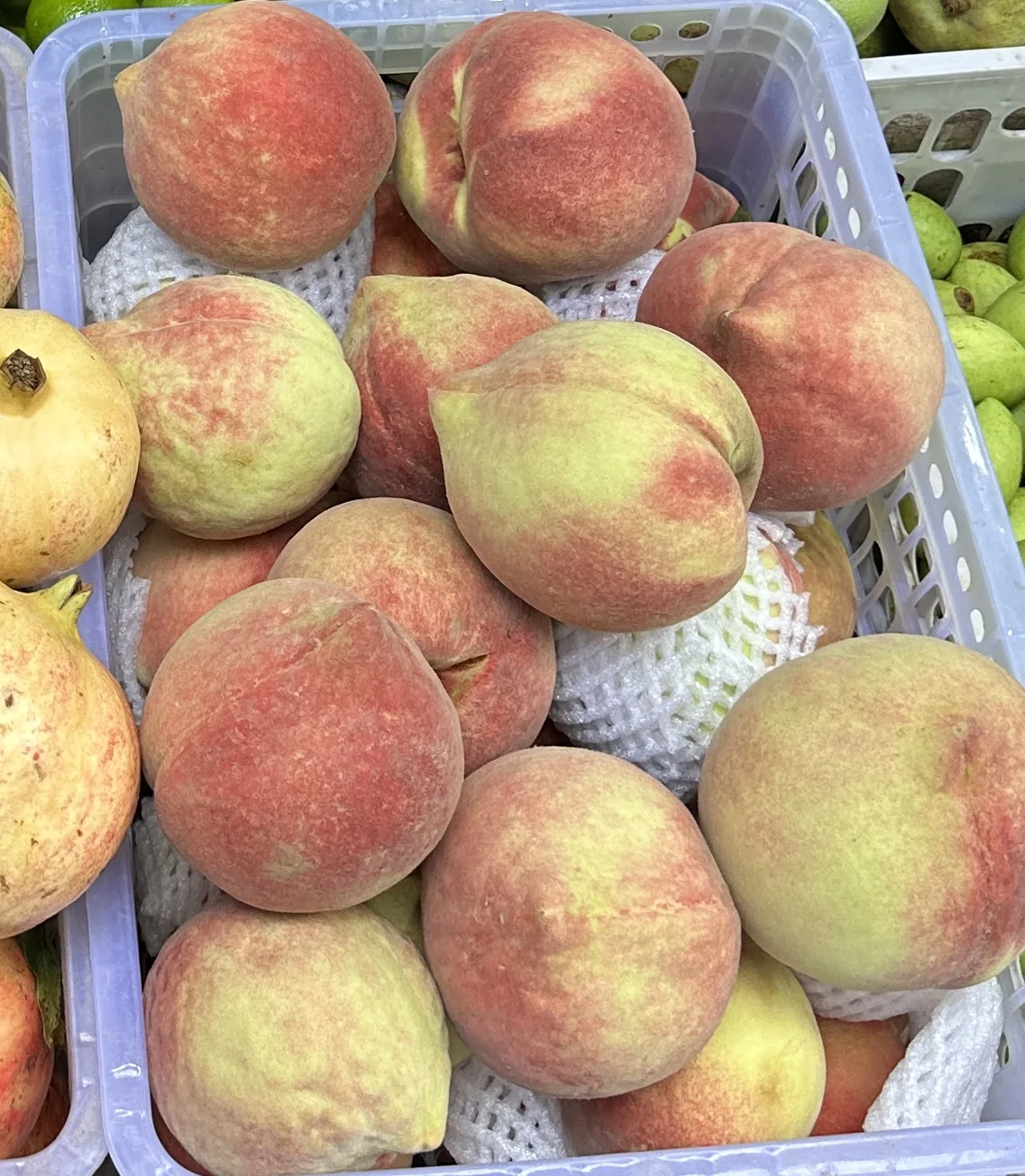
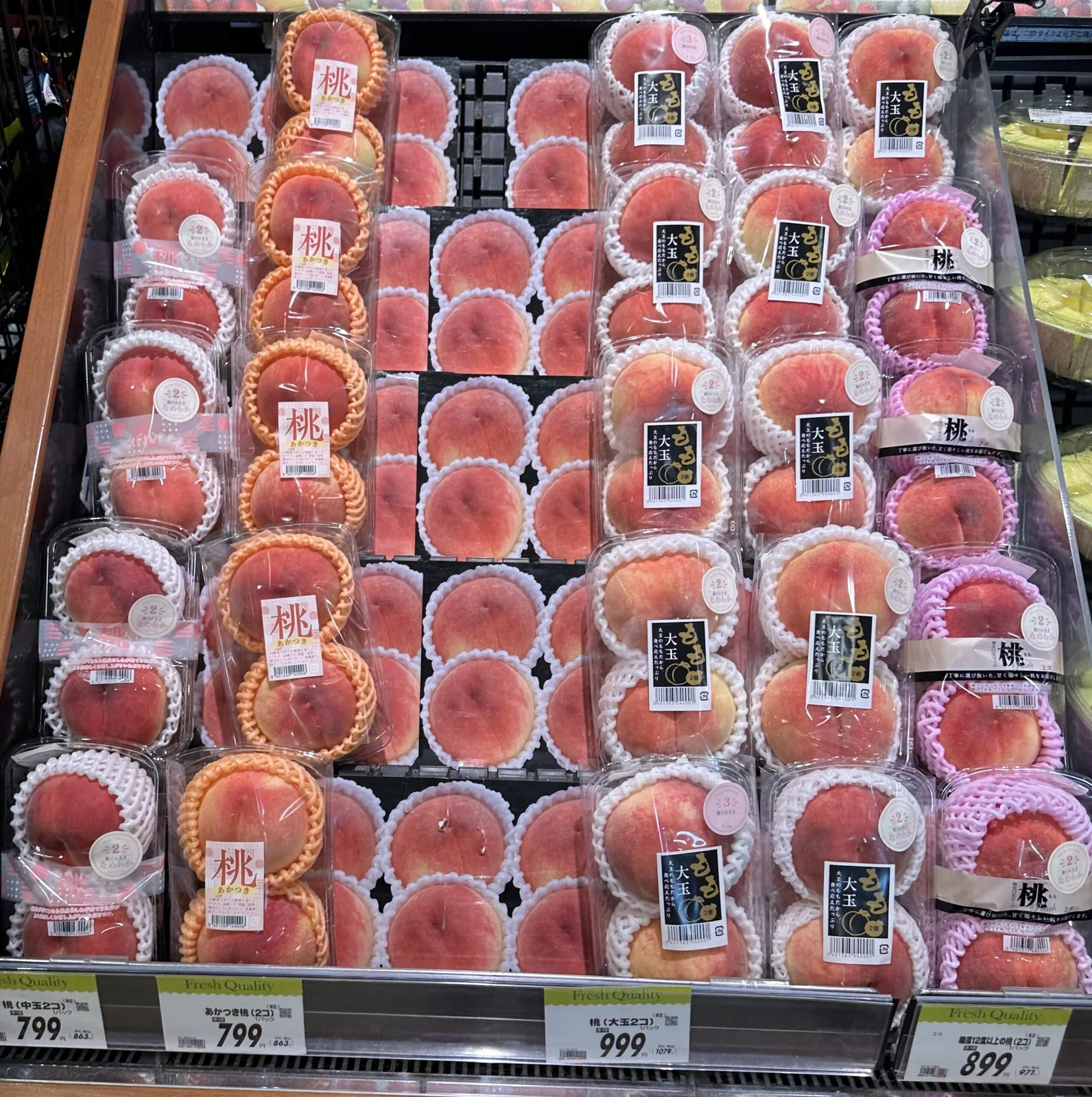
→ Peach Guide / Peach History & Stories / How to Eat Peaches
Shine Muscat: Chinese and South Korean Products Differ in Price
GO’s Chinese-grown Shine Muscat cost VND 79,000/kg, about JPY 474/kg. Lotte Mart’s South Korean product cost VND 369,000/kg, about JPY 2,214/kg.
Japanese-grown Shine Muscat was JPY 3,383/kg: about 7.14 times the GO example and 1.53 times the Lotte Mart example. Origin identifies product differences, but these sources do not determine the causes of the price gap.
GO also had a separate 500 g product at VND 59,000. Matching weights helps when comparing box prices. An additional September 13 photo confirmed VND 79,000/kg on a Shine Muscat label with “TQ,” indicating China. Its weight was 1.416 kg and total VND 111,864, illustrating the distinction between pack price and unit price.
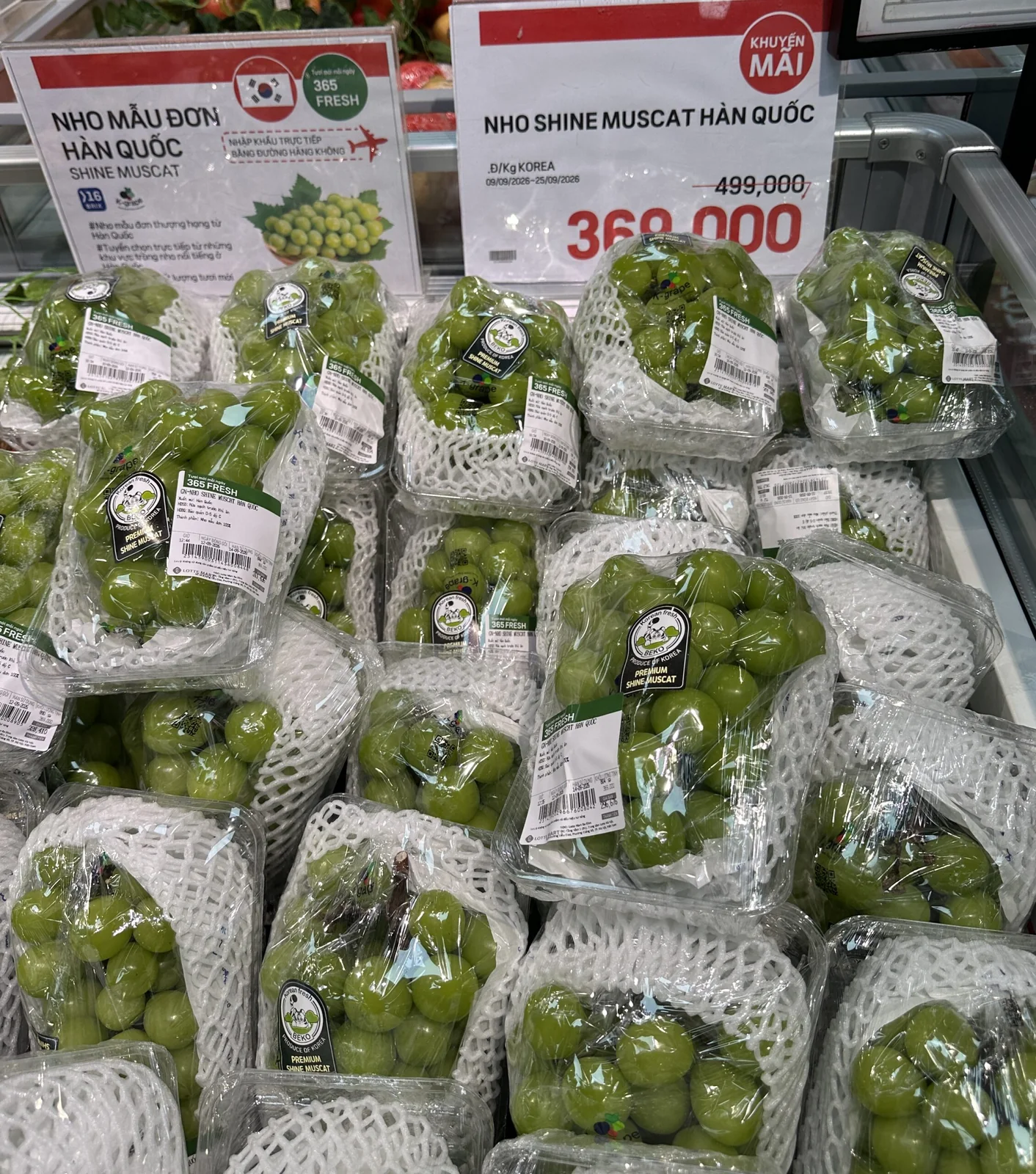
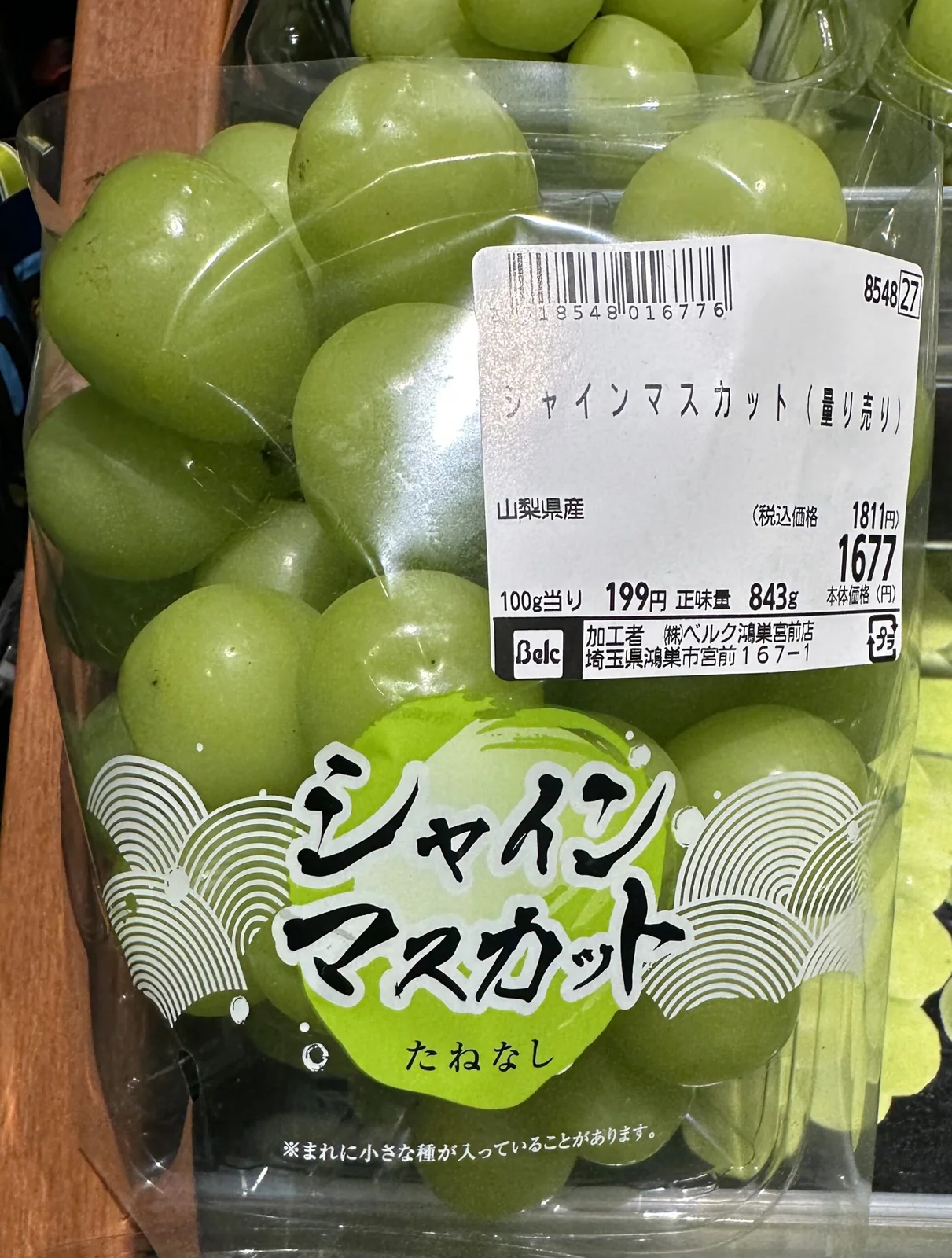
The Japanese photo is a separate retail example. The Japan price in the body and table uses 2025 retail price statistics.
Related articles: Grape guide · Grape story · Grape eating tips
Kiwifruit: Green at About JPY 834/kg, Gold at JPY 1,314/kg
The comparison uses New Zealand green kiwifruit at Lotte Mart: VND 139,000/kg, about JPY 834/kg. Japan’s figure was JPY 1,222/kg, about 1.47 times higher. The Japanese statistical table consulted does not establish the kiwifruit variety or origin.
Lotte Mart’s gold kiwifruit cost VND 219,000/kg, about JPY 1,314/kg. Choosing green or gold changes the bill. A four-fruit GO pack at VND 69,000 had no known weight and was excluded from the per-kg table.
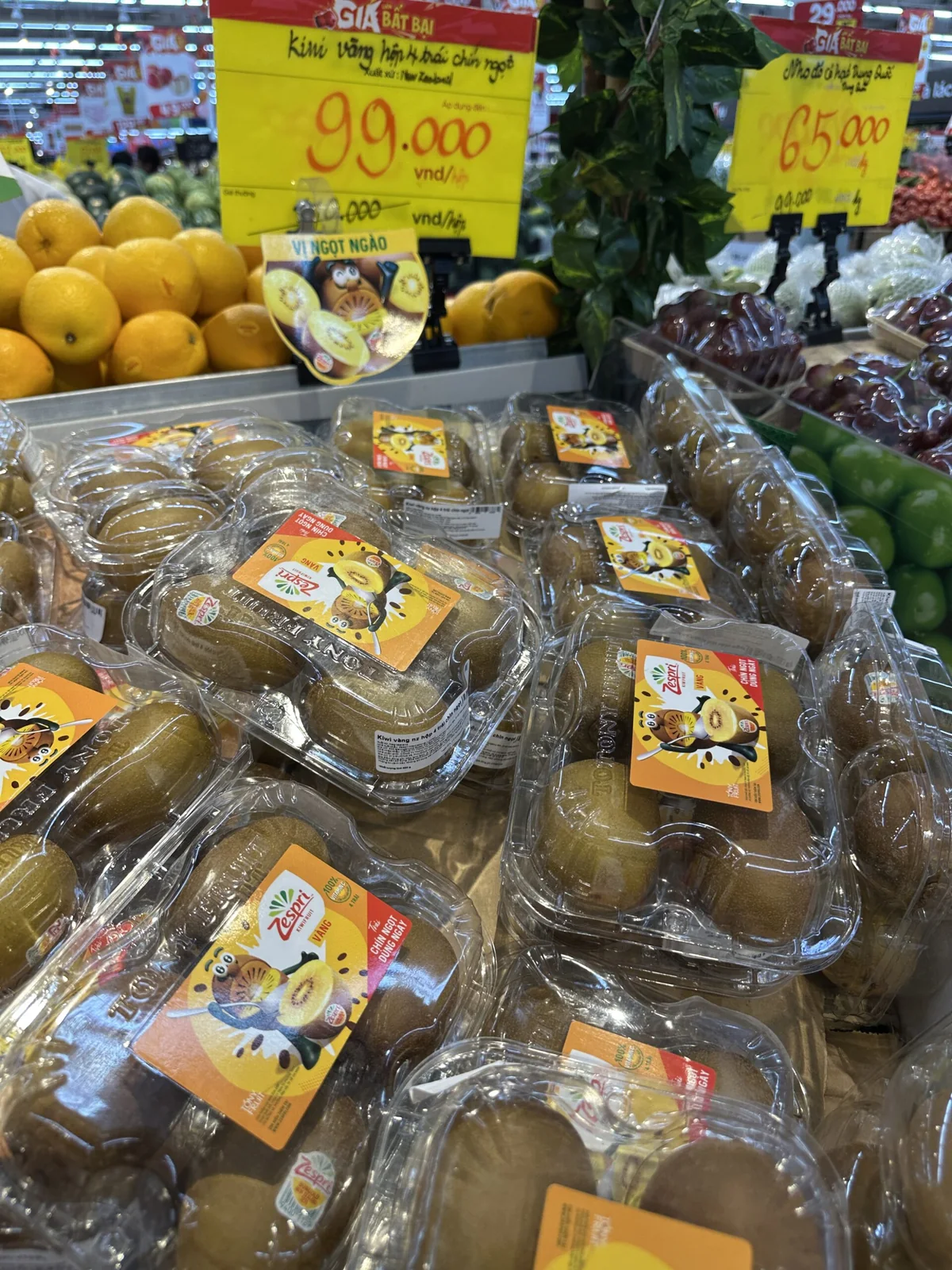
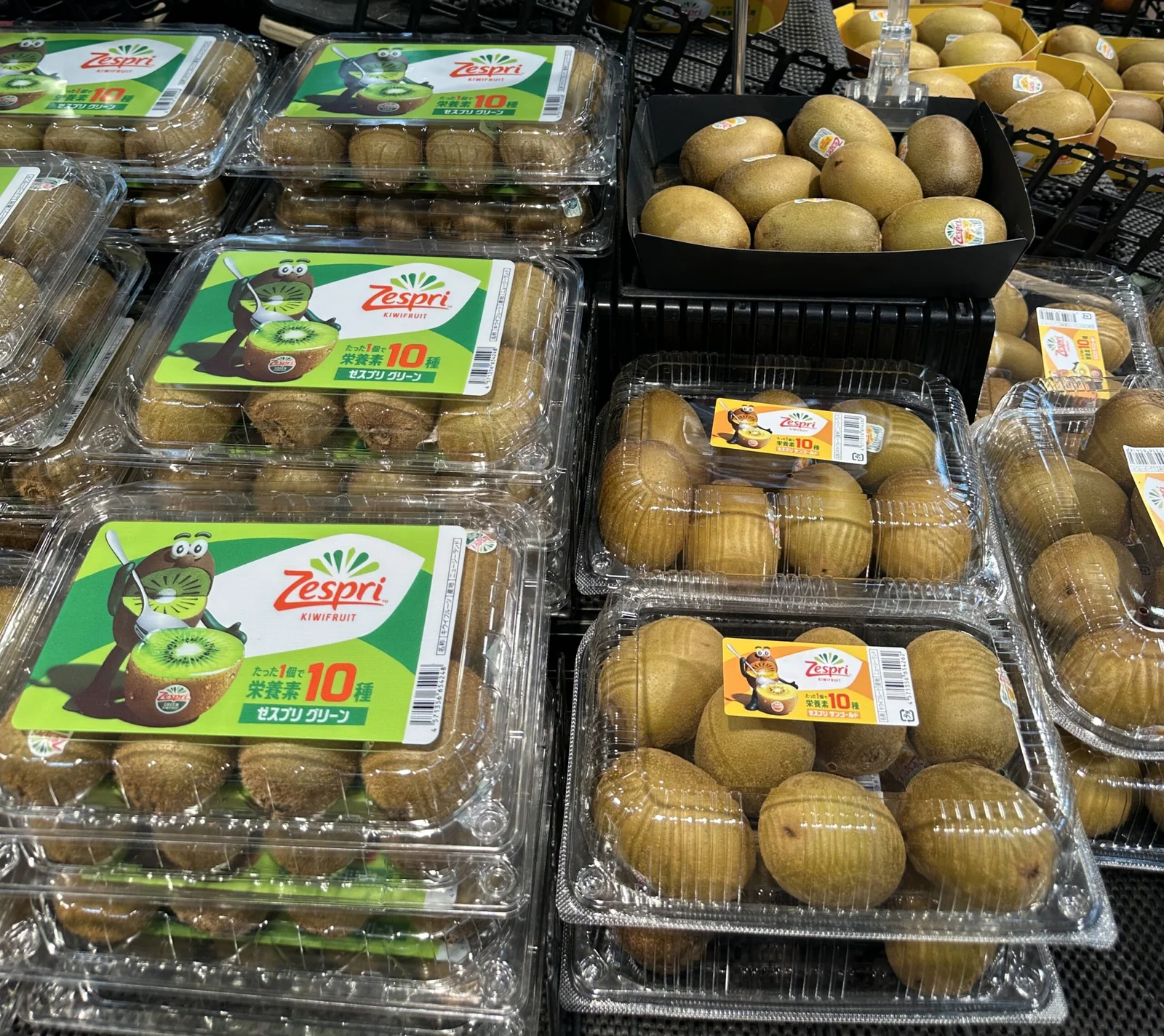
Related articles: Kiwifruit guide · Kiwifruit story · Kiwifruit eating tips
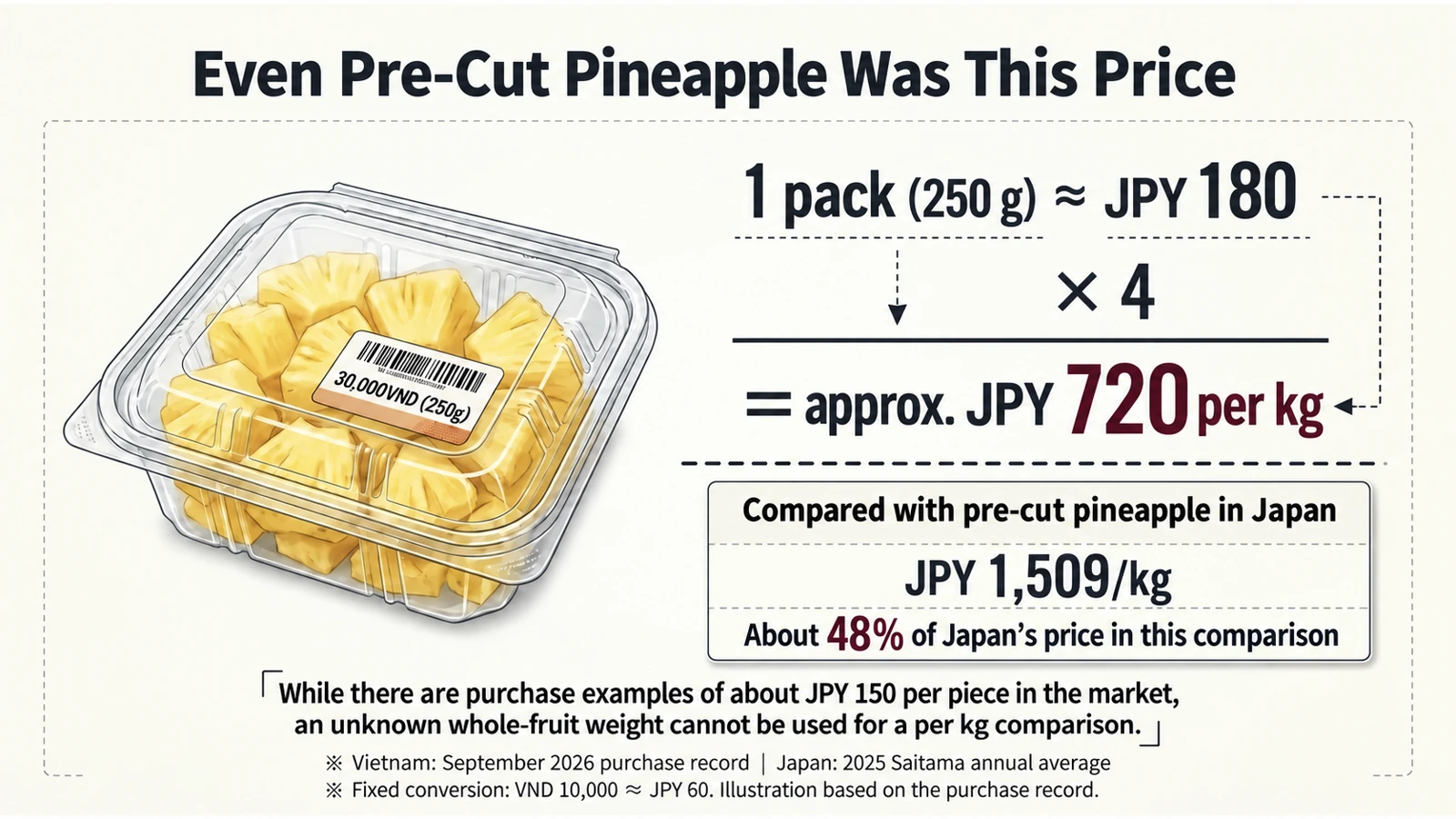
Pineapple: About JPY 180 for a Pre-Cut 250 g Pack
On September 19, 2026, the author bought “DỨA VIBA” at AEON MaxValu, Khuat Duy Tien branch. The pre-cut 250 g pack cost VND 30,000, about JPY 180. Both the label and receipt stated 250 g, and the receipt confirmed that the price included tax.
The purchased pack represented half a pineapple. At the same unit price, a whole-fruit equivalent would be 500 g for VND 60,000, about JPY 360. This calculation applies only to that product; it is not the weight of an unpeeled pineapple or a standard size for all pineapples.
Per kilogram, the price was VND 120,000, about JPY 720. The Japan figure for Philippine-grown pre-cut pineapple was JPY 1,509/kg, about 2.10 times higher, with a difference of roughly JPY 789/kg. Both sides compare the weight of peeled, pre-cut products.
The manufacturer was Vietnam’s VIBA company. The manufacturer’s address is distinct from where the fruit was grown; the available sources do not establish its cultivation origin.
As separate examples, Lotte Mart’s Vietnam-grown whole pineapple cost VND 45,000/kg, about JPY 270/kg. At an open-air Hanoi market on July 5, 2026, the author paid VND 25,000, about JPY 150, for one fruit with peeling included. That purchase has no recorded weight, so the 500 g figure above is not applied to it.
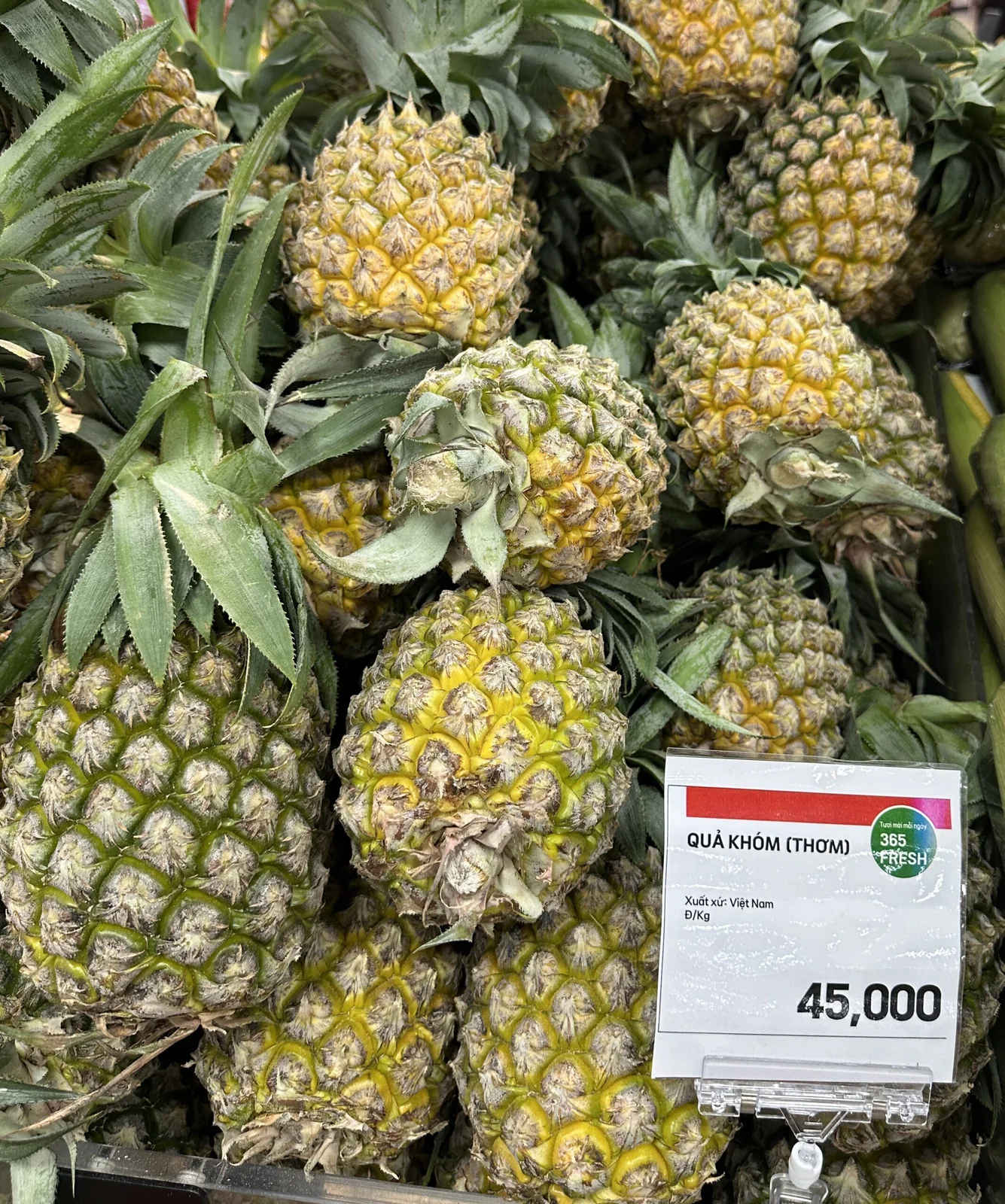
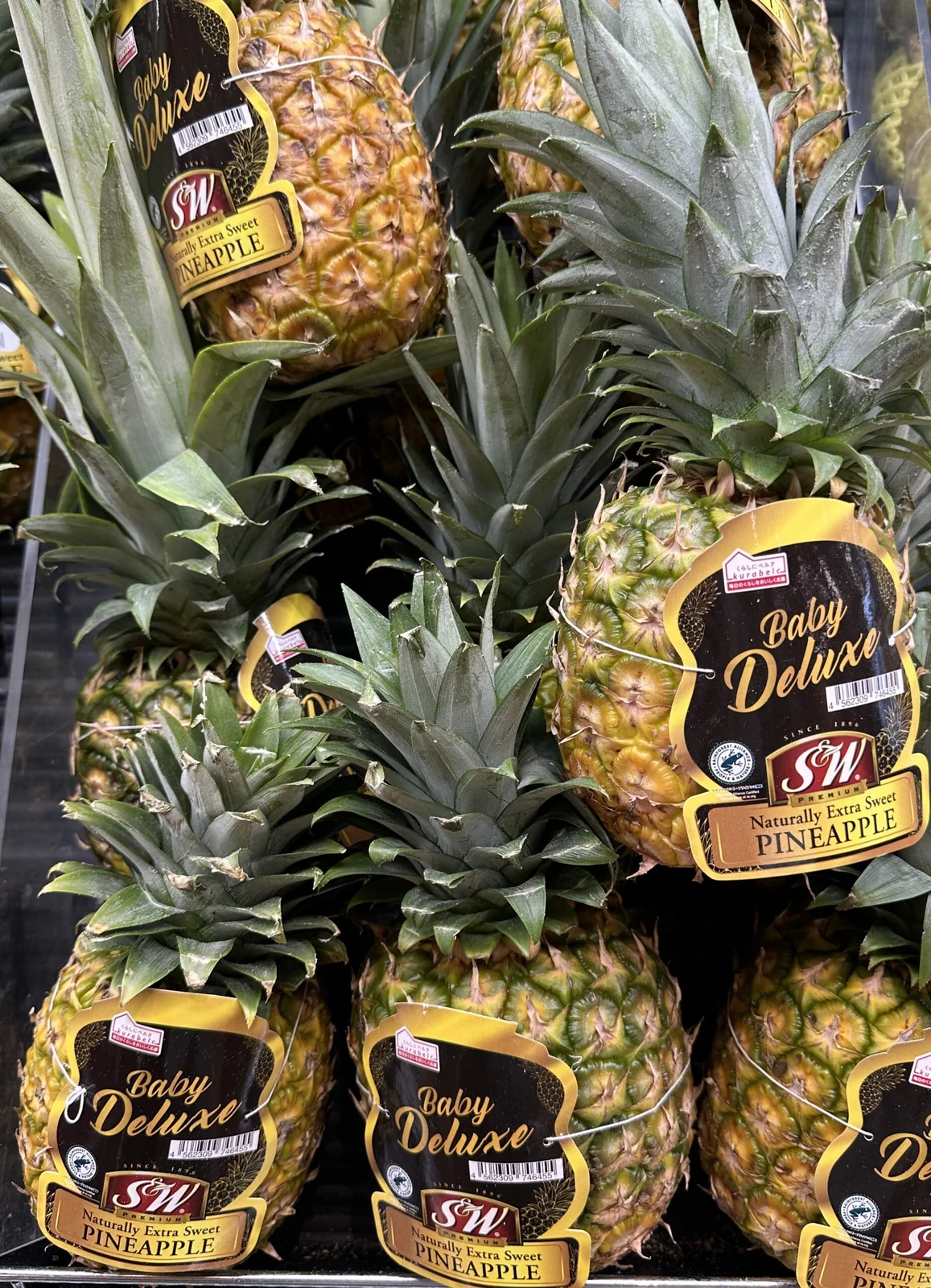
These photographs show unpeeled products. The Japanese whole fruit has no confirmed weight and was excluded from the comparison of pre-cut pineapple per kilogram.
Related articles: Pineapple guide · Pineapple story · Pineapple eating tips
How to Read Fruit Price Labels in Vietnam
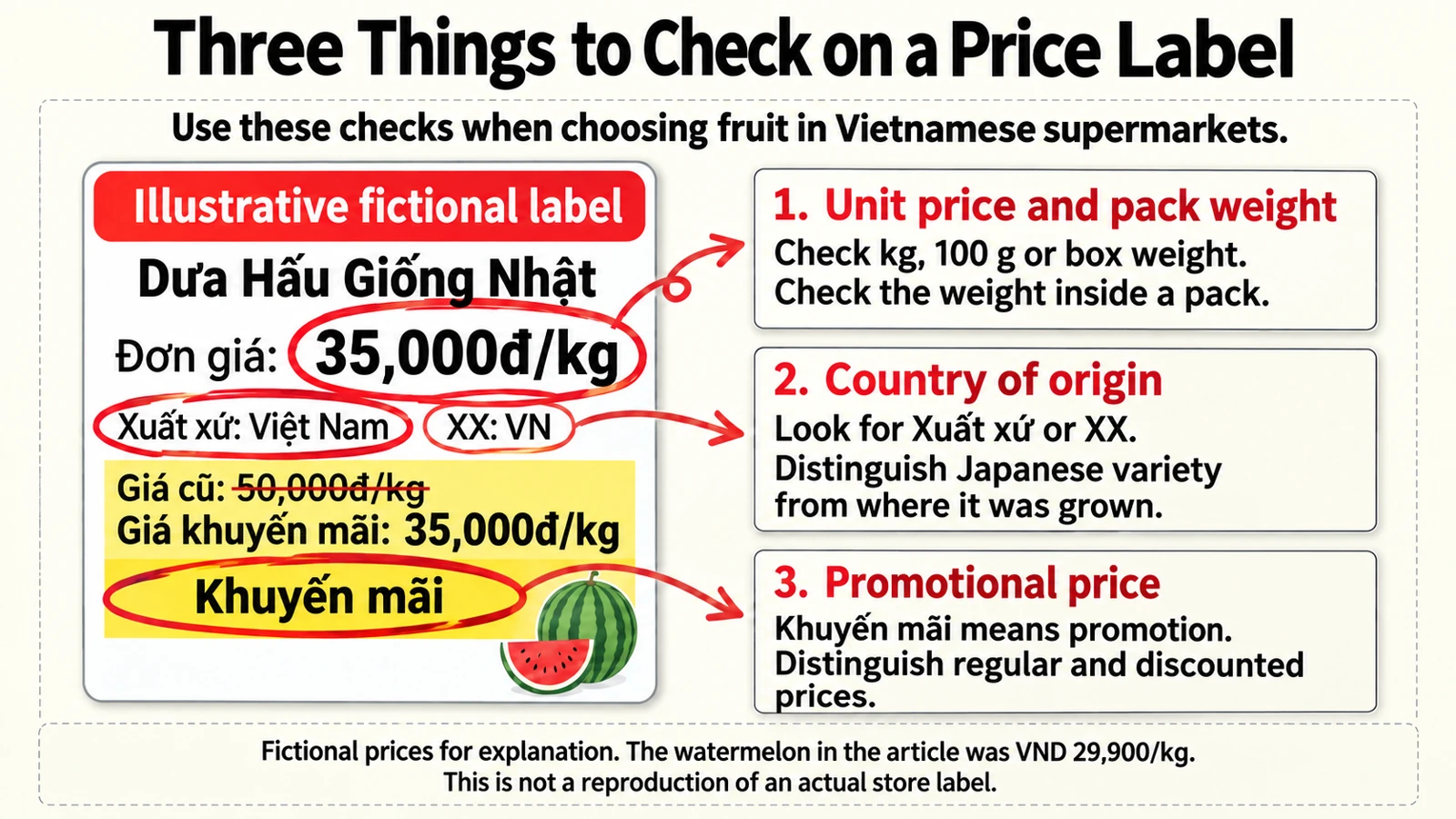
In this sample, bananas and apples were cheaper in Vietnam, while strawberries and cherries were cheaper in Japan. Even within the same fruit category, the choice of product changes the price gap. These three checks help explain the amount payable and the product differences:
- Unit price and weight: check kg, 100 g or the box weight. Converting to JPY/kg makes comparison easier.
- Origin: look for “Xuất xứ” or “XX.” A Japanese variety is not necessarily grown in Japan.
- Promotions: distinguish regular and discounted prices. Several products in this survey were on promotion.
Both the inexpensive banana and the expensive strawberry are examples encountered in this survey. Fruits familiar from Japan can offer different choices of origin and variety in Vietnam.
More Vietnamese Fruits Beyond These 15 Price Comparisons
The 15 fruits above are familiar to Japanese shoppers. Vietnam’s markets and supermarkets offer many other fruits too. The following are not included in this price comparison:
- Dragon fruit: White-fleshed varieties have bright red skin and white flesh dotted with black seeds; red-fleshed varieties are also available. Dragon Fruit Guide · Story · Eating tips
- Mangosteen: Often called the queen of fruits, with thick purple rind and delicately sweet-tart white flesh. Mangosteen guide · Story · Eating tips
- Rambutan: Red skin covered with soft hairs and juicy sweetness reminiscent of lychee. Rambutan guide · Story · Eating tips
- Jackfruit: Among the world’s largest fruits, with a strong aroma and a distinctive firm, chewy texture. Jackfruit guide · Story · Eating tips
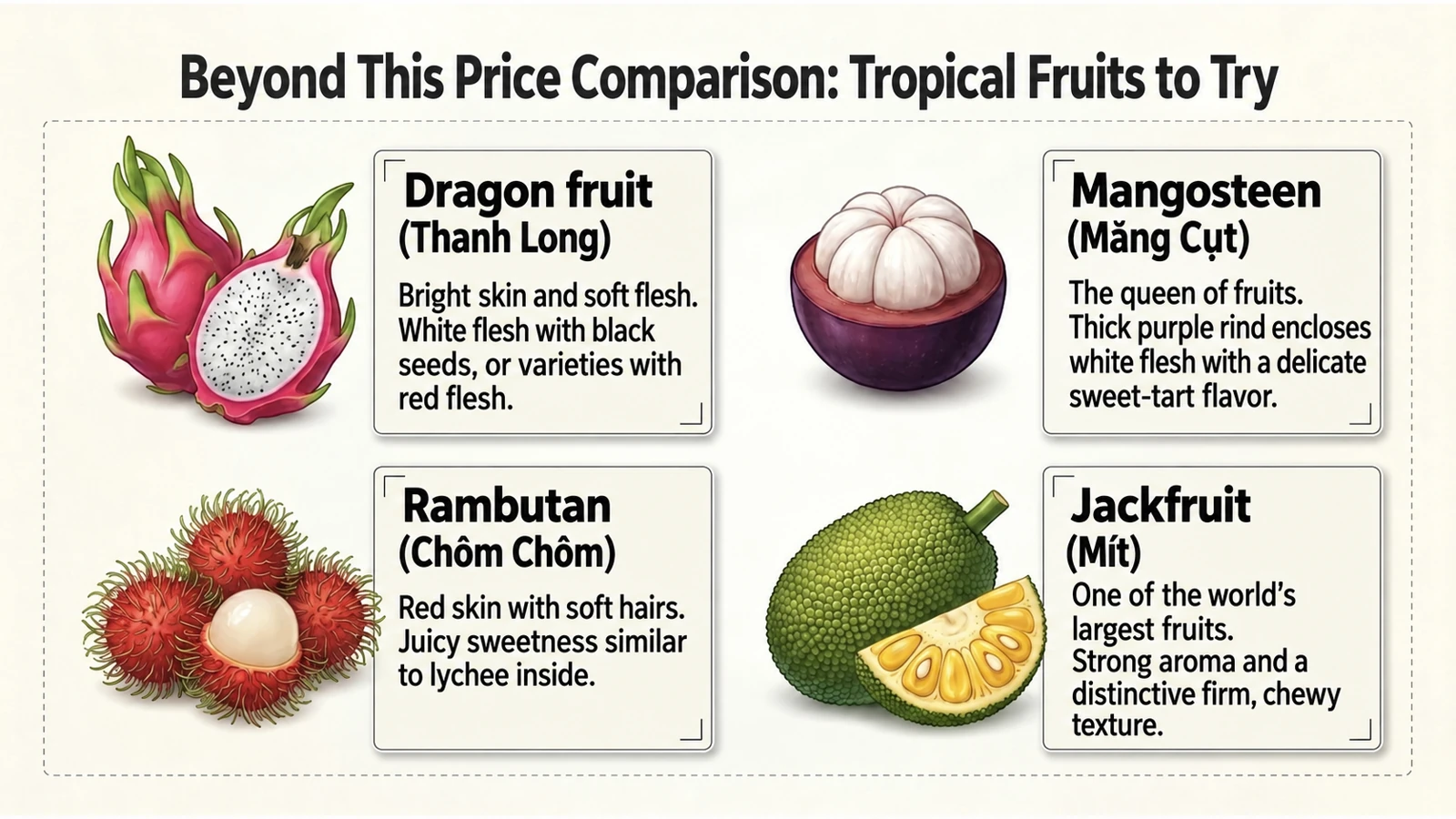
Longan, lychee, guava, pomelo and wax apple are other choices that are less commonly seen in Japanese stores. For an overview, see 15 Vietnamese Fruits and 15 Fruits Vietnamese People Eat After Meals.
- Longan: Guide · Story · Eating tips
- Lychee: Guide · Story · Eating tips
- Guava: Guide · Story · Eating tips
- Pomelo: Guide · Story · Eating tips
- Wax apple: Guide · Story · Eating tips
Can You Bring Fruit Bought in Vietnam to Japan?
Many fresh fruits are prohibited from entering Japan to prevent the introduction of pests and diseases. Eligibility depends on the country, fruit species and processing; processed products are not automatically exempt. Before travel, check the latest requirements in the MAFF Plant Protection Station’s guidance for travelers.
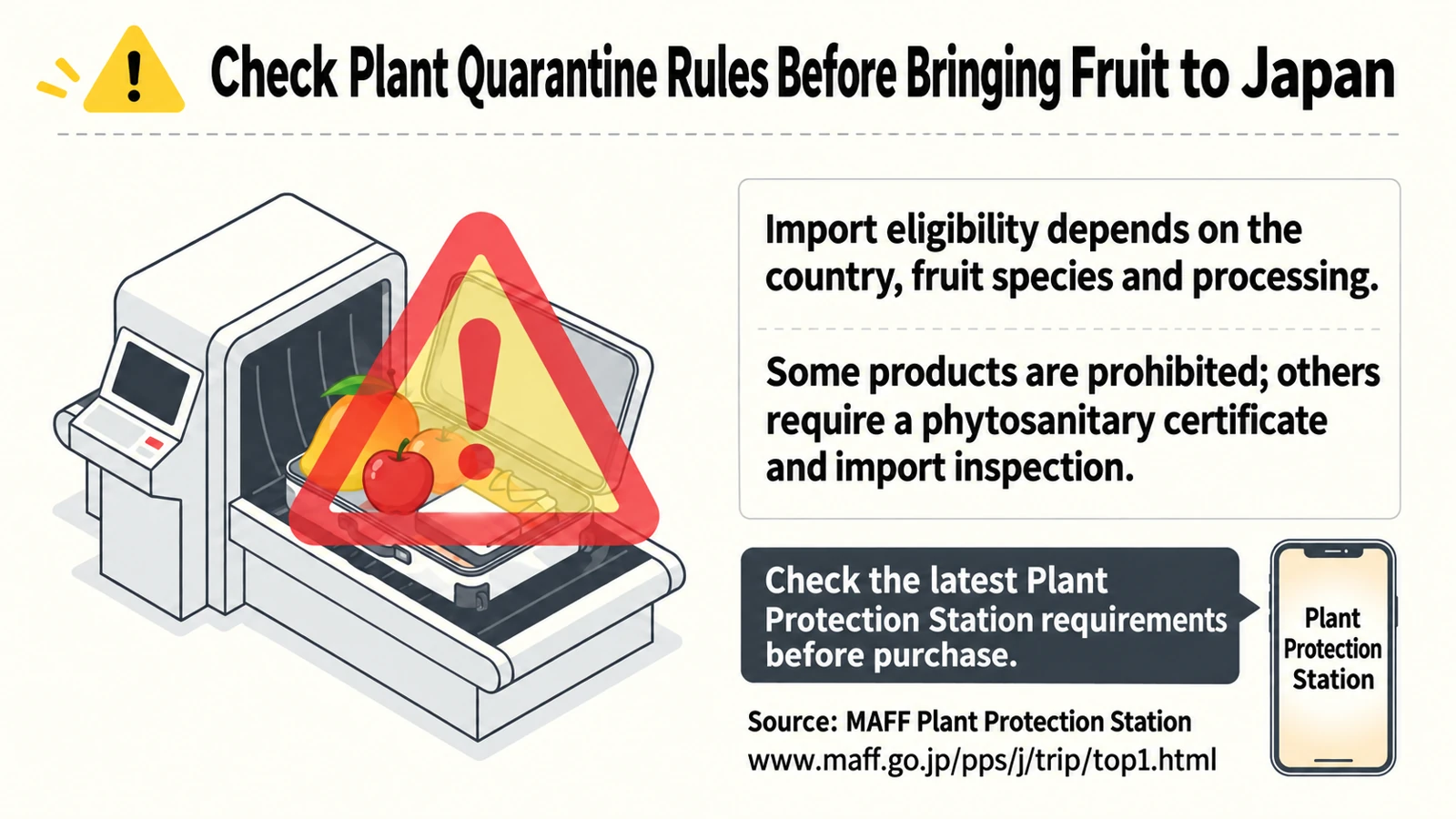
For a fruit that interests you, use the guide to learn its characteristics, the story article for its background and the eating article for ways to enjoy it. The individual fruit articles linked here are in English.
Frequently Asked Questions About Fruit Prices in Vietnam and Japan
Is fruit cheaper in Vietnam than in Japan?
Of the 15 products selected here, 13 were cheaper on the Vietnam side. Strawberries and cherries were cheaper on the Japan side. This compares September 2026 Vietnam retail examples with Japanese sources from 2025; it is not a national average or a same-variety, same-date comparison.
What should I check when comparing fruit prices?
Check unit price, weight, origin, variety and promotions. A per-fruit or per-box price can be converted to a price per kilogram if the weight is known. Also distinguish product states, such as whole unpeeled fruit and pre-cut fruit.
Does this article use the current exchange rate?
No. It uses a fixed comparison conversion of VND 10,000 ≈ JPY 60, not a market exchange rate for a specific date. The actual payment depends on the purchase price and the exchange rate applied at payment.
Choose Your Next Vietnamese Fruit Guide
- 15 Vietnamese Fruits: Photos, Seasons, Prices and How to Eat — for choosing fruit to try for the first time.
- 15 Fruits Vietnamese People Eat After Meals — for everyday fruit and salt-dipping habits.
Each article covers different fruits, survey dates and retail examples. Read its conditions when comparing prices or seasons.
Survey Locations, Comparison Method and Sources
Pineapple: the September 19, 2026 purchase receipt from AEON MaxValu, Khuat Duy Tien branch, and the DỨA VIBA label. The source states 250 g and VND 30,000. The half-fruit quantity comes from the author’s observation at purchase; 500 g and VND 60,000 for a whole-fruit equivalent are calculations at the same unit price.
GO observations were made at GO! Thăng Long. For the September 13 melon and Shine Muscat records, unit prices, weights and totals were checked against each other. The four-supermarket photographs were recorded on September 12, 2026. Cherries use Klever Fruit’s official Ho Chi Minh City online listing checked on the same day.
Japan’s main source is the Statistics Bureau’s Retail Price Survey, 2025 Table 1, fruit. We use Saitama’s published annual-average column: city retail price statistics rather than one supermarket’s shelf labels. All original units are 1 kg. The pear entry carries a note about a specification revision in August 2025.
Mango: Tropical Farm Yamakawa’s 2025 season product list, home-use A, A-7. Approximately 1 kg of Irwin mangoes, JPY 3,564 including tax, excluding shipping and box fees. The document also specifies a flat JPY 110 cardboard-box fee. The per-kg amount is approximate because the weight is approximately 1 kg. This is a producer direct-sale example from Ibusuki, Kagoshima.
Imported cherries: page 2 of the Tobu Utsunomiya Department Store flyer published July 23, 2025. American cherries grown in the United States, 500 g for JPY 980 including tax; dividing by 0.5 kg gives JPY 1,960/kg. This is a department-store advertisement from Tochigi.
Dates, locations and source types are stated to identify this comparison of past Japanese prices with September 2026 Vietnam retail examples. Unconfirmed original prices or origins have not been filled in by inference.
View Additional Lotte Mall Product Prices
Lotte Mall Product Records
All products below were observed at Lotte Mart inside Lotte Mall on September 12, 2026. They include different stores or products from the main comparison table.
| Fruit / product | Origin | Shelf price | Approx. JPY | Conditions |
|---|---|---|---|---|
| Mandarin — Quýt Úc | Australia | 129,000 VND / kg | approx. 774 JPY / kg | No regular price shown alongside |
| Orange — Cam sành vắt nước | Vietnam | 41,000 VND / kg | approx. 246 JPY / kg | No regular price shown alongside |
| Mango — Xoài tứ quý | Vietnam | 64,900 VND / kg | approx. 389 JPY / kg | No regular price shown alongside |
| Mango — Xoài cát chu vàng | Vietnam | 75,000 VND / kg | approx. 450 JPY / kg | Promotion |
| Apple — Jazz | New Zealand | 119,000 VND / kg | approx. 714 JPY / kg | No regular price shown alongside |
| Apple — Koru | New Zealand | 89,000 VND / kg | approx. 534 JPY / kg | No regular price shown alongside |
| Grapes — Shine Muscat | South Korea | 369,000 VND / kg | approx. 2,214 JPY / kg | Promotion |
| Kiwifruit — gold, ripe, four-fruit pack | New Zealand | 99,000 VND / four-fruit pack | approx. 594 JPY / four-fruit pack | Promotion |
| Kiwifruit — gold | New Zealand | 219,000 VND / kg | approx. 1,314 JPY / kg | Promotion |
| Kiwifruit — green | New Zealand | 139,000 VND / kg | approx. 834 JPY / kg | Promotion |
| Orange — Navel | Australia | 94,000 VND / kg | approx. 564 JPY / kg | Promotion |
| Grapes — Nho đỏ ko hạt Mỹ (seedless red grapes) | United States | 329,000 VND / kg | approx. 1,974 JPY / kg | No regular price shown alongside |
| Grapes — Nho xanh K.H Mỹ (seedless green grapes) | United States | 289,000 VND / kg | approx. 1,734 JPY / kg | Promotion |
| Watermelon — Dưa hấu ruột đỏ loại 1 | Vietnam | 29,900 VND / kg | approx. 179 JPY / kg | No regular price shown alongside |
| Watermelon — Mặt trời đỏ size L | Vietnam | 120,000 VND / fruit | approx. 720 JPY / fruit | No regular price shown alongside |
| Watermelon — Dưa hấu không hạt (seedless) | Vietnam | 32,900 VND / kg | approx. 197 JPY / kg | No regular price shown alongside |
| Melon — Dưa lưới Pansy | Vietnam | 79,000 VND / kg | approx. 474 JPY / kg | No regular price shown alongside |
| Melon — Dưa lưới biển Ngọc Bích | Vietnam | 120,000 VND / kg | approx. 720 JPY / kg | No regular price shown alongside |
| Melon — Dưa lưới Huỳnh Long Chín Phê | Vietnam | 69,900 VND / kg | approx. 419 JPY / kg | No regular price shown alongside |
| Melon — Dưa lưới tròn ruột cam 9 Phê | Vietnam | 69,900 VND / kg | approx. 419 JPY / kg | Promotion |
| Mandarin — Quýt đường Lão Hiếu Liêm | Vietnam | 63,900 VND / 1 kg box | approx. 383 JPY / 1 kg box | Promotion |
| Pineapple — Quả khóm (thơm) | Vietnam | 45,000 VND / kg | approx. 270 JPY / kg | No regular price shown alongside |
| Banana — Chuối cau | Vietnam | 45,000 VND / kg | approx. 270 JPY / kg | No regular price shown alongside |
| Banana — Chuối tây | Vietnam | 52,900 VND / kg | approx. 317 JPY / kg | No regular price shown alongside |
| Apple — Envy | New Zealand | 169,000 VND / kg | approx. 1,014 JPY / kg | Promotion |
| Apple — Queen | New Zealand | 109,000 VND / kg | approx. 654 JPY / kg | No regular price shown alongside |
About the Author
Chuta is based in Hanoi, Vietnam, and buys fruit at local markets and supermarkets to share first-hand observations on flavor, seasons, selection, and preparation.
